
How to Protect Plants From Frost Without a Greenhouse
We may earn a commission for purchases made using our links. Please see our disclosure to learn more.
A sudden frost can turn a healthy vegetable garden into a patch of wilted leaves overnight. Tomatoes, peppers, and other tender crops are particularly vulnerable when temperatures drop unexpectedly. Learning how to protect plants from frost can help you save your harvest without investing in an expensive greenhouse. Many effective methods use supplies you may already have around your homestead. From simple frost blankets to homemade garden tunnels, a little preparation can reduce cold damage and extend your growing season. Here’s how to give your plants a better chance when freezing weather approaches.
How Frost Damages Garden Plants
Frost forms when surfaces cool enough for water vapor to freeze into ice crystals. Plant damage can occur when their tissues freeze, even if visible frost never appears.
Freezing temperatures can injure cell membranes, leaving leaves dark, wilted, or water-soaked after thawing. The severity depends on the crop, temperature, exposure time, and how well the plant has adapted to cold weather.
Light frost may only damage tender leaves, while a prolonged freeze can destroy entire plants.
Know Which Plants Need Protection First
Not every vegetable reacts to frost the same way. Some crops naturally tolerate chilly conditions, while others suffer damage after brief exposure to freezing temperatures.
Prioritize these plants when frost threatens:
- Highly sensitive: Tomatoes, peppers, basil, beans, and cucumbers.
- Moderately tolerant: Lettuce, peas, and some young brassicas.
- More cold-hardy: Established kale, spinach, carrots, and many overwintering crops.
Cold tolerance also changes with plant age, variety, and growing conditions.
If time is limited, cover your most vulnerable crops first. Harvesting ripe tomatoes or peppers before a serious freeze may be more practical than trying to save every plant.
Cover Your Plants Before Temperatures Drop
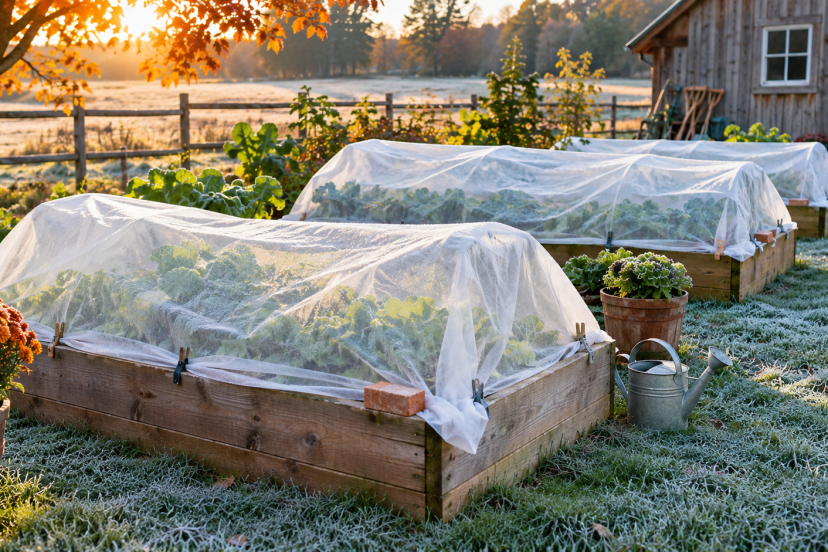
One of the easiest ways to protect a vegetable garden from frost is to cover plants before sunset.
Fabric covers reduce heat loss and help retain some warmth rising from the soil. According to the Texas A&M AgriLife Extension’s frost and freeze protection guidance, these materials work especially well during radiational frost events, although they offer limited protection during severe freezes.
Choose Suitable Covering Materials
Garden frost cloth works well because it is lightweight and allows some air and light through.
For temporary protection, you can also use:
- Old bedsheets
- Lightweight blankets
- Burlap
- Commercial floating row covers
Drape the material loosely over your plants, preferably supporting it above delicate stems. Extend the edges to the ground and secure them with stones, stakes, or soil.
Remove temporary opaque covers once temperatures recover during the day.
Build a Simple Low Tunnel Over Garden Beds
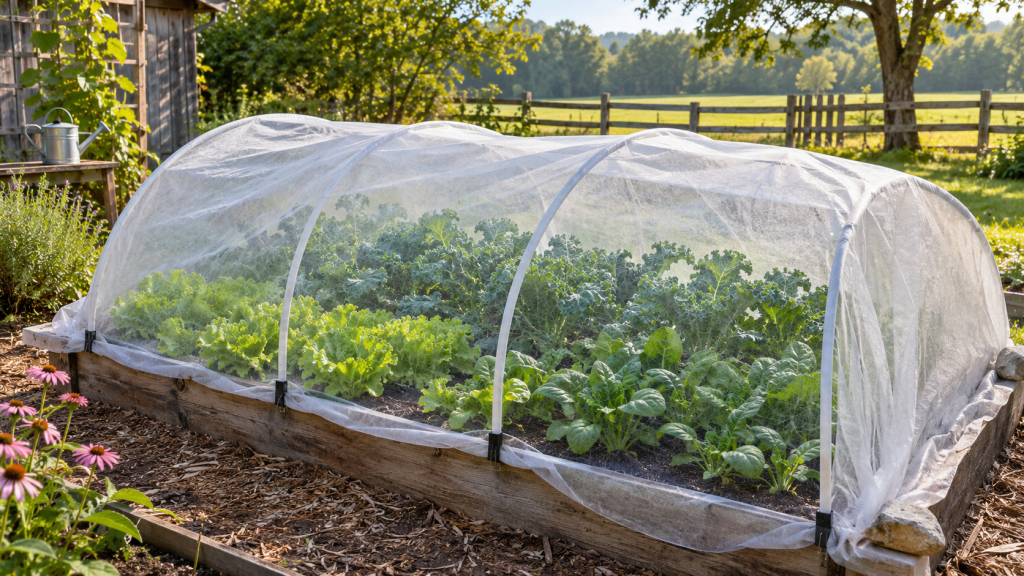
A low tunnel is a practical alternative when you need to protect several rows of vegetables.
You can build one with flexible PVC pipe, garden hoops, or sturdy wire arches. Bend the supports over your garden bed, leaving enough space above the tallest plants.
Stretch frost cloth over the frame, then secure the edges firmly against the wind.
The tunnel helps retain heat near the soil while preventing the fabric from rubbing against delicate leaves. University of Georgia Extension’s low-tunnel guidance also explains how hoops help prevent physical damage to plants.
Check temperatures under the covering during sunny weather. Ventilate or remove the fabric when necessary to prevent overheating.
Protect Plant Roots With Organic Mulch
Cold weather doesn’t only affect leaves. Repeated freezing and thawing can also stress roots, especially those growing close to the soil surface.
Organic mulch helps keep soil temperatures more stable while limiting water evaporation.
Suitable materials include straw, shredded leaves, pine needles, and untreated wood chips.
Spread roughly 2–3 inches around established plants where appropriate, keeping mulch away from stems and crowns. For overwintering perennials, the ideal timing may differ because some benefit from mulch applied after the ground begins freezing.
Mulch cannot stop severe freezing weather, but it provides another layer of protection around vulnerable roots.
Water Your Garden Before a Frost
Proper watering helps plants enter cold weather without unnecessary drought stress.
Soil that contains adequate moisture holds warmth longer and releases it more gradually than dry soil. However, watering is most useful when the ground needs moisture, and it cannot replace protective covers.
Check the soil during the day before temperatures fall. If it feels dry below the surface, water the root zone enough to moisten it without leaving standing water.
Avoid soaking already-wet soil or spraying tender foliage just before freezing temperatures arrive.
Commercial frost-protection irrigation requires specialized timing and continuous water application. Ordinary overhead watering during a freeze can cause additional damage if managed incorrectly.
Move Potted Plants Into a Sheltered Location
Container plants need special attention because their roots have less surrounding soil to buffer temperature changes.
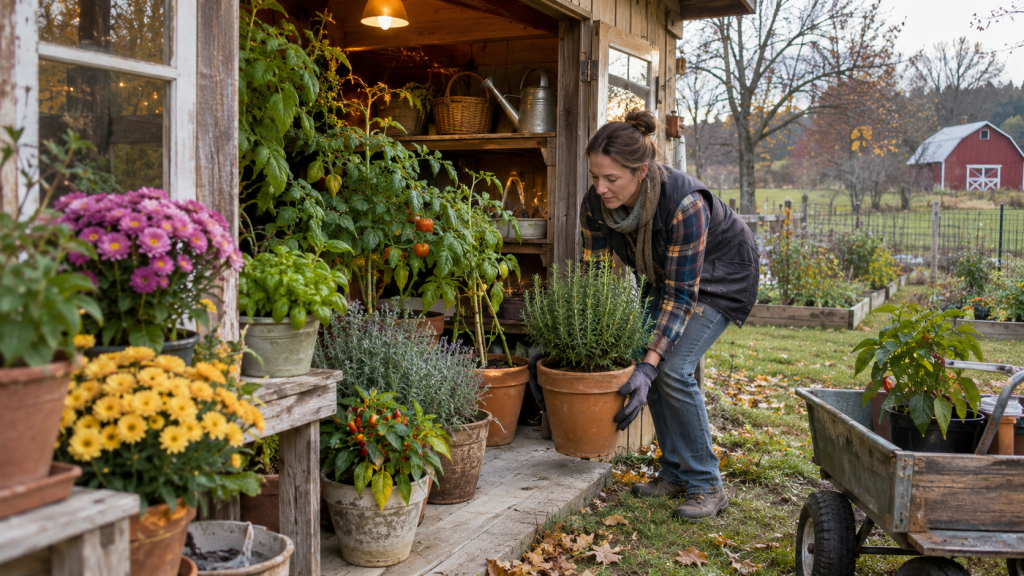
Move vulnerable pots into a garage, shed, enclosed porch, or another protected location before a freeze. Give plants suitable light if they remain indoors for an extended period.
For containers that must stay outdoors, group them near a sheltered wall and insulate the pots with suitable wrapping.
A healthy plant with protected roots has a better chance of surviving cold weather.
For more detailed seasonal care, follow these practical steps to winterize potted plants, including managing moisture and choosing winter storage.
Avoid These Common Frost Protection Mistakes
Even simple protection methods can fail when used incorrectly.
Covering too late: Install frost protection before temperatures fall rather than waiting until ice appears on leaves.
Leaving plastic against foliage: Plastic touching leaves can contribute to cold injury. Keep it above plants using a frame.
Ignoring daytime temperatures: Covered plants can overheat when sunlight returns, especially beneath plastic tunnels.
Removing frozen fabric forcefully: Wait until the material thaws to avoid tearing frozen leaves.
Expecting covers to stop extreme cold: Lightweight frost blankets provide limited insulation. Sensitive crops may still die during prolonged hard freezes.
Checking the forecast each evening helps you decide when to add protection and when to remove it.
Recommended Products for Frost Protection
Having a few reusable supplies makes preparing for sudden cold snaps much easier. These five products offer practical protection for different garden sizes and setups.
1. Agfabric 0.55 oz Frost Blanket (5 × 25 ft)
This lightweight, breathable row cover suits seedlings, leafy greens, and smaller vegetable beds during mild frosts. It allows light through while helping reduce heat loss. Secure the edges carefully, and remember that lightweight fabric offers limited protection during hard freezes.
2. Greenhouse Cover (12 × 25 ft)
This medium-weight frost cloth offers a balance between insulation and light transmission. Its generous width makes it useful for covering multiple vegetable rows or raised beds. Use hoops for taller plants and monitor conditions beneath the fabric.
3. Agfabric 1.5 oz Frost Cover (7 × 50 ft)
This heavier fabric provides greater insulation than lighter row covers, making it useful when colder nights are expected. It also blocks more sunlight, so remove it when appropriate to let crops receive sufficient light.
4. Gardzen DIY Grow Tunnel Hoops
These flexible garden hoops help create temporary low tunnels over vegetable beds. They support frost fabric above delicate leaves and can be disassembled for storage. Pair them with appropriately sized frost cloth and secure the covering along the ground.
5. Bootstrap Farmer 3/4-Inch Snap-On Clamps
These reusable clamps help fasten row covers to compatible garden hoops or frames. They’re particularly useful in windy conditions when unsecured fabric might lift away. Check your pipe dimensions before buying to ensure a proper fit.
Conclusion
Protecting plants from frost doesn’t require a greenhouse or expensive equipment. For most homesteaders, the most practical approach is to identify vulnerable crops, install secure covers before nightfall, maintain suitable soil moisture, and protect exposed roots. Keep frost cloth and garden hoops accessible during unpredictable weather. A few minutes of preparation before sunset can make a meaningful difference to your harvest the following morning.
FAQs
What can I use to cover plants from frost?
Frost cloth, lightweight blankets, bedsheets, and burlap can provide temporary protection. Extend the covering to the ground and secure its edges to help retain warmth.
At what temperature should I cover my plants?
Consider covering frost-sensitive plants when temperatures approach 32°F (0°C). Frost can develop even when forecast air temperatures are slightly higher, especially on clear, calm nights.
Can plastic bags protect plants from frost?
Plastic can provide temporary protection when supported by a frame, but it should not touch plant foliage. Remove or ventilate plastic coverings when temperatures rise to prevent overheating.
Should I water plants before a frost?
Water during the day if the soil is dry. Adequate moisture helps prevent drought stress and supports heat storage in the soil. Avoid overwatering saturated ground.
Can plants recover after frost damage?
Plants may bounce back from frost damage if their roots and growing points survive. Give them a few days to recover before trimming away damaged leaves and stems. Tender annuals may not recover after a severe freeze.