5 Elderberry Syrup Recipes for Winter Immune Support
We may earn a commission for purchases made using our links. Please see our disclosure to learn more.
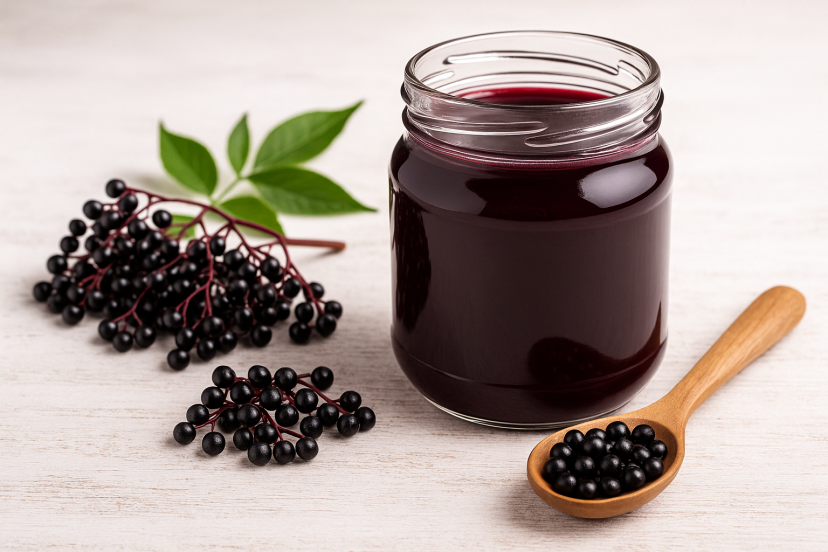
Elderberry syrup recipes have become a staple for many people looking to support their wellness during the winter months. Elderberries are packed with antioxidants, easy to prepare at home, and versatile enough to customize with spices, citrus, or natural sweeteners. Whether you’re making syrup for the first time or refining your favorite blend, the following recipes offer simple, reliable options you can create in your own kitchen.
What You’ll Need Before You Start
Across all the recipes below, the method is straightforward: simmer elderberries with water and spices, strain the liquid, then sweeten it once it’s cool. Before you start, gather these essentials:
Ingredients
- Dried elderberries (organic if possible)
- Filtered water
- Natural sweetener (raw honey, maple syrup, or agave)
- Spices like cinnamon, ginger, cloves
- Citrus zest (lemon or orange)
Tools
- Medium saucepan
- Fine mesh strainer
- Glass bottles or jars with tight lids
Pro tip: Don’t use raw elderberries — they should always be cooked. Uncooked elderberries contain compounds that are not safe to eat raw.
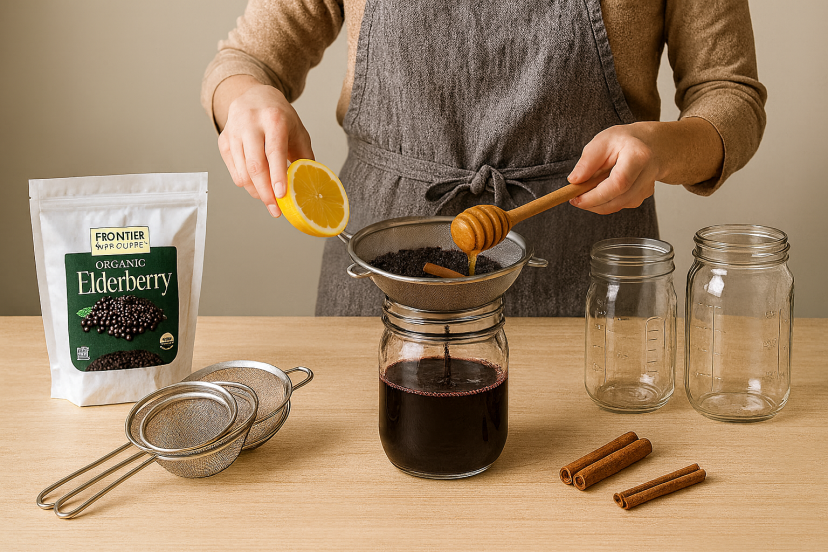
5 Elderberry Syrup Recipes You Can Make at Home
Here are five easy, delicious elderberry syrup variations — from classic to creative.
1. Classic Homemade Elderberry Syrup
This is the base recipe many people start with — clean, simple, and effective.
Ingredients
- 1 cup dried elderberries
- 3 cups water
- 1 cinnamon stick
- 3 whole cloves
- ½ cup raw honey (added after cooling)
Instructions
- Add elderberries, water, cinnamon, and cloves to a saucepan.
- Heat the mixture until it begins to boil, then lower the heat and let it gently simmer for about 45 minutes.
- Pour the cooked mixture through a fine strainer and collect the liquid in a clean glass jar.
- Allow it to cool until warm, then mix in the honey.
This classic version is rich, aromatic, and versatile — great in tea or straight by the spoonful.
2. Ginger-Cinnamon Immune Blend
A warmer, spicier twist with fresh ginger for extra zing.
Ingredients
- 1 cup dried elderberries
- 4 cups water
- 1 Tbsp sliced fresh ginger
- 1 cinnamon stick
- ¼ tsp ground cloves
- ½–¾ cup honey or maple syrup
Instructions
- Combine all ingredients except the sweetener in a pot.
- Simmer for 40–50 minutes until reduced.
- Strain, cool, and whisk in your sweetener of choice.
Ginger adds warmth and a natural kick that feels comforting on chilly days.
3. Honey & Lemon Elderberry Syrup
Bright and refreshing, this variation pairs citrus freshness with elderberry depth.
Ingredients
- 1 cup dried elderberries
- 3½ cups water
- Peel from 1 lemon (avoid the bitter pith)
- ½ tsp ground cinnamon
- ½–1 cup honey
Instructions
- Simmer elderberries, water, lemon peel, and cinnamon for 45 minutes.
- Strain, cool, and mix in honey.
This one tastes lighter and slightly citrusy — a hit if you like milder syrups.
4. Spiced Maple Elderberry Syrup
Maple brings a sweet earthiness, balanced with fall-like spice.
Ingredients
- 1 cup dried elderberries
- 3 cups water
- ½ tsp ground ginger
- ¼ tsp nutmeg
- 1 cinnamon stick
- ½–¾ cup pure maple syrup
Instructions
- Add everything but the maple syrup to a pot.
- Simmer for about 40 minutes.
- Strain, let cool a bit, then stir in maple syrup.
Maple adds a mellow sweetness that pairs beautifully with warming spices.
5. Elderberry-Orange Wellness Syrup
Sweet, citrusy, and perfect for sipping.
Ingredients
- 1 cup dried elderberries
- 4 cups water
- Peel from one orange
- ½ tsp grated fresh ginger
- ½ cup honey or maple syrup
Instructions
- Simmer the elderberries with water, orange peel, and ginger for 45 minutes.
- Strain well.
- Cool slightly and add honey or maple syrup.
This version feels almost like a seasonal tonic, especially when served warm.
Recommended Products
Here are some useful items many home syrup makers use for their elderberry syrup recipes — you can find these on Amazon:
- Organic Dried Elderberries
These high-quality, sustainably sourced elderberries offer a deep, rich flavor and consistent results, making them perfect for syrups, teas, and herbal infusions. - Ceylon Cinnamon Sticks
Known as “true cinnamon,” Ceylon cinnamon provides a smoother, sweeter spice profile that blends beautifully into elderberry syrup without overpowering it. - Fine Mesh Strainer Set
A sturdy fine-mesh strainer helps you separate liquid from berries and spices cleanly, ensuring a smooth, grit-free syrup every time. - Wide-Mouth Glass Mason Jars (multiple sizes)
These jars make storing your finished syrup easy. Their wide openings allow for quick pouring, and the airtight lids help keep your syrup fresh longer. - Stainless Steel Saucepan with Pouring Spout
A durable stainless steel saucepan distributes heat evenly and prevents scorching. The built-in pouring spout makes transferring hot liquid safer and less messy.
These products make prepping, simmering, and storing your syrups easier and more enjoyable.
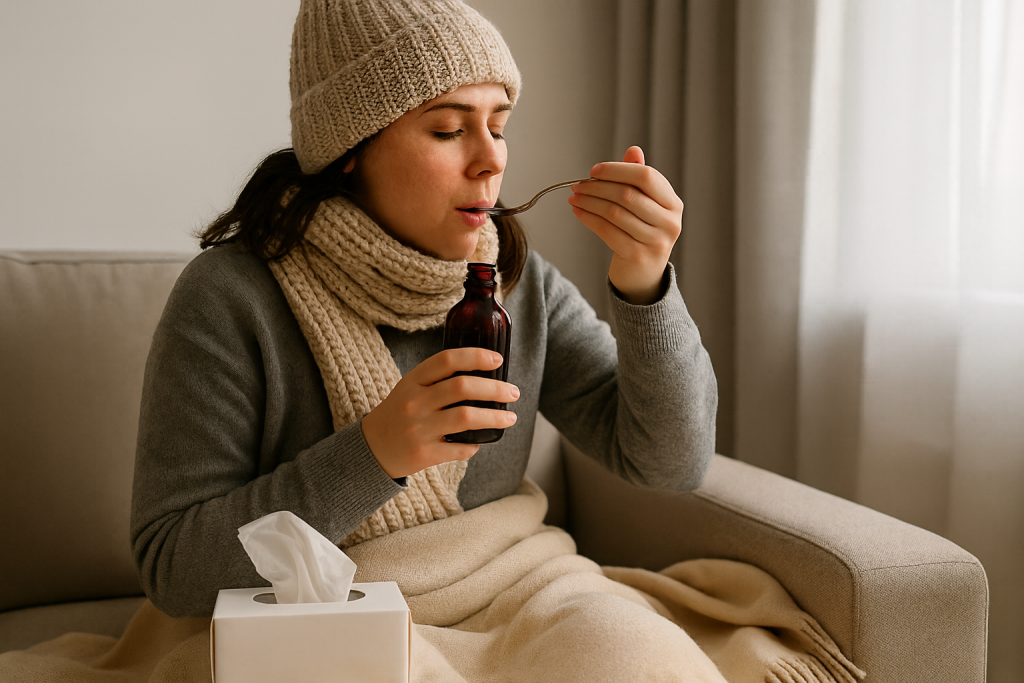
Elderberry for Colds and How Safe It Is for Kids
Modern investigations into Sambucus nigra — the European black elderberry — suggest it may provide measurable support for shortening the duration and severity of cold and flu symptoms when used as a dietary adjunct. A review of clinical trials reported that standardized elderberry extract helped reduce symptom duration and improve clinical outcomes in people with colds and influenza, supporting its traditional use as an alternative remedy for respiratory discomfort. Smaller controlled studies have echoed these effects, showing earlier relief from symptoms like cough, congestion, and fatigue compared with placebo groups, though researchers note that larger, more rigorous trials are still needed before definitive claims can be made.
When it comes to use in children, pediatric guidance is more cautious. According to expert pediatric sources, there isn’t enough strong evidence proving elderberry’s effectiveness or safety in kids, and some pediatricians highlight that the sample sizes in existing research are too small to draw firm conclusions. In addition, herbal supplements aren’t regulated like medicines, meaning product consistency and dosing can vary widely. For these reasons, many clinicians recommend consulting a pediatrician before giving elderberry products to children and emphasize that elderberry should never replace core practices like vaccination, adequate hydration, and good sleep for childhood wellness.
Conclusion
Elderberry syrup is a simple, reliable addition to any winter wellness routine. Whether you prefer a classic recipe or a flavor-forward variation with citrus or spice, making your own syrup gives you full control over quality and taste. The elderberry syrup recipes above offer an easy way to bring elderberry into your seasonal habits and enjoy a comforting, homemade approach to wellness. If you’re interested in expanding these skills into other parts of your home life, you might also enjoy exploring how to build a self-sufficient backyard and create more natural, productive routines.
FAQs
1. How long will homemade elderberry syrup stay fresh?
Stored in the refrigerator in a sealed glass jar, homemade syrup typically lasts 2–3 months.
2. Can children take elderberry syrup?
Some pediatricians advise caution because firm evidence for kids is limited. Always check with a pediatrician before offering elderberry to children.
3. Can I swap dried elderberries for fresh ones?
Yes — fresh is fine as long as elderberries are cooked. Adjust the water and simmer time if needed.
4. Is elderberry syrup recommended during pregnancy?
Because research is limited, many healthcare providers recommend against elderberry use during pregnancy unless advised otherwise.
5. Why do recipes vary with honey or maple syrup?
Honey adds depth and a slight antimicrobial quality, while maple syrup offers smoother sweetness. Either option tastes great — it simply comes down to your personal preference.