
Fly Trap Solutions Every Homesteader Should Know
We may earn a commission for purchases made using our links. Please see our disclosure to learn more.
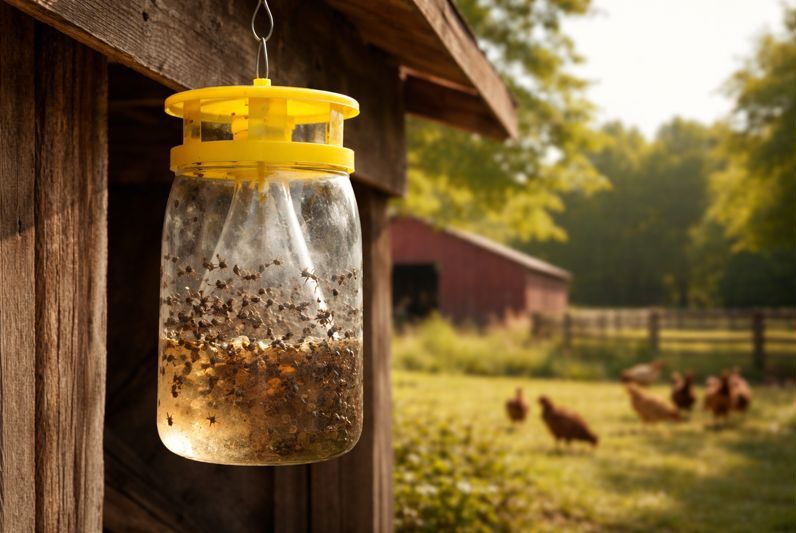
Flies are a constant challenge on a homestead. They show up in kitchens, barns, animal shelters, and compost areas, often multiplying faster than expected. While a few flies may seem harmless, unmanaged fly activity can quickly become a daily problem. This guide breaks down practical fly trap solutions every homesteader should know. You’ll learn which types of fly traps work best, where to place them, and how to use them alongside simple prevention strategies for better long-term control.
Why Flies Are Harder to Control Than Most Pests
Flies are persistent for one simple reason: they don’t stay in one place. Unlike pests that hide or stick to a single food source, flies move constantly. They bounce between animal areas, waste zones, outdoor spaces, and indoor rooms without much effort.
On a homestead, this movement makes fly control especially challenging. Even when one area is clean, nearby manure, compost, or standing moisture can keep the population going. Flies also reproduce quickly, which means a small number can turn into a noticeable problem in a short time.
Another challenge is visibility. Flies don’t hide, so their presence feels more overwhelming than other pests. That constant buzzing and landing makes it harder to ignore the issue, even when numbers are still moderate. Understanding this behavior helps explain why quick fixes often fail and why a more thoughtful approach works better.
Why Flies Are Attracted to Homesteads
Flies show up where conditions allow them to thrive.
- Organic waste like manure, compost, and food scraps
- Moisture from standing water or damp bedding
- Warm shelter inside barns, coops, sheds, and homes
If flies keep returning, one or more of these conditions usually needs attention.
Types of Fly Traps Explained
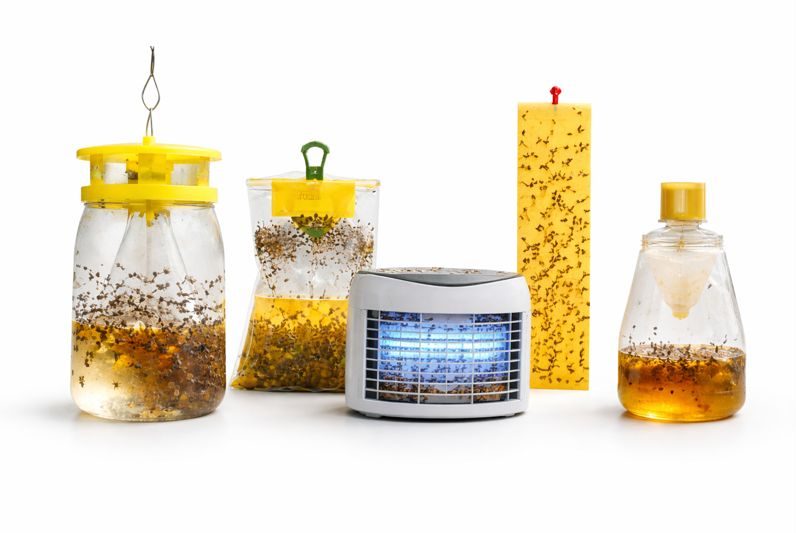
Different fly traps solve different problems. Using the right one in the right place matters more than using many at once.
Sticky Fly Traps
Sticky fly traps use adhesive surfaces to catch flies when they land. They work quietly and don’t rely on bait or electricity, which makes them a popular indoor option.
| Best For | Pros | Cons |
| KitchensPantriesWindows and doorways | No chemicalsEasy to useAffordable | VisibleCan fill quickly |
Sticky fly traps work best indoors where fly numbers are lower and visibility is less of a concern.
Baited Fly Traps
Baited fly traps use strong attractants to lure flies into a container they can’t escape. These traps are designed for heavy fly activity and are especially useful outdoors.
| Best For | Pros | Cons |
| BarnsCompost areasTrash zones | Extremely effectiveHandles large infestations | Strong odorBest kept outdoors |
Most homesteaders rely on baited fly traps during peak fly season when populations rise quickly.
Electric Fly Traps
Electric fly traps attract flies using UV light, then eliminate them quietly. They offer a clean solution for enclosed spaces where odor or exposed traps aren’t ideal.
| Best For | Pros | Cons |
| Enclosed indoor spacesMilk roomsWorkshops | Clean and discreetNo bait or odor | Requires electricityLimited range |
These traps perform best in controlled indoor environments with steady power access.
DIY Fly Traps
DIY fly traps often use simple ingredients like vinegar, sugar water, or overripe fruit to attract flies. Many homesteaders start here because the materials are inexpensive and easy to find.
| Best For | Pros | Cons |
| Small infestationsTemporary solutions | InexpensiveEasy to make | Limited effectivenessRequires frequent replacement |
DIY fly traps are helpful for light fly pressure or short-term control, but on their own, they are rarely enough for larger homestead infestations.
Recommended Fly Traps for Homesteaders
These fly traps are commonly used on homesteads because they work in real-world conditions, from indoor spaces to barns and outdoor areas.
Electric Fly Trap for Flies & Flying Insects – Great all-around electric trap that attracts and captures flies and other flying insects. Works well in indoor areas where odors and chemicals aren’t wanted. Ideal for kitchens, workrooms, and living spaces.
Green Strike Fruit Fly Trap – A highly rated fruit fly solution that’s simple to set up and safe around food prep zones. Excellent for targeting fruit flies close to compost, trash, or kitchen counters.
Fly Catcher Ribbons Pack (20) – Sticky fly ribbons you can hang indoors or outdoors. These are cost-effective and capture flies as they land. Great for barns, coops, and patios.
Fly Trap XLT Pro Series – A reusable outdoor trap solution that’s rugged enough for heavier fly loads around livestock areas or compost piles. Useful for ongoing fly pressure.
The Ranch Reusable Fly Trap – Simple and reusable net/cage-style trap for outdoor use. Works around feed zones, gardens, or areas with high fly density.
Best Fly Trap Placement for Real Results
Even the best fly trap won’t work if placement is wrong.
Indoors
- Near windows and doors
- Away from food prep surfaces
- Close to natural light
If gnats are also an issue inside your home, this guide on how to get rid of gnats in the house explains additional solutions.
Outdoors
- 20–30 feet away from living areas
- Downwind from common spaces
- Near manure or compost zones
Barns and Coops
- Hang traps at animal head height
- Keep away from feed and water
- Place near entry points
Natural Fly Control Methods That Support Traps
Fly traps work best when paired with prevention.
- Apple cider vinegar helps attract flies in DIY traps
- Essential oils like peppermint and eucalyptus help repel flies near doors
- Herbs such as basil and mint discourage fly activity
These methods reduce pressure but shouldn’t replace traps.
What Research and Reviews Say About Fly Control
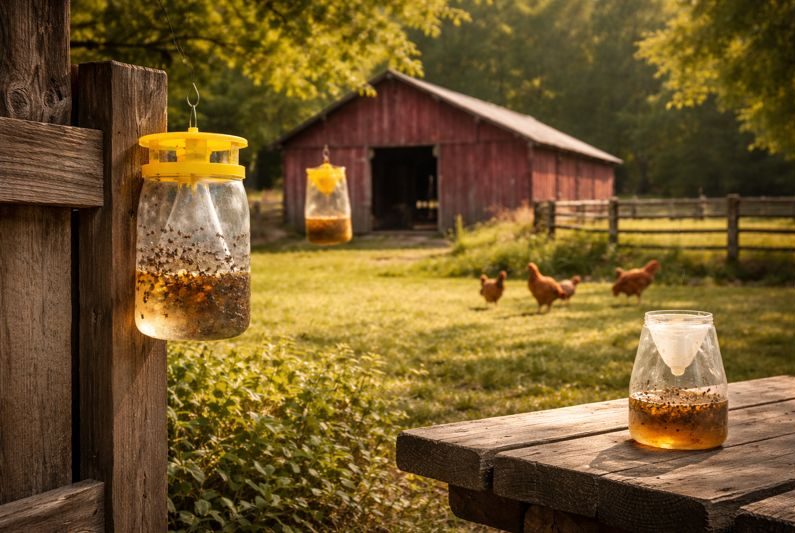
Agricultural research consistently points to integrated pest management (IPM) as the most effective way to control flies long term. Instead of relying on a single solution, IPM combines sanitation, physical traps, and environmental management to reduce fly populations at the source.
A 2024 review published in Insects (MDPI) examined stable fly control in livestock environments and found that removing breeding materials—such as manure buildup and decaying organic matter—can reduce fly populations by up to 70% when paired with trapping and habitat management. The study also noted that early intervention plays a critical role in preventing rapid population growth once warmer weather begins.
Supporting this, a comprehensive review in Frontiers in Veterinary Science on house fly control (Musca domestica) emphasized that sanitation and physical controls, including traps and exclusion methods, consistently outperform chemical-only approaches over time. Researchers highlighted that insecticide-focused strategies often lead to resistance and recurring infestations, while traps remain effective when breeding sites are properly managed.
Fly traps work best when they are part of a broader strategy. Cleaning up breeding areas, acting early in the season, and using physical traps creates more reliable and sustainable fly control than sprays alone.
Common Fly Trap Mistakes to Avoid
- Placing traps too close to living areas
- Ignoring sanitation
- Using indoor traps outdoors
- Waiting until flies become overwhelming
Consistency matters more than reaction.
Final Thoughts
Flies are part of homestead life, but infestations don’t have to be. When you choose the right fly trap, place it correctly, and support it with good sanitation, fly control becomes manageable instead of frustrating. Start early. Stay consistent. Adjust as needed.
FAQs
What is the most effective fly trap for homesteads?
Baited outdoor fly traps work best for large fly populations.
Are fly traps safe around animals?
Yes, when placed away from feed and water sources.
How often should fly traps be replaced?
Most traps need replacing every few weeks, depending on how active flies are.
Can fly traps eliminate flies completely?
They greatly reduce populations but work best with sanitation.
Do DIY fly traps really work?
They help with small infestations but aren’t enough alone.