
How To Get Rid Of Gnats In The House Naturally
We may earn a commission for purchases made using our links. Please see our disclosure to learn more.
Gnats can take over a home faster than most pests, especially when moisture, ripe fruit, or overwatered plants create the perfect breeding conditions. If you’re looking for how to get rid of gnats in the house naturally, the solutions are simple, affordable, and highly effective. By using targeted traps, plant-safe treatments, and a few preventative habits, you can eliminate gnats at the source without resorting to chemicals. This guide walks you through proven methods that work for fruit flies, drain flies, and fungus gnats—so you can get your home back under control quickly.
Why Gnats Show Up in the First Place
Before we jump into traps and treatments, it helps to understand why gnats suddenly appear. Most of the gnats you’ll find indoors fit into one of three main types:
1. Fruit Flies
Attracted to fermenting fruit, wine, juice spills, and sugary residues.
2. Drain Flies
Found around sinks, drains, garbage disposals, and areas with standing moisture.
3. Fungus Gnats
Another part of learning how to get rid of gnats in the house is treating infestations that start in overwatered plant soil. These tiny black flies live in the top layer of damp potting soil. They’re harmless to people, but their larvae chew on roots and any organic matter in the soil.
Knowing which one you’re dealing with helps you target the right solution.
Why Natural Gnat Remedies Work
Scientific research helps explain why natural gnat remedies are surprisingly effective. For fruit flies, the biggest driver is fermentation scent. A well-known study published through PubMed Central found that compounds in vinegar—especially acetic acid and acetoin—act as powerful attractants, pulling flies toward vinegar-based traps with high accuracy. This explains why simple ACV traps work so consistently for kitchen gnats and fruit flies.
Another review published on ResearchGate supports this, noting that vinegar and other fermentation cues outperform many commercial baits, particularly for species like Drosophila suzukii that rely heavily on fermentation odors to locate food and breeding sites.
When it comes to fungus gnats, the science is different. Unlike fruit flies, fungus gnats thrive in warm, moist soil with high fungal activity. That’s why overwatering is the most common cause of infestations. Research-based integrated pest management (IPM) guidelines emphasize that allowing the top 1–2 inches of soil to dry is one of the most effective ways to break their lifecycle.
Natural remedies such as chamomile tea or cinnamon help because they reduce soil fungus—removing the larvae’s primary food source. While these ingredients aren’t proven gnat killers in controlled studies, their antifungal properties make the soil less hospitable for larvae.
For direct larval control, hydrogen peroxide is one of the most reliable natural options. Horticultural IPM programs confirm that diluted peroxide oxidizes and kills larvae on contact, then breaks down safely into water and oxygen.
These methods are based on how gnats behave in natural environments. Fruit flies respond to fermentation cues, while fungus gnats depend on moisture and fungus-rich soil. Natural remedies work because they interrupt the exact conditions gnats need to survive.
Natural DIY Gnat Traps That Work Fast
If you’re trying to figure out how to get rid of gnats in the house, the fastest approach is to start with simple DIY traps. These homemade traps rely on scents that gnats can’t resist. They’re simple, inexpensive, and surprisingly effective.
Apple Cider Vinegar & Dish Soap Trap
This is the classic go-to remedy because gnats flock to the smell of fermentation.
How to make it:
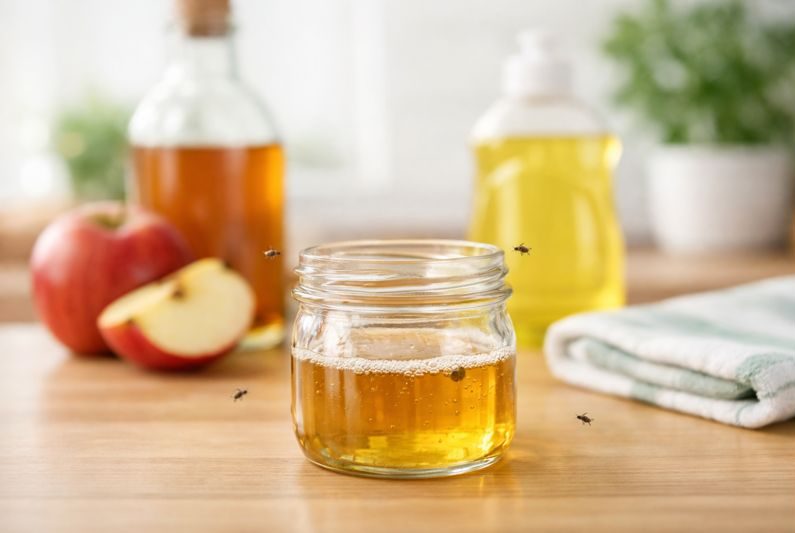
- Add 2–3 tablespoons of apple cider vinegar to a small bowl or jar.
- Add a small amount of dish soap to the mixture to break the surface tension so the gnats can’t escape.
- Add a small pinch of sugar to intensify the scent.
- Leave it uncovered—or cover with plastic wrap and poke holes for a more targeted trap.
Why it works:
The vinegar attracts them. The soap traps and drowns them.
Studies on gnat behavior show that fermentation scents mimic their natural breeding cues, which makes ACV incredibly effective.
Overripe Fruit Jar Trap
If you’ve ever forgotten a banana in the fruit basket, you already know how fast gnats gather.
How to make it:
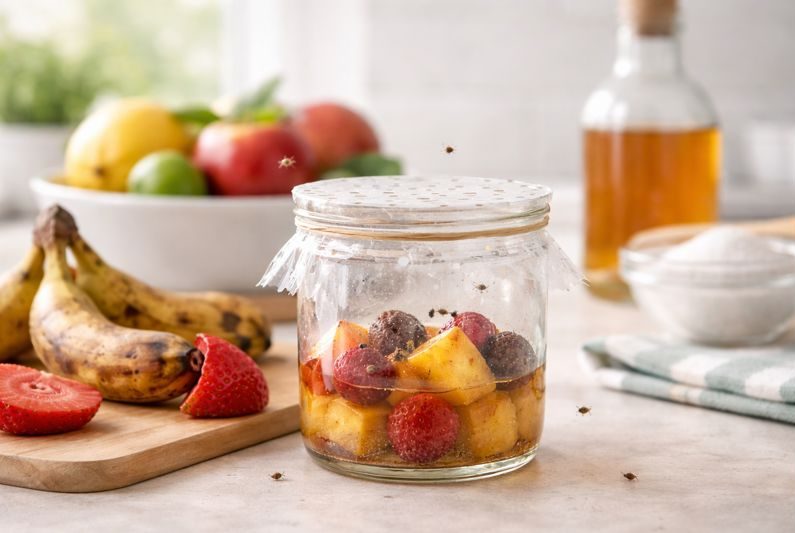
- Place a piece of overripe fruit in a glass jar.
- Cover with plastic wrap.
- Poke several tiny holes.
The insects enter the trap easily, but they’re unable to get back out.
Wine or Beer Bottle Trap
This one requires zero effort. Simply leave a nearly empty wine or beer bottle on the counter.
Gnats follow the deep bottle design down the neck but struggle to fly back up.
Pro tip: Add one drop of dish soap to make it even more effective.
Natural Solutions for Fungus Gnats in Houseplants
Fungus gnats are stubborn, especially if you love indoor gardening. However, you don’t need pesticides—just a few natural treatments.
Chamomile Tea Watering Method
Chamomile contains natural antifungal properties. When you water soil with strong chamomile tea, it kills the fungus that larvae feed on.
How to apply:
- Prepare a concentrated batch of chamomile tea.
- Let it cool.
- Water the top layer of soil thoroughly.
This interrupts the larvae lifecycle while keeping plants safe.
Cinnamon as a Soil Treatment
Cinnamon is a natural antifungal spice that dries out fungus gnats’ food source.
Sprinkle cinnamon across the topsoil and repeat every few days until gnats disappear.
Hydrogen Peroxide Drench (Plant Safe When Diluted)
Hydrogen peroxide kills larvae on contact without harming the plant.
Mixing ratio:
- 1 part 9% hydrogen peroxide
- 6 parts water
Pour the solution into the soil like a regular watering. You’ll often hear tiny fizzing sounds—that’s the peroxide reacting with the soil and larvae.
Scientific note: Hydrogen peroxide breaks down into water and oxygen after reacting, leaving no chemical residue.
Let Soil Dry Between Waterings
Gnats prefer moist soil. If you allow the top inch of soil to dry completely, larvae cannot survive.
This is one of the simplest—and most effective—prevention methods.
Eliminate Gnat Breeding Sources in the Home
Even the best traps won’t work unless you fix the root cause. Gnats multiply quickly, so removing breeding areas is key.
Clean and Flush Drains Regularly
Drains collect food particles and organic sludge, which create the perfect environment for gnat eggs.
You can clean drains naturally by:
- Pouring boiling water down the drain
- Scrubbing the drain plate
- Following with a mix of baking soda + vinegar (optional)
- Finishing with one more flush of boiling water
If needed, diluted bleach is an option, but most homeowners prefer natural methods.
Manage Produce and Food Storage
Since fermentation attracts gnats, be sure to:
- Store ripe fruit in the refrigerator
- Clean juice spills right away
- Keep counters dry
- Take out the trash daily
- Rinse empty bottles and cans
These habits alone can drastically reduce indoor gnat populations.
Reduce Moisture in Sinks & Kitchens
Wipe sinks dry before bed, especially stainless steel ones.
Moisture attracts gnats, and overnight is when they lay the most eggs.
Also—avoid leaving wet dish sponges or rags lying around.
Top 5 Products That Help Get Rid of Gnats Fast
If you want to know how to get rid of gnats in the house fast, you’d better check out these reliable products. These are widely used by homeowners and plant lovers, and all are available on Amazon.
1. Terro Fruit Fly Trap (2-Pack)
This small but powerful trap uses a vinegar-based lure to attract gnats and fruit flies. It’s discreet, safe for kitchens, and highly effective. Perfect for: countertops, near fruit bowls, or beside houseplants.
2. Katchy Indoor Insect Trap
A top-rated indoor insect trap that uses UV light to lure gnats, then traps them on sticky glue boards. Great for bedrooms, kitchens, and areas where you want a chemical-free solution.
3. Gideal Sticky Trap Pack (Yellow Houseplant Traps)
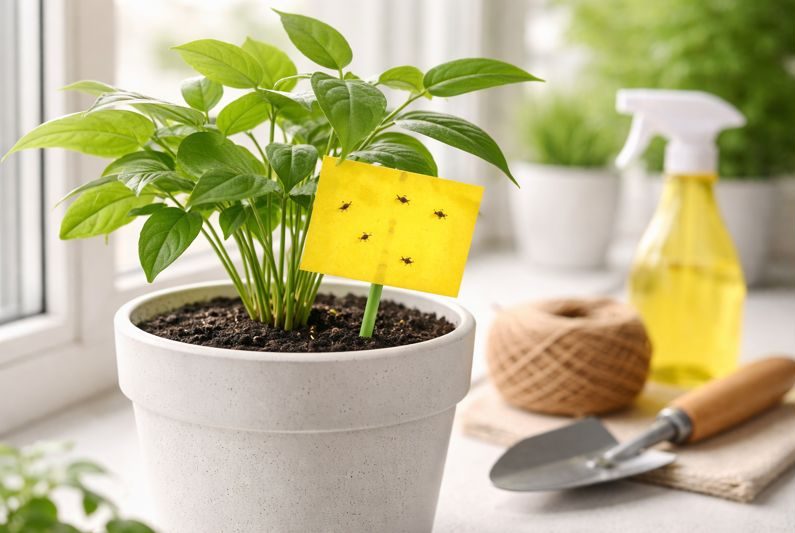
A favorite among plant owners. The bright yellow color attracts fungus gnats, while the sticky surface traps them instantly. Place them directly into the soil for continuous protection.
4. Raid Fly Ribbon Sticky Traps
An old-school classic that still works incredibly well. Hang near problem areas like trash bins, windows, or compost buckets. Perfect for homestead kitchens that get warm and humid during cooking.
5. Fruit Fly & Gnat Trap
This ready-to-use trap is a convenient alternative to DIY jars. It uses apple cider vinegar as the bait and lasts for weeks. Ideal for those who want natural solutions without mixing anything.
Prevention: Keep Gnats From Coming Back
Long-term prevention is just as important as knowing how to get rid of gnats in the house, because eliminating breeding sources keeps them from returning. Once you get rid of gnats, you’ll want to make sure they don’t return.
Follow these habits:
- Clean drains weekly
- Keep counters dry
- Refrigerate fruit
- Avoid overwatering plants
- Remove old food and compost daily
- Rinse recycling containers
- Keep trash cans lined and closed
These steps work together to create a home where gnats can’t breed.
Conclusion
Learning how to get rid of gnats in the house naturally doesn’t require harsh chemicals or complicated steps. With the right mix of DIY traps, plant-safe soil treatments, and simple prevention habits, you can eliminate fruit flies, drain flies, and fungus gnats quickly—and keep them from returning. A clean, dry, and well-maintained home removes the conditions gnats rely on, making these natural methods both effective and sustainable for long-term control.
For more practical home and homesteading guidance, explore traditional kitchen methods and self-sufficient cooking ideas.
FAQs
1. What causes gnats to show up in the house?
Gnats are attracted to moisture, ripe fruit, dirty drains, and damp soil. They lay eggs in these environments, so eliminating moisture is essential.
2. Are natural gnat traps as effective as chemical sprays?
Yes—especially ACV traps, wine traps, and sticky traps. They target gnats’ natural instincts and work without exposing your home to chemicals.
3. What can I do to prevent fungus gnats from returning?
Let the soil dry between waterings, use cinnamon or chamomile treatments, and insert sticky traps into plant pots.
4. How quickly can natural methods eliminate a gnat infestation?
Most infestations can be significantly reduced within 48–72 hours using ACV traps and soil treatments.
5. Can gnats harm houseplants?
Fungus gnat larvae can damage young roots and stunt growth. Mature plants tolerate them better, but it’s still best to treat the soil promptly.