Top 10 Rocket Stove
We may earn a commission for purchases made using our links. Please see our disclosure to learn more.
A rocket stove can turn a surprisingly small pile of sticks, branches, or charcoal into enough concentrated heat to boil water, fry breakfast, or cook a full campsite meal. That makes one a smart addition to a camping setup, emergency kit, backyard cooking station, or off-grid homestead. The trick is choosing the right design. Some models are compact enough to travel with, while others trade portability for cast-iron cooking surfaces and heavier insulation. This guide compares 10 worthwhile options based on construction, fuel flexibility, portability, customer feedback, and real-world usefulness.
Our Top Picks
| Product | Best For | Key Feature | Rating |
| EcoZoom Versa | Best overall | Insulated dual-fuel design | ★★★★★ |
| StarBlue Camping Rocket Stove | Heavy-duty camping | Large fuel chamber | ★★★★⯪ |
| StarBlue Collapsible Rocket Stove | Easy storage | Collapsible construction | ★★★★⯪ |
| Gas One RS-2600 | Emergency preparedness | Cast-iron construction | ★★★★⯪ |
| Ironclad Supply Rocket Stove | Emergency preparedness | Up to 23,000 BTU output | ★★★★⯪ |
| Lineslife 12.6-Inch Rocket Stove | Large cookware | Wide six-prong top | ★★★★⯪ |
| VEVOR Camping Rocket Stove | Camping and outdoor cooking | Heavy-duty steel construction | ★★★★⯪ |
| Petromax rf33 | Premium build | Cast-iron heat distribution | ★★★★★ |
| Onlyfire Camping Rocket Stove | Backyard cooking | Cast-iron cooking top | ★★★★⯪ |
| Zarkind Smokeless Rocket Stove | Portable emergency cooking | Secondary combustion | ★★★★⯪ |
1. EcoZoom Versa Rocket Stove
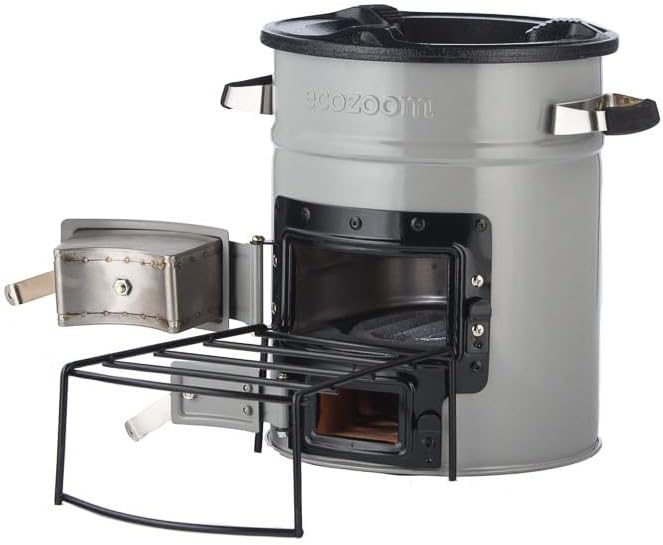
The EcoZoom Versa is one of the most established choices in this category. Its insulated combustion chamber concentrates heat efficiently, while the sturdy cast-iron top comfortably supports pots, pans, and Dutch ovens.
It can burn both biomass and charcoal, which gives you more flexibility when camping or preparing for power outages. Customer feedback is especially strong, with more than 1,000 reviews associated with the model.
Key features: Insulated combustion chamber, cast-iron cooktop, wood and charcoal compatibility
Best for: Off-grid cooking and emergency preparedness
Pros: Excellent heat retention; durable construction; supports heavy cookware
Cons: Too heavy for backpacking; premium price
Why we recommend it: Its combination of efficiency, proven durability, and fuel flexibility makes it the most rounded choice for serious outdoor cooking.
2. StarBlue Camping Rocket Stove

StarBlue’s traditional rocket stove uses a large fuel chamber and sturdy steel body that suit car camping, backyard cooking, and preparedness kits. The wide cooking support also handles larger pans better than many compact twig stoves.
Users consistently praise its sturdy construction and ability to produce substantial heat from ordinary sticks.
Key features: Large fuel chamber, wide cooking grate, carrying bag
Best for: Heavy-duty camping
Pros: Strong construction; simple fuel source; stable cookware support
Cons: Fairly heavy; exterior becomes extremely hot
Why we recommend it: It offers the straightforward, rugged design many buyers expect when shopping for a traditional rocket stove.
3. StarBlue Collapsible Rocket Stove

Want the same basic cooking principle without dedicating as much storage space? The collapsible StarBlue design breaks down more conveniently for transportation and storage.
It still provides a substantial steel cooking platform and can use commonly available wood instead of requiring propane canisters.
Key features: Collapsible body, carrying bag, wood-burning design
Best for: Campers with limited storage
Pros: Packs smaller; sturdy construction; no gas canisters needed
Cons: Heavier than true backpacking stoves; requires assembly
Why we recommend it: It balances ruggedness with easier storage better than many fixed-body designs.
4. Gas One RS-2600 Rocket Stove

The Gas One RS-2600 feels more like emergency equipment than a lightweight camping gadget. Its cast-iron components and substantial insulated body provide a stable platform for cookware.
It weighs considerably more than a backpacking stove, but that extra mass makes sense for base camps, cabins, and home emergency supplies. The model carries strong customer feedback for sturdiness and heat output.
Key features: Cast-iron construction, insulated body, wood-powered design
Best for: Emergency preparedness
Pros: Very sturdy; stable with cookware; strong heat output
Cons: Heavy; awkward for hiking
Why we recommend it: For stationary emergency cooking, its weight becomes less important than its solid construction and dependable cooking platform.
5. Ironclad Supply Rocket Stove

The Ironclad Supply Rocket Stove is built for camping, emergency preparedness, and off-grid cooking. Its efficient rocket-style combustion chamber burns wood, branches, twigs, pinecones, or charcoal and can produce up to 23,000 BTU of cooking heat.
A sturdy six-prong cast-iron cooktop provides a stable surface for pots, pans, woks, and Dutch ovens. It also comes with a fuel-support system for longer pieces of wood and a canvas storage bag for easier transport and storage.
Key features: Up to 23,000 BTU output, cast-iron cooktop, wood and charcoal compatible, fuel-support system, canvas storage bag
Best for: Emergency preparedness and off-grid cooking
Pros: High heat output; sturdy cookware support; multiple biomass fuel options; no propane or electricity required
Cons: Bulkier and heavier than lightweight backpacking stoves
Why we recommend it: Its powerful heat output, durable cooking surface, and ability to use readily available biomass make it a practical choice for camping, homesteading, and emergency cooking.
6. Lineslife 12.6-Inch Rocket Stove

For bigger pans and Dutch ovens, Lineslife’s larger version gives you a 12.6-inch cooking platform and a six-pronged cast-iron top.
Its fuel rack supports longer branches, while the vertical combustion chamber helps direct heat upward toward your cookware. The tradeoff is weight—the larger configurations can exceed 15 pounds.
Key features: 12.6-inch cooktop, fuel rack, six-prong cast-iron support
Best for: Larger cookware
Pros: Wide cooking surface; sturdy; handles wood and charcoal
Cons: Heavy; bulky for hiking
Why we recommend it: Choose this version when cookware stability and cooking capacity matter more than portability.
7. VEVOR Camping Rocket Stove

The VEVOR Camping Rocket Stove is built for outdoor cooking, emergency preparedness, and campsite use. Its rugged SPCC steel body includes a heat-resistant inner lining, while the cast-iron cooking surface supports pots and pans for boiling, frying, or simmering.
It burns wood, branches, twigs, or charcoal, giving you more fuel flexibility when cooking outdoors. At about 16.1 pounds, it is heavier than folding backpacking stoves, but the included weather-resistant carrying bag makes transportation and storage more manageable.
Key features: SPCC steel construction, cast-iron cooktop, wood and charcoal compatible, double-door design, carrying bag
Best for: Camping and emergency outdoor cooking
Pros: Sturdy construction; multiple fuel options; stable cookware support; ready to use without assembly
Cons: Too heavy for lightweight backpacking
Why we recommend it: Its durable construction, versatile fuel compatibility, and stable cooking surface make it a practical choice for car camping, backyard cooking, and emergency preparedness.
8. Petromax Rocket Stove rf33

Petromax takes a more premium approach with the rf33. Its substantial body channels combustion heat toward a cast-iron cooking surface designed for pans, kettles, and Dutch ovens.
The manufacturer specifically positions it for high-heat cooking rather than slow braising, so it works particularly well for boiling, frying, and searing.
Key features: Cast-iron cooking surface, insulated body, efficient wood combustion
Best for: Premium outdoor kitchens
Pros: Excellent build quality; strong heat output; stable cookware support
Cons: Expensive; heavy
Why we recommend it: Buyers prioritizing craftsmanship and a substantial outdoor cooking platform will appreciate its durable design.
9. Onlyfire Camping Rocket Stove

The Onlyfire Camping Rocket Stove is designed for outdoor cooking, emergency preparedness, and backyard use. Its rocket-style combustion chamber burns sticks, branches, and other small pieces of wood efficiently, while the heavy-duty construction helps it stand up to repeated high-heat cooking.
A three-prong cast-iron cooking surface supports different cookware, including pots, frying pans, griddles, and Dutch ovens. At roughly 12.7 inches wide and 11.4 inches tall, it provides a substantial cooking platform without requiring propane or electricity.
Key features: Up to 23,000 BTU output, heavy-duty construction, three-prong cast-iron cooktop, wood-burning design
Best for: Backyard cooking and emergency preparedness
Pros: Strong heat output; supports various cookware; uses readily available wood fuel; stable cooking surface
Cons: Bulkier than lightweight camping stoves; not ideal for backpacking
Why we recommend it: Its sturdy cooktop and high heat output make it a practical option for campers and homesteaders who want a durable rocket stove for regular outdoor cooking.
10. Zarkind Smokeless Rocket Stove

The Zarkind Smokeless Rocket Stove is built around a secondary-combustion system that helps burn rising smoke more completely, producing a hotter, cleaner-burning flame than a basic single-burn rocket stove. Its 45-degree fuel chamber also helps feed sticks and small pieces of wood toward the fire as they burn.
At about 5.5 pounds, it is reasonably portable for car camping, emergency kits, and backyard cooking. The removable ash drawer simplifies cleanup, while the detachable legs and serrated pot stand break down for more compact storage. A carrying bag and fire tongs are also included.
Key features: Secondary combustion, removable ash drawer, detachable legs, 45-degree fuel chamber, carry bag
Best for: Camping and emergency outdoor cooking
Pros: Cleaner-burning design; compact breakdown; easy ash cleanup; burns wood, twigs, pinecones, and charcoal
Cons: Requires assembly before use; heavier than ultralight camping stoves
Why we recommend it: Its secondary-combustion design and removable components make it a versatile choice for buyers who want efficient wood-fired cooking without the bulk of a larger fixed rocket stove.
How to Choose the Best Rocket Stove
Start with how you expect to use the stove. For emergency preparedness or an off-grid property, durability and cookware stability usually matter more than shaving a few pounds.
Campers should consider packed size as well as weight. A three-pound folding model is far easier to carry than a 15-pound cast-iron stove, although the heavier stove generally offers a steadier platform for large cookware.
Fuel compatibility matters too. Most rocket stoves burn dry twigs and branches, while models such as the EcoZoom Versa and Lineslife designs can also accommodate charcoal. That added flexibility is useful when weather conditions make gathering dry biomass difficult.
For a broader self-sufficient food setup, a manual fruit press can also complement outdoor and homestead equipment by letting you process apples, grapes, and other produce without relying on electricity.
Final Thoughts
The best rocket stove depends less on finding the biggest flame and more on matching the stove to how you actually cook. The EcoZoom Versa offers an especially compelling combination of durability, fuel flexibility, cookware support, and established customer feedback, while the VIRE makes more sense when packability matters. Larger StarBlue, Gas One, Lineslife, Petromax, and TAFEIDA models are better suited to car camping, backyard meals, cabins, and emergency preparedness. Whichever design you choose, prioritize a stable cooking surface, durable combustion chamber, practical fuel options, and a size you will realistically transport and use.
FAQs
What is a rocket stove?
A rocket stove is a wood-burning cooking stove designed to create a strong draft through a combustion chamber. The airflow concentrates heat under cookware while allowing relatively small pieces of wood or biomass to provide useful cooking heat.
Are rocket stoves good for camping?
Yes, especially for car camping and established campsites where wood fires are permitted. Lightweight folding models are easier to transport, while heavy insulated models work better as base-camp cooking stations.
Can a rocket stove burn charcoal?
Some models can. The EcoZoom Versa and several Lineslife designs are made to accommodate charcoal as well as wood or other suitable biomass. Always follow the manufacturer’s fuel recommendations.
How much wood does a rocket stove use?
Rocket stoves generally rely on small sticks, twigs, or split pieces rather than large logs. Actual consumption depends on stove design, wood moisture, cookware, weather, and how long you cook.
Can you use a rocket stove indoors?
Standard camping rocket stoves should be treated as outdoor cooking appliances unless the manufacturer explicitly states otherwise and provides an approved venting installation. Burning wood can produce dangerous carbon monoxide, so enclosed-space use should never be improvised.