Mushroom Cultivation At Home Guide
We may earn a commission for purchases made using our links. Please see our disclosure to learn more.
Cultivating your own food is simple, and that’s why a lot of homesteaders begin with growing mushroom cultivation at home. You don’t need a big garden, an expensive setup, or a lot of know-how to start seeing results. Mushrooms grow fast, require minimal space, and can be grown indoors.
Once you know what to do, it’s easy to do it over and over again. Properly configured and given sufficient care, you will be able to harvest fresh mushrooms on a regular basis, all the while gaining confidence in your ability to grow food in your own home.
Why More Homesteaders Are Growing Mushrooms at Home
Mushroom cultivation fits perfectly into a self-sufficient lifestyle. It doesn’t require acres of land, complicated equipment, or years of gardening experience.
Instead, it offers a reliable way to produce nutritious food in a controlled environment.
Here’s why interest keeps growing.
Fast Harvest Cycles
Most mushrooms grow quickly. Oyster mushrooms, for example, can be harvested within three to four weeks. That speed makes them ideal for beginners who want visible results.
Small-Space Friendly
You can grow mushrooms in:
- A spare closet
- A basement
- A garage
- A kitchen shelf
Even apartment dwellers can succeed with basic equipment.
Low Water and Energy Needs
Compared to traditional gardening, mushrooms require less water and no sunlight. That efficiency makes them attractive for sustainable living.
Understanding the Basics of Mushroom Growth
Before diving into supplies and techniques, it helps to understand how mushrooms grow.
Unlike plants, mushrooms belong to the fungi family. They don’t rely on photosynthesis. They obtain nutrients by breaking down organic matter rather than making their own food.
What Mushrooms Need to Thrive
Most species require:
- Moisture
- Fresh air
- Stable temperatures
- Clean growing conditions
- Nutrient-rich substrate
When these factors stay balanced, mushrooms grow reliably.
Common Types of Mushrooms for Beginners
Some varieties perform better for first-time growers.
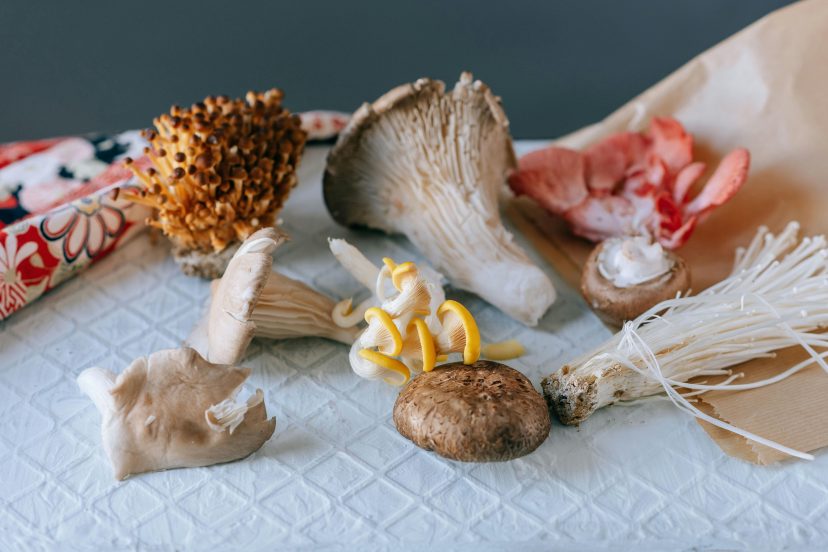
Oyster Mushrooms – These grow quickly and tolerate small mistakes.
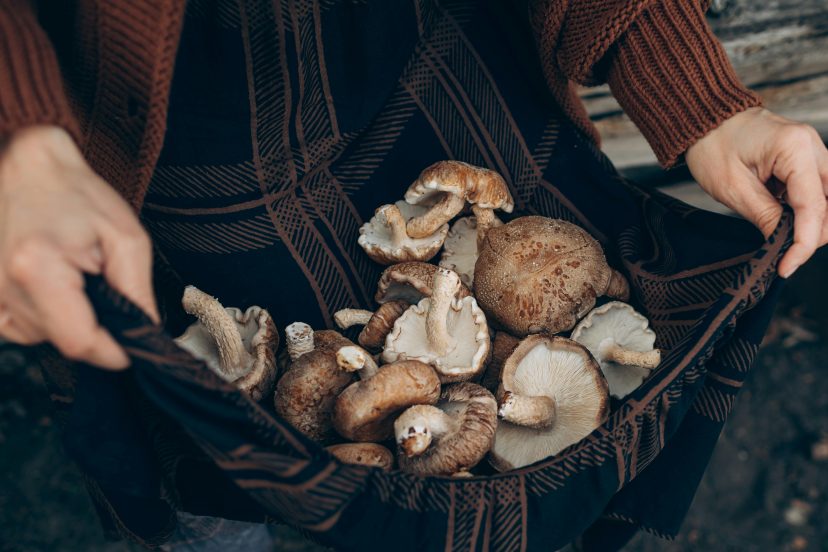
Shiitake Mushrooms – They produce rich flavor and store well.
Lion’s Mane Mushrooms – They offer unique texture and growing popularity.
Button Mushrooms – These remain one of the most familiar options.
Starting with one of these varieties increases your chances of success.
Choosing the Best Mushroom Variety for Home Cultivation
Each mushroom type offers different benefits.
Oyster Mushrooms
Best for beginners because they grow fast and adapt easily.
They tolerate temperature changes better than many species.
Shiitake Mushrooms
These mushrooms develop deeper flavor and longer shelf life.
These varieties can be grown successfully indoors or outside.
Lion’s Mane Mushrooms
This variety attracts attention for its potential cognitive benefits.
Many homesteaders enjoy growing it for both nutrition and novelty.
Button Mushrooms
These remain popular for everyday cooking.
They require slightly more controlled conditions but still grow reliably.
Essential Supplies for Mushroom Cultivation At Home
You don’t need expensive gear to get started. However, a few basic tools make the process smoother and more predictable.
Growing Medium
Also called substrate, this material feeds the mushrooms.
Common options include:
- Straw
- Sawdust
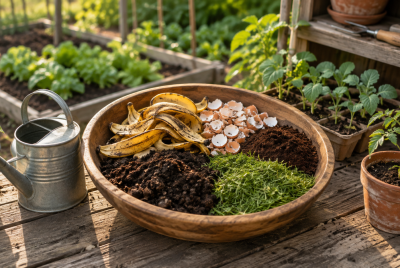
- Coffee grounds
- Compost
Each type supports different species.
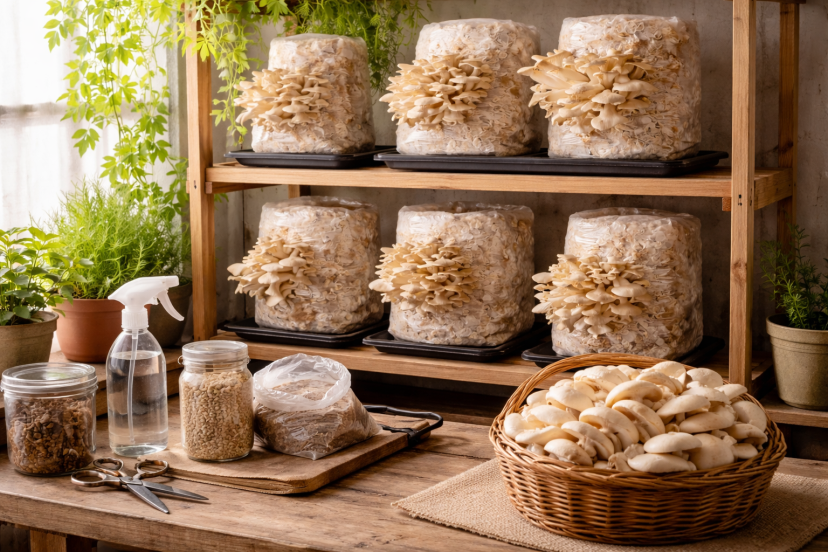
Containers or Grow Bags
These containers support the substrate as the mushrooms grow and mature.
Many beginners prefer grow bags because they simplify setup.
Temperature and Humidity Tools
Mushrooms depend heavily on stable conditions.
Helpful tools include:
Small adjustments can dramatically improve yields.
Step-by-Step Guide to Growing Mushrooms at Home
Growing mushrooms at home follows a predictable process. Once you understand the sequence, each step becomes routine. Focus on cleanliness, moisture, and steady conditions, and your chances of success increase quickly.
Step 1: Prepare the Growing Medium
The growing medium—also called the substrate—is the material that feeds the mushrooms. Common options include straw, sawdust, coffee grounds, or compost, depending on the mushroom variety.
Before adding mushroom spawn, the substrate must be pasteurized or sterilized. This step removes harmful bacteria and mold that compete with mushroom growth. Most home growers use heat, such as hot water or steam, to clean the material.
Allow the substrate to cool completely before moving to the next step. If it stays too hot, it can damage the mushroom culture.
Step 2: Inoculate with Mushroom Spawn
Mushroom spawn contains the living fungal culture that will grow into mushrooms. Think of it as the “seed” of the mushroom.
Mix the spawn evenly throughout the prepared substrate using clean hands or sanitized tools. Even distribution helps the fungus spread quickly and reduces the risk of contamination.
Once mixed, place the substrate into containers, jars, or grow bags and seal them. This creates a controlled environment where the mushroom culture can begin developing.
Step 3: Maintain Proper Growing Conditions
After inoculation, the mushrooms need stable conditions to grow.
Pay attention to these key factors:
- Temperature: Most mushroom species thrive in temperatures ranging from 60°F to 75°F (15–24°C)
- Humidity: Aim for 80% to 90% humidity
- Airflow: Provide fresh air to prevent mold and excess carbon dioxide
- Moisture: Mist lightly to keep the substrate damp, not soaked
Consistency matters more than perfection. Small daily checks usually prevent larger problems later.
Step 4: Harvest Your Mushrooms
Mushrooms are ready to harvest when the caps are fully formed but still slightly curved downward. Waiting too long can reduce quality and shelf life.
Cut the mushrooms at the base using sanitized scissors or a sharp knife. Avoid pulling them out, which can damage the growing surface.
After harvesting:
- Store mushrooms in the refrigerator
- Keep them dry and loosely covered
- Use within several days for best flavor
If you produce larger harvests, preserving food safely becomes important. Many homesteaders extend shelf life by drying, freezing, or canning their produce using proper preservation methods and reliable equipment.
Indoor vs Outdoor Mushroom Cultivation
Both approaches work well. However, each offers different advantages.
Indoor Growing
Benefits include:
- Better temperature control
- Year-round production
- Fewer pests
- Predictable results
Indoor growing suits beginners and small households.
Outdoor Growing
Outdoor systems rely more on natural weather conditions.
They often produce larger yields but require more patience.
Homesteaders with extra space often combine both methods.
Common Mistakes to Avoid When Growing Mushrooms
Even simple projects can fail without proper care. The good news is that many common mistakes can be avoided with simple adjustments.
Poor Sanitation
Contamination remains the most common problem.
Always clean tools and surfaces before handling substrate.
Incorrect Moisture Levels
Too little water slows growth.
Too much water encourages mold.
Consistent moisture keeps mushrooms healthy.
Lack of Airflow
Fresh air prevents harmful buildup of carbon dioxide.
Small ventilation adjustments can improve results quickly.
Why Mushroom Cultivation Supports Health and Sustainable Food Production
Mushroom cultivation at home offers real benefits beyond convenience. Research shows that mushrooms provide strong nutritional value while supporting efficient, low-waste food production—two priorities for many homesteaders.
Studies on the health benefits of edible mushrooms as functional foods confirm that mushrooms contain antioxidants, fiber, B vitamins, and essential minerals that support immune function and overall health. Researchers also note that mushrooms can help improve diet quality because they provide nutrients without requiring large growing spaces or intensive resources.
Mushroom cultivation also supports sustainability. Research on mushroom farming for environmental sustainability and food security explains that mushrooms can grow on agricultural byproducts such as straw, sawdust, and crop waste. This process converts unused materials into nutritious food while reducing waste and lowering environmental impact.
Mushrooms are efficient to grow, require minimal space, and produce reliable harvests. They fit well into small-scale food systems focused on self-sufficiency, resource efficiency, and consistent food production.
Conclusion
Starting with mushroom cultivation at home is a practical step toward growing your own food in a simple, manageable way. The process doesn’t require much space or complicated equipment, and once you establish a routine, it becomes reliable and easy to maintain. Many homesteaders appreciate how quickly mushrooms produce results and how well they fit into a self-sufficient lifestyle. With steady care and the right conditions, growing mushrooms at home can provide a dependable source of fresh food while building confidence in your ability to produce more of what you eat.
FAQs
Is mushroom cultivation at home safe for beginners?
Yes. Most beginners succeed with basic sanitation and proper moisture control. Starting with oyster mushrooms improves early success rates.
How much time does it usually take to grow mushrooms at home?
Most varieties grow within three to six weeks. Oyster mushrooms typically develop the fastest.
Do mushrooms need sunlight to grow?
No. Mushrooms grow best in low-light environments. They rely on nutrients in the substrate rather than sunlight.
What temperature is best for growing mushrooms?
Stable temperatures between 60°F and 75°F encourage proper mushroom development. However, specific varieties may require slightly different conditions.
Is it possible to grow mushrooms indoors throughout the entire year?
Yes. Indoor environments allow consistent temperature and humidity control, making year-round production possible.