How To Preserve Herbs From The Garden?
We may earn a commission for purchases made using our links. Please see our disclosure to learn more.
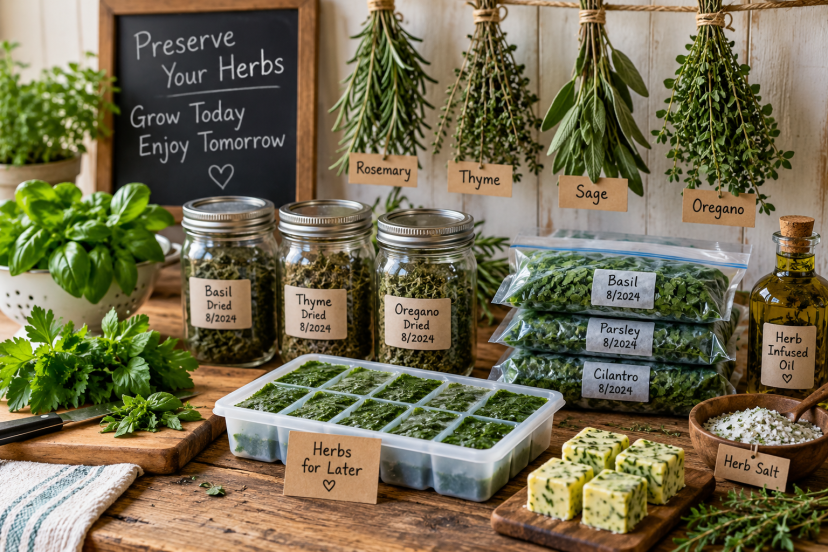
A productive herb garden can rapidly bury you under a mountain of basil, rosemary, mint, parsley, or thyme that you can’t possibly use fresh. Rather than allowing the surplus harvest to rot in the fridge or go to waste, you can preserve it for later. It’s pretty easy to learn how to preserve herbs from the garden. Some herbs are ideal for drying, while others retain their flavor better when frozen. You can also convert surplus herbs into seasoned salt, herb butter, or ready-to-use cooking portions. The key is to select the appropriate technique for each herb. Here’s how to preserve your harvest without making the process more complicated than it needs to be.
Harvest Herbs at the Right Time
The quality of preserved herbs starts in the garden.
For the best flavor, pick healthy leaves before the plant is covered in flowers. Herbs tend to have strong oils and aroma around this stage.
The National Center for Home Food Preservation recommends harvesting most herbs just before their flowers open and gathering them in the morning after the dew has dried.
Use clean scissors or garden pruners rather than pulling stems from the plant. Choose leaves that look healthy and skip anything with discoloration, insect damage, or signs of disease.
Bring the harvest inside soon after cutting. Leaving fresh herbs sitting in hot sunlight can cause them to wilt surprisingly fast.
Wash and Prepare the Harvest
Give freshly picked herbs a gentle rinse under cool running water to remove dirt and insects.
Shake off as much water as possible, then spread the herbs over a clean kitchen towel. Pat them dry and let the remaining surface moisture evaporate.
This step matters more when you plan to dry herbs. Extra moisture slows the process and may encourage mold.
Remove damaged leaves and woody stems as you work. If you are drying whole sprigs, however, you can leave the leaves attached until they are completely dry.
Air-Dry Sturdy Herbs
Air drying is probably the simplest preservation method if you grow herbs such as rosemary, thyme, oregano, or sage. If you’re learning how to preserve herbs from the garden, air drying is one of the easiest methods to start with.
Gather a few stems together and tie them loosely with kitchen string or a rubber band. Hang the bundles upside down somewhere dry with good airflow.
Avoid placing them next to a sunny window. Direct sunlight can fade the leaves and weaken some of their flavor.
Keep your bundles small rather than creating one large bunch. A tightly packed bundle holds moisture in the center and takes much longer to dry.
Once the leaves feel crisp and crumble easily between your fingers, strip them from the stems and place them in airtight containers.
Use a Dehydrator for Faster Drying
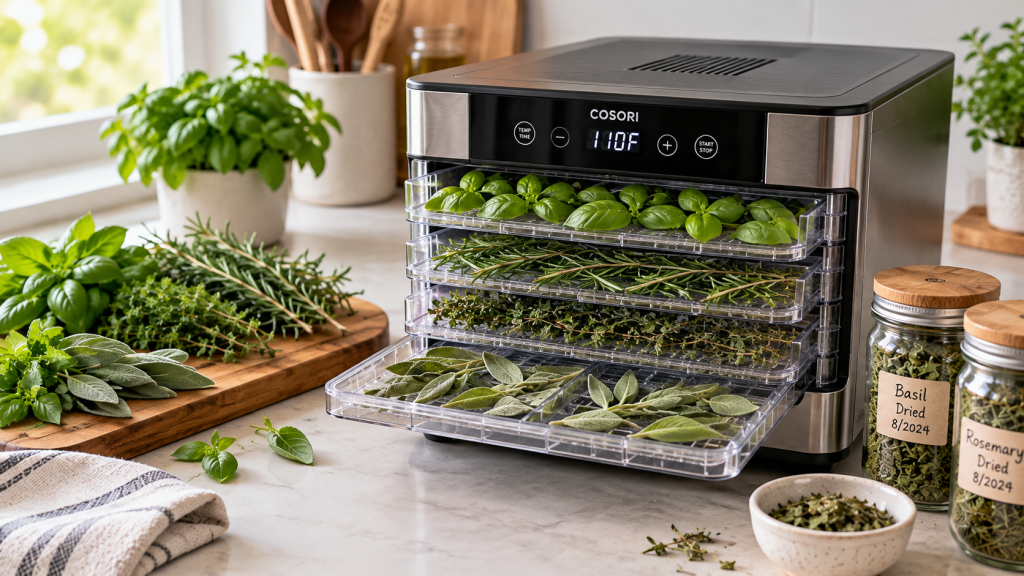
Air drying works well, but humid weather can slow things down. A food dehydrator gives you better control over temperature and airflow.
Spread the herbs in a single layer so air can move around them. According to home herb-drying guidance from the National Center for Home Food Preservation, a temperature of about 95°F to 115°F works well for most herbs.
Check the trays regularly since thinner leaves may dry faster than thicker stems.
Avoid turning the heat too high just to finish faster. A 2026 review of herb drying methods found that drying temperature and time can affect the aromatic compounds that give herbs their flavor and scent.
Freeze Tender Herbs
Not every herb tastes its best after drying. Knowing how to preserve herbs from the garden also means choosing freezing when delicate herbs need it.
Basil, parsley, cilantro, dill, and chives often keep more of their fresh character when frozen. The leaves will not stay crisp, but that usually does not matter if you plan to cook with them.
Rinse the herbs well, then let them dry completely before storing or preserving them. You can freeze small leaves whole or chop them first.
Place them in freezer-safe bags, press out excess air, and label each bag before freezing.
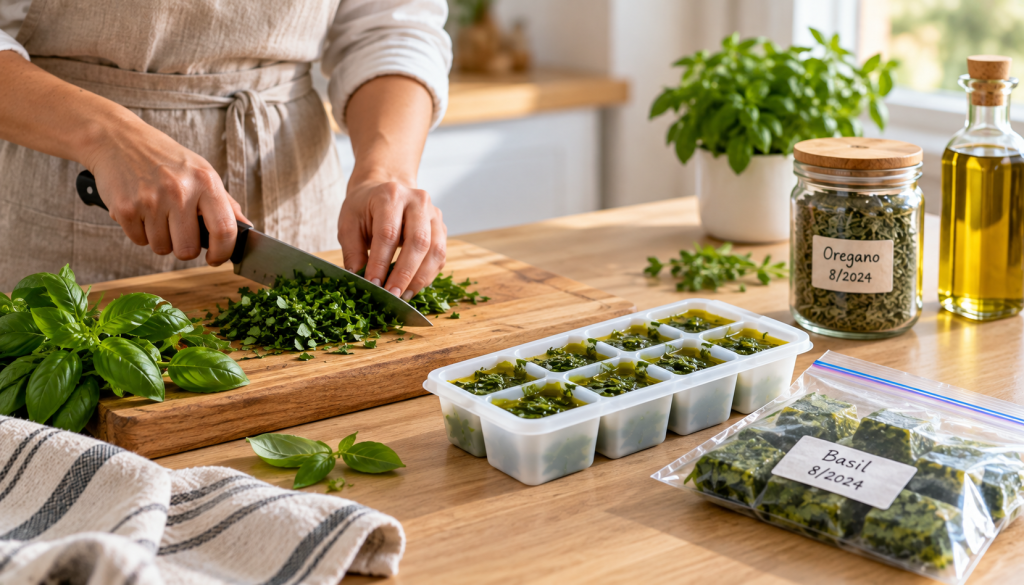
Another handy option is to place chopped herbs in an ice cube tray with a small amount of water. After the cubes are fully frozen, move them into a freezer-safe bag.
Frozen herbs become soft after thawing, so save them for soups, sauces, eggs, stews, and cooked dishes rather than garnishes.
Freeze Herbs in Oil or Butter
If you regularly cook with herbs, turning them into ready-to-use freezer portions can save time later.
Finely chop rosemary, basil, thyme, oregano, or sage and mix them into softened butter. Divide the mixture into small servings, then place them in the freezer.
You can also put chopped herbs into a freezer tray and add a little cooking oil.
Once everything freezes solid, move the cubes into a labeled freezer bag. Then you can toss one straight into a skillet, soup pot, or sauce whenever you need it.
Keep fresh herb-and-oil mixtures refrigerated or frozen rather than storing them on the counter.
Make Herb Salt
When the garden is producing faster than you can cook, herb salt is another easy way to use the excess.
Start with clean, dry herbs such as rosemary, thyme, sage, oregano, parsley, or chives.
Finely chop the leaves and mix them with coarse or kosher salt. Spread the mixture out and let it dry thoroughly before putting it into a jar.
Use herb salt on roasted potatoes, vegetables, eggs, chicken, soups, or homemade bread.
Because the mixture already contains salt, add it gradually when cooking. You can always sprinkle in more.
Store Dried Herbs Properly
Proper storage makes a big difference in how long dried herbs keep their flavor.
Wait until the herbs are completely dry and cool before putting them into containers. Even a small amount of leftover moisture can cause problems inside a sealed jar.
Choose airtight jars or containers and store them somewhere cool, dry, and dark.
A cool cupboard or pantry shelf away from heat is a good storage spot. Heat and sunlight can gradually weaken the aroma.
You may also want to keep the leaves mostly whole until you use them. Crushing releases their aroma, but it also exposes more surface area to air.
Mark each jar with the herb variety and the date it was harvested. That saves you from staring at three nearly identical jars six months later trying to remember which one is oregano.
Choose the Best Method for Each Herb
The easiest way to decide between drying and freezing is to think about how you normally use the herb. That’s really the key to how to preserve herbs from the garden without losing the qualities you enjoy most.
Rosemary, thyme, sage, and oregano dry very well and remain useful in soups, roasts, sauces, and marinades.
Basil, cilantro, parsley, dill, and chives are often better candidates for freezing because their fresh flavor changes considerably when dried.
Mint works either way. Dry it for tea or freeze it for drinks and cooking.
If you are working toward producing more of your own food, planning a self-sufficient backyard garden can also help you make better use of herbs, vegetables, and other productive plants throughout the year.
There is no need to preserve every herb the same way. A jar of dried thyme and a freezer bag full of basil cubes can happily share the same kitchen.
Recommended Products for Preserving Herbs
You do not need much equipment to get started, but a few tools can make bigger harvests easier to manage.
1. COSORI Food Dehydrator
A COSORI Food Dehydrator is useful when you want predictable drying without depending on the weather. Adjustable temperature controls are particularly helpful for delicate herbs that do better with gentle heat.
2. VIVOSUN Hanging Mesh Drying Rack
The VIVOSUN Hanging Mesh Drying Rack gives you several layers of drying space without taking up much counter space. It works well for herbs, flowers, and other small garden harvests that need steady airflow.
3. Ball Wide Mouth Mason Jars
Ball Wide Mouth Mason Jars are a straightforward choice for storing fully dried herbs. The wide opening makes filling and cleaning easy, and clear glass lets you quickly see what is inside.
4. FoodSaver Vacuum Sealing System
A FoodSaver Vacuum Sealing System can be useful if you freeze large amounts of herbs and garden produce. Removing excess air helps keep frozen food neatly packed and reduces the amount of freezer space taken up by bulky bags.
5. Souper Cubes Freezer Trays
Souper Cubes Freezer Trays make portioning herb butter, sauces, broth, and chopped herbs easier. When the portions are frozen solid, transfer them to a labeled freezer bag for storage.
Conclusion
Learning how to preserve herbs from the garden means you can keep using your harvest long after the growing season slows down. Dry rosemary, thyme, oregano, and sage for the pantry, freeze tender herbs such as basil and parsley, and use extra leaves for herb salt or freezer-ready cooking cubes. You do not need to preserve everything at once, either. Even saving a few small batches throughout the season can give you a useful supply of homegrown herbs for months.
FAQs
What is the simplest way to preserve herbs from the garden?
Drying is one of the easiest methods for rosemary, thyme, oregano, and sage. For tender herbs such as basil, parsley, cilantro, and chives, freezing often preserves their flavor better.
Should I wash herbs before drying them?
Yes. Rinse the herbs carefully with cool water, then dry them well before you begin the drying process. Allow the leaves to dry well on a clean towel before placing them in bundles or a dehydrator.
Is it better to freeze or dry basil?
Freezing is usually the better choice if you want basil to keep more of its fresh flavor. Frozen basil is great for soups, sauces, pesto, and other recipes where the leaves will be cooked.
How do I know when herbs are completely dry?
Fully dried herbs should feel brittle and break apart easily. Smaller stems should snap cleanly instead of flexing. The thinner stems should feel dry and break easily when you bend them. If the herbs still feel soft or flexible, give them more drying time.
Can I preserve several herbs together?
Yes. You can combine herbs if you regularly use them together. Rosemary, thyme, and sage make a useful savory blend, while mixed herbs can also be turned into seasoned salt. Keeping some herbs separate, however, gives you more flexibility when cooking.