
5 Ways To Preserve Eggs For Long-Term Storage
We may earn a commission for purchases made using our links. Please see our disclosure to learn more.
A productive flock can fill your egg basket faster than your household can empty it. That abundance is wonderful until fresh eggs start piling up in the kitchen. Learning how to preserve eggs helps you manage those seasonal surpluses, reduce food waste, and keep a dependable supply available when your hens slow down their laying. The key is choosing preservation methods that protect both quality and food safety. Some techniques keep eggs usable for several weeks, while others make it possible to store them for months or longer. Here are five practical methods worth considering, along with the supplies and precautions that make each one work.
1. Refrigerate Fresh Eggs for Extended Storage
Refrigeration is the easiest option when you want to preserve eggs without changing how you cook with them.
According to the USDA, eggs should remain refrigerated at 40°F (4°C) or below. Properly stored fresh shell eggs generally maintain good quality for approximately three to five weeks.
How to Store Fresh Eggs Properly
- Collect eggs regularly and discard cracked ones.
- Place clean eggs in cartons that protect their shells.
- Write the collection date on each carton.
- Store them on an interior refrigerator shelf rather than in the door.
- Use the oldest eggs first.
For backyard eggs, avoid unnecessary washing before storage, as improper washing can increase contamination risks.
Refrigeration is especially useful when your flock produces slightly more eggs than your family consumes each week.
If your homestead depends on solar power or batteries, choosing a reliable off-grid refrigerator can help maintain safe storage temperatures.
2. Freeze Whole Eggs for Future Cooking
Freezing is one of the most practical ways to preserve a large egg surplus without investing in specialized equipment.
You cannot simply place whole raw eggs in their shells inside the freezer. The contents expand during freezing and may crack the shells.
Instead, remove the shells and freeze the liquid eggs in measured portions.
How to Freeze Whole Eggs
- Crack each egg individually into a clean bowl.
- Check for unusual odors or appearances.
- Gently mix the yolks and whites without whipping in excessive air.
- Add salt or sugar according to a tested freezing procedure to reduce yolk thickening.
- Divide the mixture into freezer-safe containers or trays.
- Write the contents and preparation date on each container, then place it in a freezer that maintains a temperature of 0°F (-18°C) or colder.
The National Center for Home Food Preservation’s egg-freezing guidance recommends ½ teaspoon of salt or 1½ tablespoons of sugar per cup of whole eggs, depending on their intended use.
Three tablespoons of beaten egg mixture equal approximately one large egg.
For best quality, use frozen eggs within about one year. Defrost the eggs in the refrigerator, then make sure they are fully cooked before serving.
3. Freeze Egg Whites and Yolks Separately
Separating eggs before freezing makes sense when you regularly prepare recipes that require only one part of the egg.
Egg whites are useful for meringues and certain baked goods, while yolks add richness to custards, sauces, and homemade pasta.
Freezing them separately also prevents unnecessary waste when a recipe leaves you with extra whites or yolks.
Freezing Egg Whites
Separate the whites carefully, keeping them free from yolk contamination. Gently mix, strain if necessary, and divide into freezer-safe portions.
Egg whites generally freeze well without added salt or sugar.
Freezing Egg Yolks
Yolks require more preparation because freezing can make them unusually thick and gelatinous.
Gently stir the yolks and follow tested instructions for adding a measured quantity of salt or sugar before freezing.
Label each container clearly, especially if you are preparing some yolks for sweet recipes and others for savory dishes.
Thaw both whites and yolks in the refrigerator before cooking. This method gives homesteaders greater flexibility during baking and meal preparation.
4. Make Refrigerated Pickled Eggs
Pickling transforms hard-boiled eggs into a tangy, flavorful food that works particularly well for snacks, sandwiches, and salads.
It also extends their refrigerated storage life beyond that of ordinary hard-boiled eggs.
However, homemade pickled eggs are not shelf-stable and must remain refrigerated.
How to Pickle Eggs Safely
Start with a tested refrigerator-pickling recipe from a reliable food-preservation authority.
The basic process involves:
- Hard-boiling and peeling fresh eggs.
- Preparing and sterilizing suitable glass jars.
- Heating the specified vinegar, salt, and seasoning mixture.
- Placing the eggs in jars and covering them completely with hot brine.
- Closing the jars and refrigerating immediately.
According to the National Center for Home Food Preservation’s pickled egg recommendations, properly prepared refrigerated pickled eggs should be used within three to four months for best quality.
Never store homemade pickled eggs in a pantry or attempt to make them shelf-stable using untested canning methods.
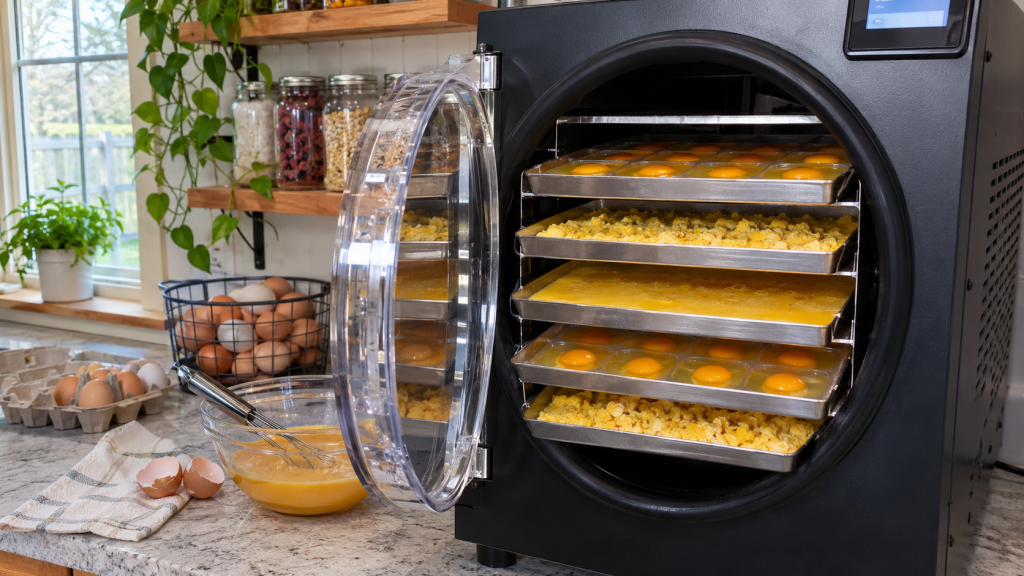
5. Freeze-Dry Eggs for Longer Storage
Freeze-drying offers an alternative for homesteaders who want to build a more substantial food reserve.
The process removes moisture under low pressure, helping preserve food while making it lighter and more compact.
Unlike ordinary freezing, properly processed freeze-dried food can be stored without continuous refrigeration when packaged correctly.
How Freeze-Drying Works
Eggs can be freeze-dried raw or cooked, although both require careful food handling.
Use a freeze-dryer suitable for food preparation and follow its manufacturer’s instructions. Check the finished product thoroughly for remaining moisture before packaging it in moisture-resistant, airtight containers.
Freeze-drying does not reliably destroy harmful microorganisms. Freeze-drying does not cook raw eggs, so they still require careful handling and thorough cooking once rehydrated.
University extension guidance also notes that validated home freeze-drying recipes remain limited, so you should not assume a particular homemade batch will remain safe for decades.
This method requires a substantial equipment investment, making it more practical for households already preserving large quantities of other foods.
How to Choose the Right Egg Preservation Method
The right approach depends on how many eggs you have, how long you need to store them, and the equipment available.
| Method | Storage Guidance | Best For |
| Refrigeration | About 3–5 weeks | Everyday cooking |
| Freezing whole eggs | Up to 1 year for best quality | Baking and scrambled eggs |
| Freezing separated eggs | Up to 1 year for best quality | Recipes requiring whites or yolks |
| Refrigerator pickling | 3–4 months for best quality | Snacks and salads |
| Freeze-drying | Depends on processing and packaging | Longer-term food reserves |
If your flock produces a moderate surplus, start with freezing. Consider freeze-drying only when the additional equipment and preparation costs make sense for your homestead.
Egg Preservation Mistakes to Avoid
Traditional preservation methods are not automatically safe simply because previous generations used them.
Water glassing, which involves submerging eggs in a lime or sodium silicate solution, is one example. Penn State Extension advises against this practice because of food-safety concerns.
Other mistakes include freezing eggs inside their shells, leaving pickled eggs unrefrigerated, and storing preserved eggs without dates.
Follow tested preservation instructions rather than relying on appearance or smell to determine whether stored eggs are safe.
Best Products for Preserving Eggs
These five supplies can make egg preparation, storage, and organization more manageable.
1. Souper Cubes 1-Cup Silicone Freezer Tray
A reusable silicone tray with a fitted lid that helps organize portions of beaten eggs before transferring the frozen blocks into freezer-safe packaging.
2. Ball Regular Mouth 32-Ounce Mason Jars
These glass jars are suitable for storing refrigerated pickled eggs when prepared according to tested instructions. They do not make homemade pickled eggs shelf-stable.
3. Refrigerator Thermometer
A compact digital thermometer that helps monitor refrigerator temperatures, making it easier to check whether your fresh eggs are being kept sufficiently cold.
4. FoodSaver Reusable Gallon Vacuum Zipper Bags
Reusable food-storage bags designed for compatible FoodSaver handheld vacuum sealers. They can help organize frozen egg portions, but vacuum sealing does not replace refrigeration or freezing.
5. Avery Printable Shipping Labels (8163)
These printable adhesive labels offer a convenient way to record preservation dates, portion sizes, and added ingredients. Protect labels from moisture and verify adhesion before using them on frozen containers.
Conclusion
Preserving eggs allows you to make better use of your flock’s seasonal production without letting valuable food go to waste. For most homesteaders, refrigeration and freezing provide the simplest starting points. Refrigerated pickling adds variety, while freeze-drying offers another option for households with suitable equipment. Begin by preserving a small batch, label everything clearly, and expand your storage routine as you gain experience.
FAQs
Can you preserve eggs without refrigeration?
Commercially processed, pasteurized dried eggs can be shelf-stable. Properly freeze-dried eggs may also be stored without refrigeration, but safe processing and packaging are essential. Water glassing is not a recommended substitute.
How long do frozen eggs last?
Properly preserved eggs stored continuously at 0°F (-18°C) or colder generally maintain their best quality for up to one year.
Is it safe to freeze eggs without removing their shells?
No. Shells can crack as the contents expand during freezing. Remove the shells and prepare the eggs before freezing.
Are homemade pickled eggs shelf-stable?
No. Homemade pickled eggs must remain refrigerated. There are no established safe home-canning procedures for storing them at room temperature.
What is the easiest way to preserve fresh eggs?
Refrigeration requires the least preparation. For a larger surplus, freezing beaten eggs in measured portions offers an affordable and convenient alternative.