Canning Tomatoes: Tips for Better Flavor & Safety
We may earn a commission for purchases made using our links. Please see our disclosure to learn more.
Canning tomatoes is one of the most practical skills a homesteader can learn. When done correctly, it preserves peak-season flavor and keeps your pantry stocked year-round. However, safety matters just as much as taste. Because tomatoes sit near the safe acidity threshold, proper processing and acidification are essential. In this guide, you’ll learn how to can tomatoes safely, boost their flavor, and avoid common mistakes that can compromise your jars.
Why Every Homesteader Should Learn to Can Tomatoes
Every homesteader values self-sufficiency, but real independence starts with practical skills. Canning tomatoes is one of the simplest and most valuable skills you can learn.
Tomatoes often ripen all at once. Without preservation, much of that harvest goes to waste. Canning allows you to capture peak-season flavor and store it safely for months. As a result, you turn short-term abundance into long-term stability.
It also strengthens food security. When prices rise or supply chains tighten, your pantry remains stocked. That confidence matters. In addition, buying tomatoes in bulk during peak season costs far less than purchasing canned versions year-round. You also control the ingredients — no added sugars or unnecessary preservatives.
Canning tomatoes builds momentum. Once you master it, other preservation skills feel more achievable. It goes hand in hand with other practical skills every homesteader should know.
Choosing the Best Tomatoes for Canning
Tomato selection changes everything.
Paste varieties like Roma, Amish Paste, or San Marzano contain less water and more flesh. Therefore, they create thicker sauces with minimal cooking down. They also separate less inside jars.
Slicing tomatoes like beefsteaks work too, but expect more liquid. If you use them, consider draining excess juice before packing jars.
When selecting tomatoes, aim for:
- Fully vine-ripened fruit
- Firm texture without mushy spots
- Deep, consistent color
- No mold, bruising, or insect damage
Avoid green shoulders or underripe tomatoes. They reduce flavor and can alter acidity balance.
In short, better fruit equals better jars.
Step-by-Step Guide to Canning Tomatoes Safely
Canning tomatoes follows a simple structure, but precision matters.
- Wash thoroughly under running water.
- Remove stems and core.
- Submerge the tomatoes in a pot of actively boiling water for roughly half a minute to one minute.
- Immediately move them into a bowl of ice water so the skins slip off easily.
- Peel completely.
- Quarter or crush depending on preference.
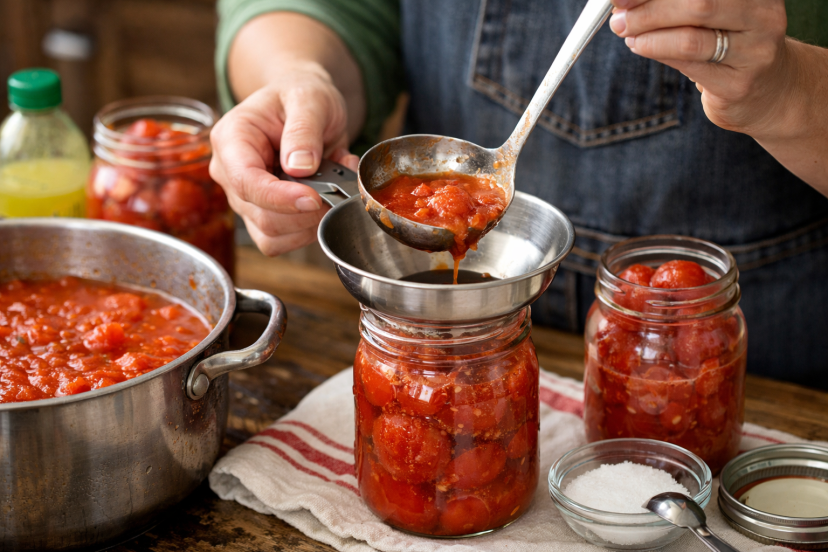
- Before filling, place bottled lemon juice or citric acid directly into each jar.
- Pack tomatoes while hot.
- Remove air bubbles using a non-metal utensil.
- Leave proper headspace (usually ½ inch).
- Process according to approved times.
Consistency in these steps prevents spoilage.
Water Bath vs Pressure Canning
Water bath canning works when tomatoes are properly acidified. It remains the most common method for plain crushed or whole tomatoes.
However, pressure canning provides additional safety margins. If you plan to add onions, garlic, peppers, or herbs in large quantities, pressure processing becomes the better choice.
A pressure canner heats food to temperatures higher than standard boiling water can reach. That extra heat destroys microorganisms more effectively.
Both methods work. The key is following tested timing charts precisely.
The Role of Acidity in Tomato Safety
This step is non-negotiable.
Modern tomato varieties fluctuate in acidity. Some test higher than safe levels for water bath processing without added acid. That creates risk for botulism, a rare but serious illness caused by Clostridium botulinum spores.
Research from the USDA confirms that adding bottled lemon juice standardizes pH levels below 4.6. That threshold prevents bacterial growth in sealed jars.
Always choose bottled lemon juice instead of fresh since it provides reliable, standardized acidity.
Measure and pour 1 tablespoon of commercially bottled lemon juice into every pint-sized jar before filling.
Add 2 tablespoons to each quart jar.
Simple step. Major protection.
How to Boost Flavor Before You Seal the Jar
Safety ensures shelf life. Flavor ensures enjoyment.
If you want next-level taste, try these enhancements:
Slow Simmer First
Cooking tomatoes gently before packing concentrates flavor and reduces watery separation later.
Roast for Depth
Roasting at 400°F caramelizes sugars. As a result, the final sauce tastes richer and slightly smoky.
Add Fresh Herbs Lightly
A small basil leaf or a sprig of oregano adds aroma without compromising safety.
Use Quality Salt
A pinch of sea salt enhances natural sweetness. However, avoid excessive amounts. You can always season later.
Focus on balance so the flavor improves without becoming overpowering.
Essential Tools for Safe and Easy Canning
Having proper tools reduces stress and prevents accidents.
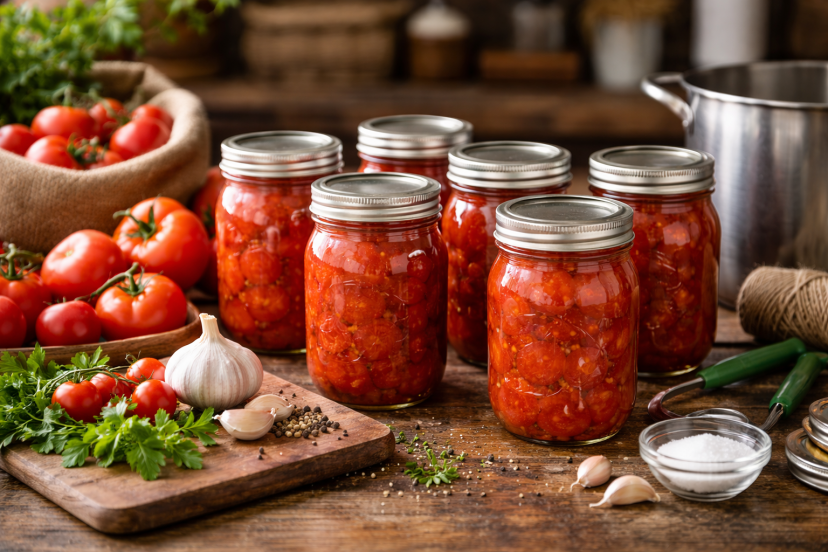
1. Ball Wide Mouth Glass Mason Jars – Trusted, durable, and easy to clean. Wide mouths simplify packing.
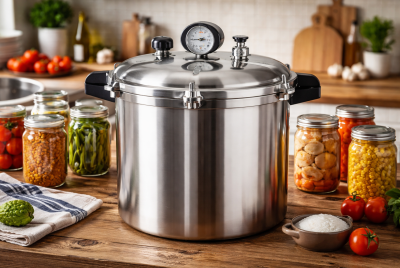
2. Presto 23-Quart Pressure Canner – Spacious enough for large batches. Reliable pressure control.
3. Granite Ware Water Bath Canner Kit – Includes rack and handles. Great for beginners.
4. Norpro Canning Jar Lifter – Strong grip prevents slipping when jars are boiling hot.
5. Digital Food Thermometer – Helps confirm safe internal temperatures during hot packing.
Quality equipment makes canning smoother and safer.
Common Mistakes That Ruin Canned Tomatoes
Even experienced homesteaders can slip up.
Here’s what to avoid:
Skipping Acid
Never assume tomatoes are acidic enough.
Incorrect Headspace
Too little space causes siphoning. Too much prevents proper sealing.
Overtightening Lids
Bands should be fingertip tight. Over-tightening blocks air release.
Reusing Old Lids
Lids lose sealing ability after one use.
Ignoring Seal Failures
If a lid flexes or pops, refrigerate immediately.
Pay attention during cooling. Listen for that satisfying “ping.” It signals a successful seal.
The Hidden Risks of Improper Canning
It’s easy to assume food safety warnings are overblown. After all, people have been canning tomatoes for generations. But research tells a consistent story: when shortcuts happen, problems follow.
A major U.S. study published in Clinical Infectious Diseases reviewed a decade of botulism cases and found that home-canned foods were a leading source of foodborne botulism in the United States. The issue wasn’t tomatoes themselves. It was improper processing.
Most outbreaks were linked to skipping key safety steps — especially acidification and correct heat timing. Tomatoes sit close to the safe acidity threshold. Without added bottled lemon juice or citric acid, the pH can rise above 4.6, which allows Clostridium botulinum spores to grow inside sealed jars.
A broader global review reached the same conclusion: many outbreaks traced back to home-preserved foods that weren’t processed correctly. The pattern was clear — process errors, not bad ingredients, caused the problem.
The reassuring part is that these safety concerns can be avoided.
Add acid. Follow tested processing times. Adjust for altitude. When guidelines are followed, home-canned tomatoes are considered safe and reliable.
This isn’t about fear. It’s about doing it right.
How Canning Tomatoes Builds Real Homesteading Confidence
Canning tomatoes builds more than pantry stock. It builds capability.
You learn patience. You learn food science. You learn how to preserve abundance instead of wasting it.
That confidence carries forward. Once you succeed with tomatoes, you approach other preservation methods with less hesitation.
Skill builds momentum.
And momentum builds independence.
Final Thoughts
Canning tomatoes isn’t complicated, but it does require care. When you choose ripe fruit, add the proper acid, and follow tested processing times, you create jars that are both flavorful and safe. More importantly, you build a dependable pantry skill that supports long-term self-reliance. Take your time, follow the guidelines, and enjoy the confidence that comes with preserving your own harvest.
FAQs
1. Is it necessary to add lemon juice when preserving tomatoes?
Yes. Bottled lemon juice ensures consistent acidity and safe preservation.
2. Can I can tomatoes without peeling them?
Peeling improves texture and reduces potential bacterial load. It’s strongly recommended.
3. How long do canned tomatoes last?
Best quality lasts 12–18 months when stored properly.
4. Is pressure canning necessary for tomatoes?
Not always. However, it’s recommended when adding low-acid ingredients.
5. Why do canned tomatoes separate?
Natural enzymes cause separation. Heating tomatoes quickly before packing reduces this effect.