Top 10 Goat Milking Equipment
We may earn a commission for purchases made using our links. Please see our disclosure to learn more.
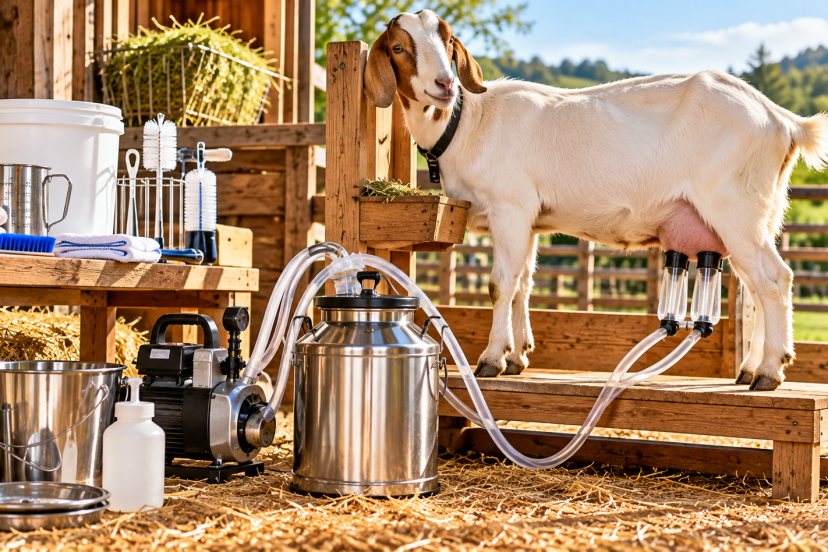
Milking goats gets much easier once you stop fighting with awkward buckets, slow filtering, or equipment that is difficult to sanitize. The right goat milking equipment can shorten your routine, keep fresh milk cleaner, and make daily milking considerably less stressful. This guide covers both powered equipment and practical accessories. Whether you milk one Nigerian Dwarf by hand or manage several does with a portable machine, these picks cover the tools that can make the biggest difference.
Our Top Picks
| Product | Best For | Key Feature | Rating |
| VEVOR 3L Cordless Goat Milking Machine | Small herds | Rechargeable portable pump | ★★★★⯪ |
| 12L Milking Machine | Multiple animals | Large stainless steel bucket | ★★★★☆ |
| Lindy’s 1-Gallon Stainless Steel Milk Jug | Hand milking | Seamless stainless construction | ★★★★⯪ |
| Ken-Ag 6-1/2″ Milk Filter Discs | Everyday filtering | Commercial-style disposable filters | ★★★★★ |
| OXO 5-Quart Milk Strainer | Larger batches | Wide stainless steel strainer | ★★★★☆ |
| Cotton Farm Grade 100 Cheesecloth | Fine filtering | Ultra-fine reusable cotton | ★★★★⯪ |
| Toncoo 5-Inch Funnel & Filter | Transferring milk | 200-mesh removable filter | ★★★★⯪ |
| Q’mark Teat Dip Cups | Udder hygiene | Non-reflow two-chamber design | ★★★★☆ |
| YMJOINMX 5L Stainless Milk Can | Milk transport | Covered stainless container | ★★★★⯪ |
| THE PARDAL STORE Organic Strainer Bag | Reusable filtering | 14 × 14-inch cotton filter | ★★★★⯪ |
1. VEVOR 3L Cordless Goat Milking Machine

The VEVOR 3L is a useful step up from hand milking when you only have one or two dairy goats. Its compact stainless steel collection bucket and rechargeable battery let you milk without keeping the setup next to an electrical outlet.
The smaller bucket also makes the entire system easier to carry than high-capacity milkers. Its adjustable setup is particularly useful when different goats tolerate slightly different suction levels. Current product data shows strong feedback for ease of use, although long-term durability naturally matters more with a powered machine than with simple hand-milking equipment.
Key features: 3L stainless steel bucket, rechargeable battery, two teat cups, portable pulsation system
Best for: One or two goats and mobile milking setups
Pros: Cordless operation; compact footprint; enclosed milk collection; relatively easy setup
Cons: Small capacity; more parts to clean than hand milking
Why we recommend it: It provides the convenience of powered milking without forcing a small homestead to buy a bulky commercial-size machine.
2. 12L Rechargeable Milking Machine

If three liters feels restrictive, this 12L system gives you far more room before the milk container needs emptying. It uses a food-grade stainless steel bucket, four teat cups, and a rechargeable battery designed for portable use.
The larger capacity makes more sense for people milking several animals or keeping both cows and goats. Reviews suggest owners appreciate the adjustable suction, although some animals may require the lowest setting for comfortable milking.
Key features: 12L stainless bucket, rechargeable battery, four teat cups, adjustable suction
Best for: Larger home dairies and multiple animals
Pros: Generous capacity; battery powered; versatile teat-cup setup
Cons: Bulkier than a compact goat-only unit; takes longer to wash thoroughly
Why we recommend it: It gives expanding homesteads useful capacity without moving all the way to a large wheeled commercial system.
3. Lindy’s Stainless Steel 1-Gallon Milk Jug

Powered machines aren’t necessary for everyone. If you prefer hand milking, Lindy’s stainless steel jug is one of the simplest pieces of equipment to add to your setup.
Its seamless construction avoids unnecessary interior joints, while the lid and swivel handle make fresh milk easier to carry after milking. The Amazon-linked product data shows more than 1,000 ratings, making it one of the more established products in this roundup.
Key features: One-gallon capacity, stainless steel construction, fitted lid, swivel handle
Best for: Hand milking and carrying fresh milk
Pros: Easy to wash; durable; covered storage; convenient handle
Cons: Opening may be narrower than an open milking pail
Why we recommend it: It’s a straightforward, long-lasting option for anyone who wants fewer plastic surfaces around fresh milk.
4. Ken-Ag 6-1/2-Inch Milk Filter Discs

Fresh milk should be filtered promptly, and Ken-Ag’s disposable filter discs simplify that part of the routine. The 6-1/2-inch non-gauze filters are designed for compatible milk strainers and are commonly used for removing hair and other visible debris.
They are made for fast liquid flow rather than improvised filtering with paper towels or loosely woven cloth. Amazon-linked product data shows a strong rating and more than 500 customer ratings.
Key features: 6-1/2-inch diameter, non-gauze filter media, 100-pack
Best for: Regular dairy-goat milking
Pros: Fast filtering; disposable; consistent size; convenient bulk pack
Cons: Requires a compatible strainer; recurring consumable cost
Why we recommend it: Dedicated milk filters are cleaner and considerably more convenient than improvising a filter every morning.
5. OXO 5-Quart Stainless Milk Strainer

The OXO milk strainer is built for people processing more than a small jar at a time. Its broad 12.5-inch top provides a generous target when pouring, while the narrower bottom fits into larger milk cans.
The 304-grade stainless steel body is easier to sanitize than many plastic alternatives, and the screen locks into place while you pour. The main drawback is size: this is better over a milk can than a narrow gallon jar.
Key features: Approximately five-quart capacity, stainless steel body, locking screen
Best for: Several goats or larger batches
Pros: Stable; large opening; durable construction; easy to rinse
Cons: Too large for many small jars; takes more storage space
Why we recommend it: It solves one of the most annoying parts of handling larger volumes—trying to pour fresh milk through an undersized strainer.
6. Cotton Farm Grade 100 XL Cheesecloth

For especially fine filtering, Cotton Farm’s Grade 100 cheesecloth provides a tightly woven, reusable option. The 36 × 36-inch sheet gives you enough material to fold, line a strainer, or adapt it to different containers.
It is made from unbleached cotton and can be washed and reused. Current Amazon product tracking shows thousands of reviews, making it a much more established option than many specialty dairy filters.
Key features: Grade 100 weave, 36 × 36 inches, unbleached cotton, reusable
Best for: Fine filtering and cheesemaking
Pros: Very fine weave; washable; versatile; inexpensive
Cons: Needs thorough washing and drying between uses
Why we recommend it: It’s an affordable backup even if you normally use disposable milk filter discs.
7. Toncoo 5-Inch Stainless Steel Funnel With Filter

Transferring filtered goat milk into bottles or jars can create an unnecessary mess. Toncoo’s wide stainless steel funnel includes a removable 200-mesh filter that lets you pour and filter in one step.
Its five-inch opening gives you more room than a standard kitchen funnel, and the stainless steel construction handles repeated cleaning well. Amazon-linked product data shows thousands of customer reviews.
Key features: Five-inch stainless funnel, removable 200-mesh filter, cleaning brush
Best for: Filling milk bottles and jars
Pros: Wide opening; reusable filter; durable; compact
Cons: Filter can drain slowly if milk contains substantial debris
Why we recommend it: It’s especially useful for small batches where a full-size dairy strainer feels excessive.
8. Q’mark 2-Pack Teat Dip Cups

Good milking equipment isn’t only about collecting milk. Udder and teat hygiene also deserves a dedicated place in your routine.
Q’mark’s two-chamber cups use a non-reflow design intended to reduce the amount of used solution returning to the lower reservoir. The 300ml cups also include a clip, which is handy when you’re moving between animals.
Key features: Two 300ml cups, two-chamber design, non-reflow operation, carrying clip
Best for: Pre- or post-milking teat-care routines
Pros: Inexpensive two-pack; easy to refill; compact
Cons: Plastic construction; seals and rims need regular inspection
Why we recommend it: It makes a consistent teat-care routine easier than trying to apply solution from an open container.
9. YMJOINMX 5L Stainless Steel Milk Can
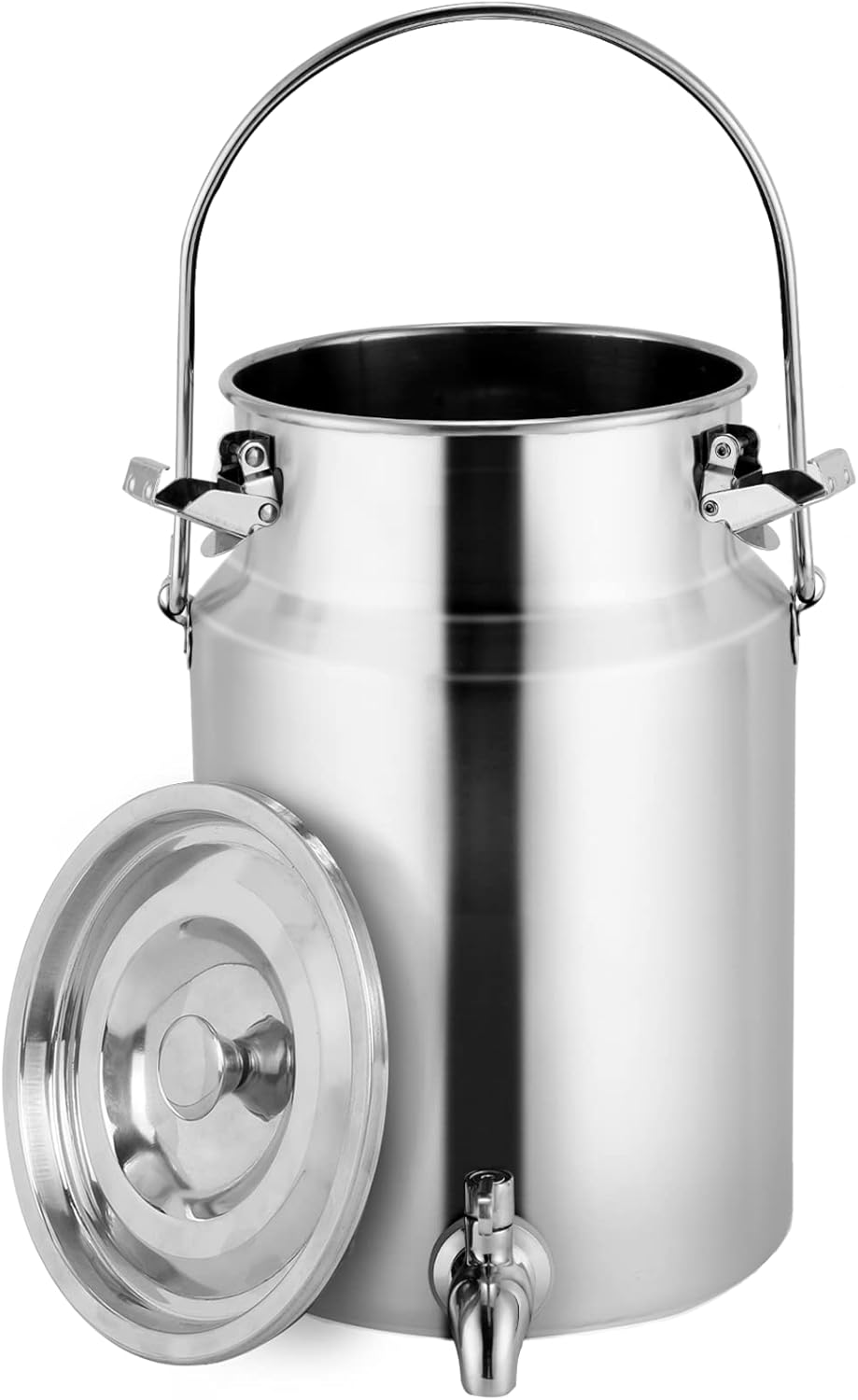
The YMJOINMX 5L can works well between milking and refrigeration when you need a covered container that is more substantial than a glass jar.
Its stainless steel body, carrying handle, and lid make it suitable for moving fresh milk from the barn to the kitchen. The five-liter size is also manageable when full, unlike oversized dairy cans that quickly become heavy.
Key features: Five-liter capacity, stainless steel body, lid, carrying handle
Best for: Transporting freshly collected milk
Pros: Covered container; reusable; easy to carry; corrosion-resistant material
Cons: More expensive than a simple plastic bucket; relatively modest capacity
Why we recommend it: It provides a practical middle ground between a small jar and an oversized commercial milk can.
10. THE PARDAL STORE Organic Cotton Strainer Bag

A reusable strainer bag is worth keeping around even if it isn’t your primary milk filter. This 14 × 14-inch cotton bag has a fine 0.5mm mesh and reinforced seams, giving you a large filtering surface for milk, whey, or cheesemaking.
Its size makes it especially convenient when working with a bowl or wide container rather than a narrow bottle. It also has several thousand customer ratings on Amazon-linked product data.
Key features: 14 × 14-inch cotton bag, 0.5mm mesh, reusable construction
Best for: Reusable filtering and dairy processing
Pros: Large; washable; fine filtration; no disposable filters required
Cons: Requires careful washing and complete drying after use
Why we recommend it: It’s a versatile low-cost accessory that can serve as a backup filter and later handle cheesemaking jobs.
How to Choose Goat Milking Equipment
Start with the number of goats you actually milk. One or two does usually don’t justify an oversized machine, especially once you account for assembly and cleaning. A stainless pail, reliable filter, and good sanitation equipment may be faster overall.
For larger herds, powered pulsation equipment becomes more attractive because repetitive hand milking takes considerably more time. Prioritize adjustable suction, replaceable tubing, easy-to-clean milk-contact surfaces, and a bucket large enough for your normal session.
Also think about your wider homestead setup. If you’re still building livestock infrastructure, this guide to starting a homestead from scratch offers a useful framework for adding animals gradually.
Final Thoughts
The best goat milking equipment is the gear that makes your everyday routine cleaner and simpler rather than more complicated. Small herds may be perfectly served by a stainless milk pail, proper filters, and basic sanitation tools, while several lactating does can make a portable milking machine worth the extra cleaning and maintenance. Choose equipment around your herd size, milk volume, and available workspace, and prioritize washable food-contact surfaces over unnecessary features.
FAQs
What equipment do I need to milk a goat?
At minimum, you need a clean milk container, udder-cleaning supplies, and a suitable milk filter. A milking stand, teat dip cup, stainless steel strainer, and dedicated storage container can make the routine easier.
Is a goat milking machine worth buying?
It can be worthwhile if you milk several goats daily, have limited hand strength, or want to shorten repetitive milking sessions. For one small doe, hand milking may still be quicker once machine cleanup is considered.
What size milk bucket is best for goats?
A one-gallon container is sufficient for many small home setups. Larger herds may benefit from five- to 12-liter containers so you don’t have to stop midway through milking to empty the bucket.
Should goat milk be filtered after milking?
Yes. Filtering fresh milk helps remove hair and visible debris that may enter the container during milking. Dedicated dairy filter discs, fine strainers, or properly cleaned filter cloths are common options.
Is stainless steel better than plastic for goat milking equipment?
Stainless steel is popular because it is durable, nonporous, and easy to wash thoroughly. Plastic equipment can still be useful, particularly for teat dip cups and tubing, but worn or scratched milk-contact surfaces should be replaced.