How To Snake-Proof A Chicken Coop?
We may earn a commission for purchases made using our links. Please see our disclosure to learn more.
Finding a shed snakeskin near the nest boxes is enough to make any chicken keeper inspect every board twice. Learning how to snake-proof a chicken coop does not require harsh chemicals or elaborate traps. You need to close small entry points, remove easy meals, and make the coop less inviting.
Snakes may visit because they smell rodents, eggs, or young birds. They also use quiet, shaded spaces as shelter. A secure coop tackles all three attractions without harming useful snakes elsewhere on your property.
Why Snakes Get Into Chicken Coops
A snake usually follows food. Spilled grain attracts mice, mice attract snakes, and eggs or small chicks may become an additional meal.
Coops also develop entry points as wood shrinks, soil settles, and doors sag. A gap beneath a threshold or beside a pipe can be easy to miss. Because some snakes use very small openings, treat every gap about 1/4 inch wide as a possible entrance.
According to Missouri Extension’s snake exclusion guidance, property owners should check structures for cracks and openings that are 1/4 inch wide or larger.
Begin With a Thorough Coop Inspection
Once you understand how to snake-proof a chicken coop, the first step is checking every wall, vent, door, and floor edge for small openings. Inspect the coop during daylight, then repeat the check after dark with a flashlight. Look for light around walls, corners, vents, doors, and the roofline.
Pay special attention to:
- Door bottoms and pop-hole tracks
- Ventilation openings
- Gaps around wiring and pipes
- Loose siding or rotted floorboards
- Corners where the coop meets the run
- Burrows beneath the foundation
Mark each opening with chalk or painter’s tape. That prevents the classic homestead mistake of noticing six gaps and repairing only the three you remember.
Seal Openings With Durable Materials
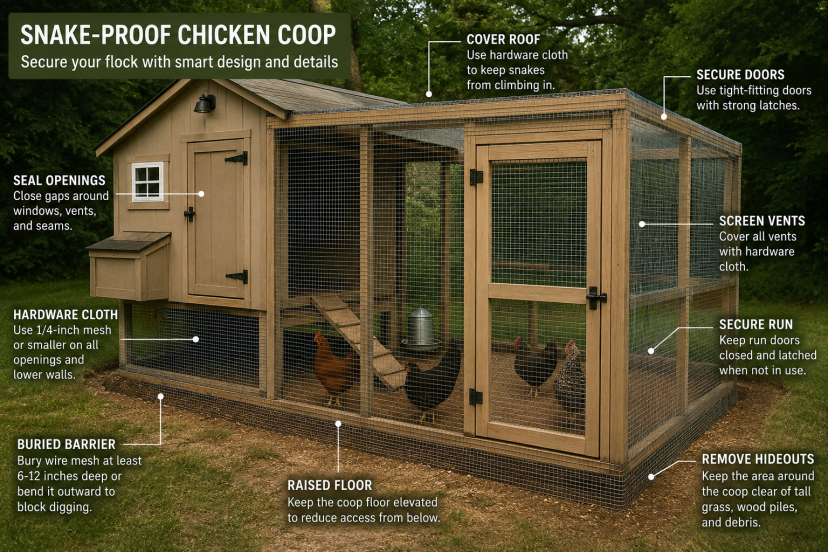
Use galvanized hardware cloth with 1/4-inch mesh or smaller on vulnerable openings. Chicken wire can contain birds, but its larger, flexible openings do not offer the same snake protection.
Cut the mesh so it overlaps sound wood by at least two inches. Attach it with exterior screws and fender washers or heavy poultry staples. Lightweight staples may loosen as wood expands and contracts.
Use caulk for narrow seams around trim and wiring. For larger holes, place metal mesh or sheet metal behind the repair before adding sealant. Foam alone is not a dependable structural barrier.
Missouri Extension recommends hardware cloth or sheet metal for wooden buildings and caulk around doors, windows, pipes, and wiring.
Tighten Doors, Pop Holes, and Vents
A door that “mostly closes” is still an opening. Adjust hinges, replace warped boards, and install a solid threshold. Add a metal-backed door sweep when carpentry alone cannot correct the bottom gap.
Latches should pull doors firmly against the frame. Check automatic coop doors regularly because bedding, dirt, or a bent track can prevent a complete seal.
Do not block ventilation. Instead, cover vents with securely fastened hardware cloth. The goal is screened airflow, not a sealed box.
Secure the Run From Ground to Roof
Knowing how to snake-proof a chicken coop also means protecting the run, since snakes may enter through gaps near the ground or climb unsecured fencing. Cover the lower run walls with small-mesh hardware cloth, especially around corners and gates. Extend the barrier below ground or bend it outward into a horizontal apron, then pin and bury it.
Oklahoma State University’s poultry predator guide recommends properly built fencing, a covered run, buried lower fencing, and tight-fitting screened doors and windows. A secure roof also prevents snakes and other climbing predators from entering from above.
Keep gates square and close-fitting. Add a treated-wood sill or paver threshold if shifting soil repeatedly creates a gap.
Control Rodents and Secure Feed
Rodent control is part of snake control. Store feed in a tightly closed metal container, sweep spilled grain, and avoid leaving full feeders outside overnight. Repair rodent holes rather than filling them with loose soil.
Gather the eggs each day and clear away any cracked shells. If you keep mixed poultry, the same secure-feed and nighttime-housing habits also help when raising ducks on a small homestead.
Missouri Extension notes that yard cleanup and sealed feed storage reduce rodent habitat and a major food source for snakes. Oklahoma State also warns that mice and rats damage poultry structures and encourage other predators to enter.
Remove Hiding Places Around the Coop
Keep grass short and trim low branches. Move lumber, roofing sheets, unused cages, rocks, and stacked pots away from the enclosure. Raise firewood and building supplies on racks.
You do not need to strip the homestead bare. Simply create a visible, uncluttered zone around the coop.
Extension guidance recommends removing tall weeds, brush, boards, rock piles, and other sheltered areas that attract snakes and rodents.
Follow a Five-Minute Evening Routine
Before dark:
- Collect remaining eggs.
- Remove or secure feed.
- Confirm every bird is inside.
- Test doors and latches.
- Scan the floor, nests, and run edges.
Once a week, inspect mesh fasteners and door alignment. Check again after storms, flooding, digging activity, or repairs.
Fresh soil, bent wire, or a new strip of daylight beneath a wall may reveal a problem before a snake gets inside.

Do Not Depend on Snake Repellents
Odor-based granules, sulfur products, essential oils, and electronic devices may sound easier than repairing a coop. However, results can vary with weather, species, placement, and maintenance.
Even registered snake repellents may fail under real-world conditions.
Your main defense should remain small-mesh screening, solid door seals, rodent control, and habitat cleanup. Physical repairs keep working after rain and do not depend on a snake disliking a particular smell.
What to Do If You Find a Snake
Keep children and pets away, and give the animal space. Do not handle it when you cannot confidently identify the species.
Contact animal control, a licensed wildlife professional, or an experienced snake remover when the snake may be venomous or is trapped in a difficult area.
After removal, inspect the exact location before returning the flock. Look for loose mesh, disturbed soil, open doors, or other entry points. Extension guidance recommends getting experienced help when you cannot safely remove a snake yourself.
Practical Tools and Materials for Securing Your Coop
1. Metamesh 1/4-Inch Galvanized Hardware Cloth
Metamesh hardware cloth works well for covering vents, reinforcing the lower walls of a run, and blocking small openings around the coop.
The 1/4-inch mesh helps stop slender snakes from squeezing through. For areas that may also face pressure from raccoons, dogs, or other larger predators, pair it with sturdy framing, screws, and washers.
2. Arrow T50 Heavy-Duty Staple Gun
The Arrow T50 staple gun makes it easier to hold hardware cloth in place while you secure it properly.
It is especially handy for quick repairs and awkward corners. However, staples should act as temporary support rather than the only fastener on exterior panels. Add screws and wide washers for a stronger, longer-lasting hold.
3. Great Stuff Pestblock Smart Dispenser
Great Stuff Pestblock foam can help fill narrow cracks around pipes, cables, trim, and other small utility openings.
Use it alongside metal mesh or another solid backing. Foam on its own can be damaged or pushed aside, so it should not replace hardware cloth, sheet metal, or sound lumber.
4. M-D Building Products Aluminum Door Sweep
The M-D 69609 aluminum door sweep can help close the gap beneath a full-size coop door.
Its flexible rubber edge sits against the threshold and blocks openings up to about 3/8 inch. Measure carefully before installation and check that the door still opens smoothly without leaving gaps at either corner.
5. Crescent Wiss M3R Aviation Snips
Crescent Wiss M3R aviation snips make it easier to cut hardware cloth to fit vents, doors, corners, and run panels.
The serrated blades grip wire well, while the spring-loaded handles reduce hand strain during larger projects. Always wear work gloves, since freshly cut mesh can leave sharp edges.
Conclusion
Learning how to snake-proof a chicken coop comes down to removing access, food, and shelter. Cover openings with small-mesh hardware cloth, tighten doors, protect the run, control rodents, and keep the surrounding area visible. Maintain those repairs with a quick evening check and a deeper monthly inspection. That routine protects eggs, chicks, and adult birds without treating every snake on the homestead as an enemy.
FAQs
Can snakes get through chicken wire?
Yes. Many chicken-wire openings are large enough for slender or young snakes, and the wire bends easily. Use 1/4-inch hardware cloth on vulnerable sections of the coop and run.
How small should gaps be in a snake-proof coop?
Close every gap that is 1/4 inch wide or larger. In areas with particularly small snake species, consider using 1/8-inch mesh on low openings and vents.
Should I bury hardware cloth around the chicken run?
Yes. Bury the lower edge or install an outward-facing apron to block access at ground level. Inspect it again after heavy rain, flooding, or digging activity.
Do chickens keep snakes away?
Do not depend on chickens as snake control. Some birds may mob a small snake, while others panic or become prey. A secure structure is much safer.
Will keeping mice out help prevent snakes?
Yes. Feed spills and rodent nests create a steady food source for snakes. Secure feed, remove clutter, and repair rodent entry points as part of the same prevention plan.