How to Freeze Tomatoes and Save Your Harvest
We may earn a commission for purchases made using our links. Please see our disclosure to learn more.
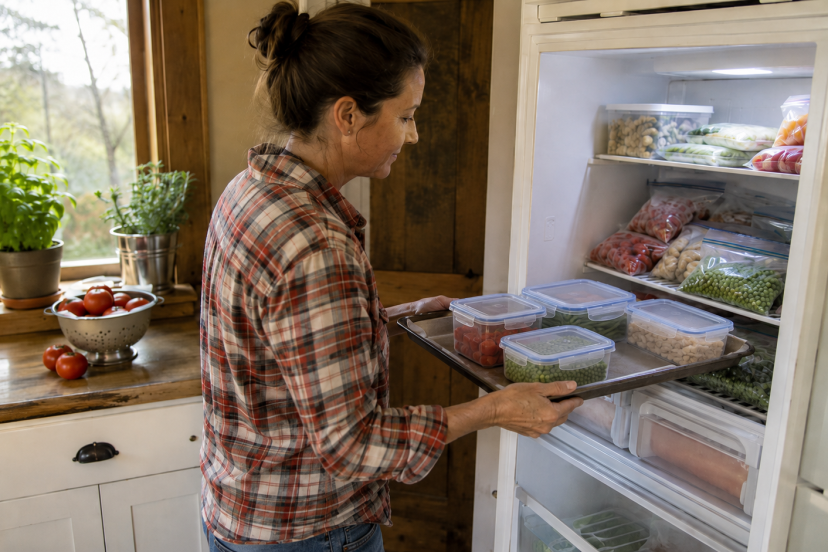
Tomatoes have a funny way of ripening all at once, don’t they? One day you have a few on the vine, and the next, your counter looks like a mini farmers market. If you want to learn how to freeze tomatoes, the process is simple. You can freeze them whole, chopped, or turned into sauce, then use them later in soups, chili, stews, and pasta dishes. Below, you’ll learn the easiest ways to save your harvest before it goes soft.
Why Freezing Tomatoes Is Worth It
Freezing tomatoes saves time, money, and garden effort. When tomatoes ripen faster than you can eat them, freezing keeps them from going soft on the counter or ending up in the compost pile.
It also gives you flexibility. You can freeze tomatoes whole when you feel tired, chop them when you have a little more energy, or turn them into sauce when you want ready-to-use meal starters.
For homesteaders, this matters. A good harvest should stretch beyond one season. If you enjoy planning your food supply around the garden calendar, you may also like this guide to creating a year-round garden so fresh food does not feel limited to one short growing window.
Best Tomatoes to Freeze
You can freeze almost any ripe tomato, but some types work better than others.
Roma, plum, San Marzano, and similar dense tomatoes freeze especially well because they have more flesh and less juice. They make thicker sauces and less watery soups.
Beefsteak tomatoes also freeze well, especially for sauce, chili, and stews. Cherry tomatoes can go straight into freezer bags and later into roasted sauces, skillet meals, or soups.
Choose tomatoes that feel ripe, firm, and deeply colored. Skip tomatoes with mold, sour smells, bruised soft spots, or signs of spoilage. Freezing preserves quality, but it does not magically fix bad produce.
What You Need Before You Start
You do not need fancy equipment to freeze fresh tomatoes. However, a few basics make the job much easier.
You will need:
- Fresh ripe tomatoes
- A sharp knife
- Cutting board
- Freezer bags or freezer-safe containers
- Permanent marker or freezer labels
- A baking sheet for flash-freezing chopped tomatoes
- Optional tomato corer
- Optional vacuum sealer
Before freezing, wash the tomatoes under cool running water. Then dry them well. Extra surface water can create more ice crystals, which may affect texture.
Also, label every bag. I know it feels obvious now, but three months later every red freezer brick looks suspiciously alike.
How to Freeze Tomatoes Whole
Freezing whole tomatoes is the lazy gardener’s dream, and honestly, I respect it.
Wash the tomatoes first, then pat them dry. After that, remove the stems and trim away any soft or damaged areas. You can core them now, or wait until later.
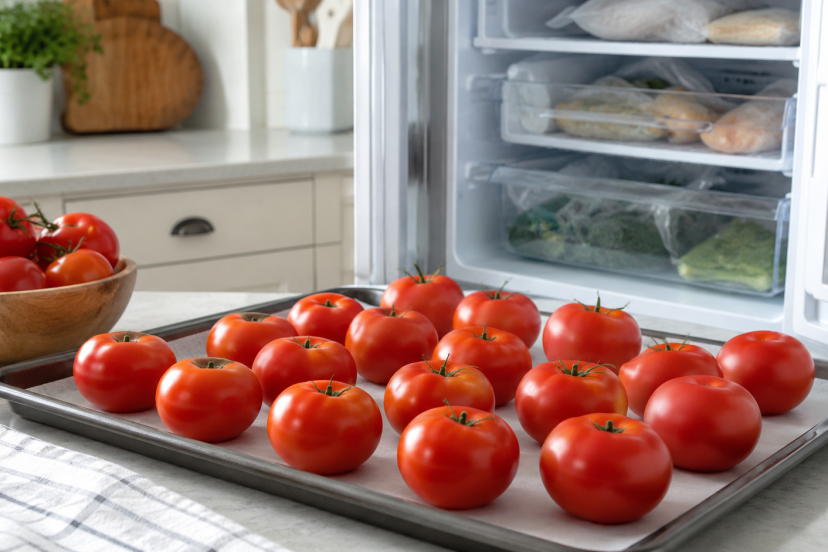
Arrange the tomatoes in one even layer on a baking sheet. Freeze them until firm. Then move them into freezer bags or containers. Push out the extra air, close the bag tightly, add a label, and place it in the freezer.
You can also skip the tray and place tomatoes directly into bags. However, flash-freezing keeps them from sticking together in one giant tomato boulder.
When you need them, run frozen tomatoes under warm water for a few seconds. The skins often slip off easily. Then drop them into soups, sauces, stews, or chili.
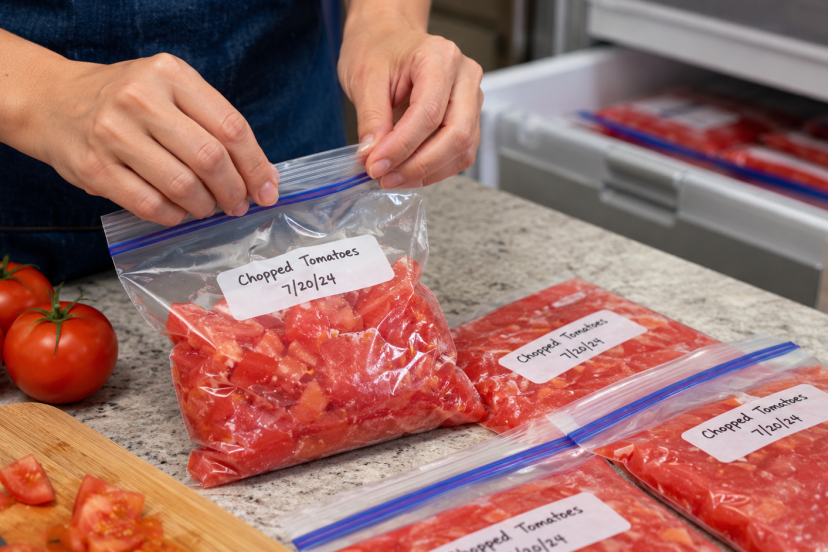
How to Freeze Chopped Tomatoes
Chopped tomatoes take a little more prep, but they save time later.
First, wash and dry the tomatoes. Remove the core. Then chop them into pieces. You can peel them if you want a smoother texture, but it is not required for most cooked recipes.
Spread the chopped tomatoes on a parchment-lined baking sheet. Freeze until solid. After that, transfer them into freezer bags.
This method lets you scoop out only what you need. It works well for weeknight meals when you want a handful of tomatoes without thawing a full bag.
For best results, pack chopped tomatoes in recipe-sized portions. For example, freeze 2-cup portions for soup or 4-cup portions for sauce.
How to Freeze Tomato Sauce or Puree
If you have a little more time, turning tomatoes into sauce before freezing can make winter cooking much easier.
Wash and core the tomatoes. Chop them roughly. Add them to a large pot and simmer until soft. Then blend or crush them, depending on the texture you like.
You can leave the sauce plain or add basic ingredients like garlic, onion, basil, or oregano. However, I prefer freezing plain tomato sauce because it gives you more options later.
Cool the sauce completely before freezing. Pour it into freezer containers, jars, or bags. Leave space at the top because sauce expands as it freezes.
Flat freezer bags are great for sauce because they stack like books. Once frozen, you can line them up neatly and feel like the kind of person who has life under control.
How Long Do Frozen Tomatoes Last?
Frozen tomatoes stay safe as long as they remain frozen at 0°F, but quality changes over time. USDA food safety guidance explains that frozen foods kept at 0°F remain safe indefinitely, though freezer storage times mainly relate to quality, not safety.
For the best taste and texture, try to use your frozen tomatoes within 8 to 12 months. Nebraska Extension gives the same general quality window for frozen fruits and vegetables, which works well for rotating a homestead freezer.
A simple rule helps: freeze this year’s harvest, then use it before next year’s tomatoes arrive.
Best Ways to Use Frozen Tomatoes
Frozen tomatoes lose their firm, fresh texture after thawing. So, do not expect them to behave like sliced tomatoes on a sandwich.
Instead, use them in cooked dishes where softness becomes a strength.
Try frozen tomatoes in:
- Pasta sauce
- Tomato soup
- Chili
- Stews
- Curry
- Shakshuka
- Salsa for cooking
- Casseroles
- Braised meat or beans
- Pizza sauce
If the tomatoes release too much water, simmer the dish longer. The flavor concentrates as the liquid cooks down.
Why Freezing Method Matters
How you freeze tomatoes can affect their texture, color, and flavor. A study on the quality of frozen tomato pieces found that faster freezing helped tomato pieces keep better color, smell, texture, and overall quality.
Another study on grape tomato freezing methods found that reducing ice damage helped tomatoes hold their shape, color, and nutrients better.
For home freezing, keep it simple: freeze tomatoes in a single layer first, remove extra air from bags, and avoid stuffing too many tomatoes into one container. This helps protect quality and makes your harvest easier to use later.
Common Mistakes to Avoid
Freezing underripe tomatoes usually leads to bland results. They will not develop rich flavor in the freezer.
Always cut away spoiled spots before freezing. One bad area can affect the taste of the whole batch.
Leave space in jars or containers because tomatoes and sauce expand as they freeze.
Avoid packing everything into one huge bag unless you plan to use it all at once. Smaller portions save frustration later.
Finally, remember that thawed tomatoes will not taste like fresh sliced tomatoes. Their texture changes, but their flavor still works beautifully in cooked meals.
Conclusion
Freezing tomatoes is a simple way to make your harvest last long after the growing season ends. Once you know how to freeze tomatoes, you can save them whole, chopped, or cooked into sauce before they spoil. Then, you’ll have garden-fresh flavor ready for soups, stews, chili, pasta sauce, and other cozy meals. Start with ripe tomatoes, pack them in useful portions, remove as much air as possible, and label each batch before it goes into the freezer. A little prep now can turn a busy harvest day into months of easy, homemade flavor.
FAQs
Can tomatoes go straight into the freezer without blanching?
Yes. Tomatoes can be frozen raw, so blanching is not required.. Wash, dry, core, and freeze them whole or chopped. Blanching helps loosen skins, but it is not required for freezing raw tomatoes.
Do frozen tomatoes taste good after thawing?
Frozen tomatoes taste best in cooked recipes. Their texture turns soft after thawing, so they are not ideal for salads or sandwiches. However, they work wonderfully in soups, sauces, chili, and stews.
Do tomatoes need to be peeled before freezing?
Peeling tomatoes before freezing is optional. You can leave the skins on if you prefer a faster method. If you freeze them whole with skins on, the skins often slip off easily after you run the frozen tomatoes under warm water.
How many months do frozen tomatoes last?
Frozen tomatoes taste best when used within 8 to 12 months. They can stay safe longer if kept at 0°F, but flavor and texture may decline over time.
What is the easiest way to freeze a large tomato harvest?
The easiest method is freezing tomatoes whole. Wash and dry them, remove stems, freeze them on a tray, then pack them into labeled freezer bags. This method saves time and keeps your harvest ready for cooked meals.