Best Food Preservation Equipment for Homesteading
We may earn a commission for purchases made using our links. Please see our disclosure to learn more.
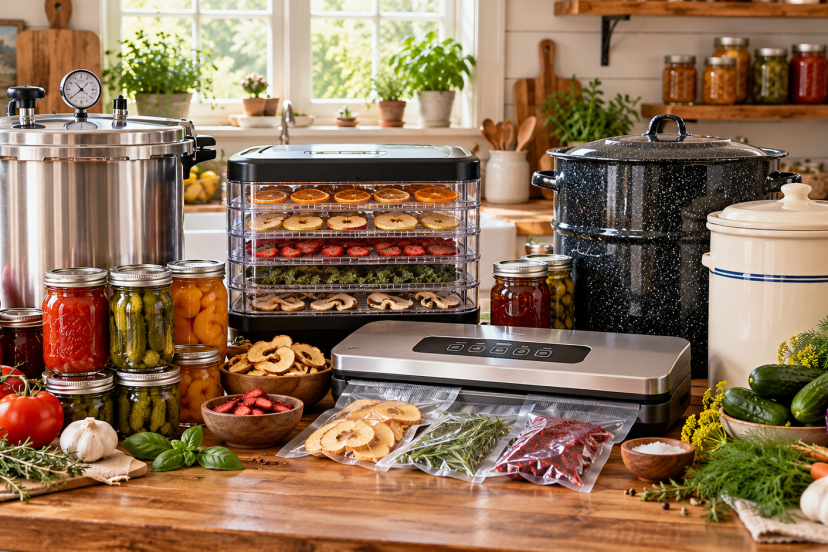
A good harvest can quickly become a storage problem. Fresh tomatoes, herbs, fruit, meat, and vegetables only last so long, so preserving them properly helps you waste less food and rely more on what your homestead produces. The right food preservation equipment makes that process easier and safer. From pressure canners and dehydrators to vacuum sealers and Mason jars, each tool serves a different purpose. This guide covers the most useful options for homesteaders, what each one does best, and which equipment is worth adding to your kitchen first.
Start With the Foods You Preserve Most
Before buying equipment, look at what regularly comes through your kitchen.
If you grow tomatoes, berries, cucumbers, and herbs, you may get more use from jars, a water-bath canner, and a dehydrator than from an expensive freeze dryer. If you raise meat or grow plenty of beans and other low-acid vegetables, a pressure canner may be a better investment.
This is where beginners often save money. It is easy to buy equipment because it looks useful, only to discover later that it does not fit your routine. If you are still building your self-sufficiency skills, this guide to beginner homesteading skills can help you decide what to learn first.
A simple rule works well: buy for the harvest you already have, not the harvest you imagine having someday.
A Pressure Canner Is Essential for Certain Foods
A pressure canner is one of the most important tools for homesteaders who want to store low-acid foods safely.
That includes many vegetables, meat, poultry, and seafood when using tested recipes. These foods need temperatures higher than boiling water can provide. The National Center for Home Food Preservation explains that pressure canning is the recommended method for low-acid foods because it reaches the temperatures needed to control the risk of botulism.
This is one area where improvising is not worth it. A stockpot and a pressure canner are not interchangeable.
Choose a model that fits your usual batch size, works with your stove, and has replacement parts that are easy to find.
Water-Bath Canning Handles Many Pantry Staples
Not every jar needs pressure.
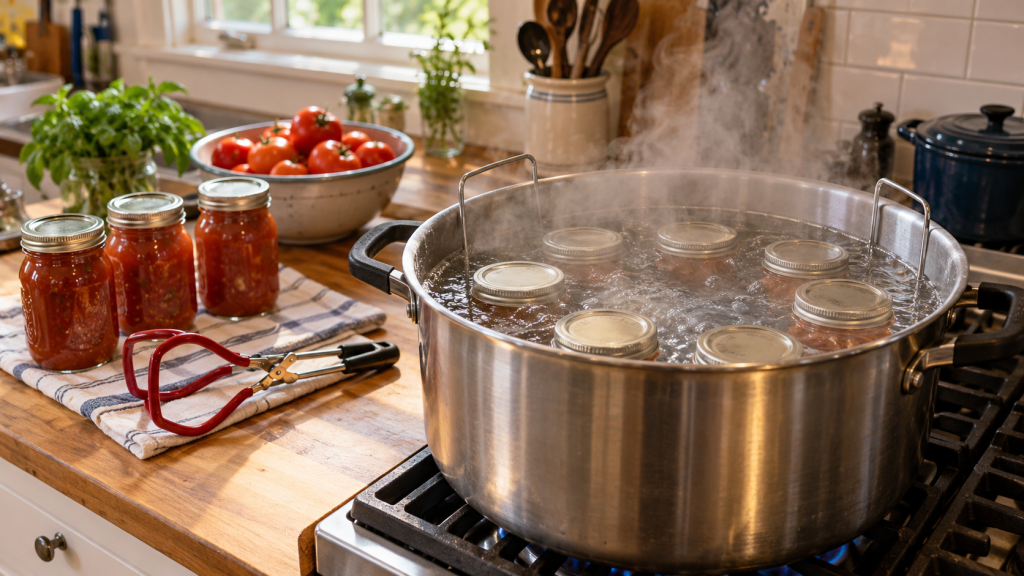
Boiling-water canning works well for high-acid foods and properly acidified recipes, including many jams, jellies, fruits, pickles, and tested salsa recipes.
The setup is simple: a deep pot with a rack, proper canning jars, new lids, a jar lifter, a funnel, and a headspace tool. For many homesteaders, these inexpensive basics get used every summer.
There is something reassuring about seeing jars lined up after a busy afternoon of preserving. More importantly, those jars represent food that will not need freezer space and can remain useful well beyond harvest season.
A Food Dehydrator Makes Surplus Easier to Manage
A dehydrator is one of those appliances that often proves more useful than expected.
Herbs that would wilt in the refrigerator can become pantry staples. Apple slices turn into snacks, while peppers, mushrooms, tomatoes, and other foods shrink into compact packages that take up far less room than frozen produce.
According to the University of Minnesota Extension guidance on drying food, successful dehydration depends on removing enough moisture while controlling temperature and airflow. A dedicated dehydrator therefore gives you better control than trying to dry large batches in an oven.
Look for adjustable temperature settings, good airflow, and enough tray space for the amount of food you normally preserve.
A Vacuum Sealer Helps Protect Stored Food
Vacuum sealers work best as supporting equipment rather than as a preservation method on their own.
They remove much of the air around food, which helps reduce oxidation and freezer burn. They are useful for meat, frozen vegetables, dried foods, and bulk pantry ingredients.
However, sealed does not mean shelf-stable. The Utah State University Extension guidance on food storage packaging makes an important distinction: packaging helps protect food quality, but foods that require refrigeration or freezing still need those storage conditions.
Think of a vacuum sealer as a way to protect food you have already preserved, not as a replacement for canning, drying, or freezing.
Freezers and Fermentation Tools Still Matter
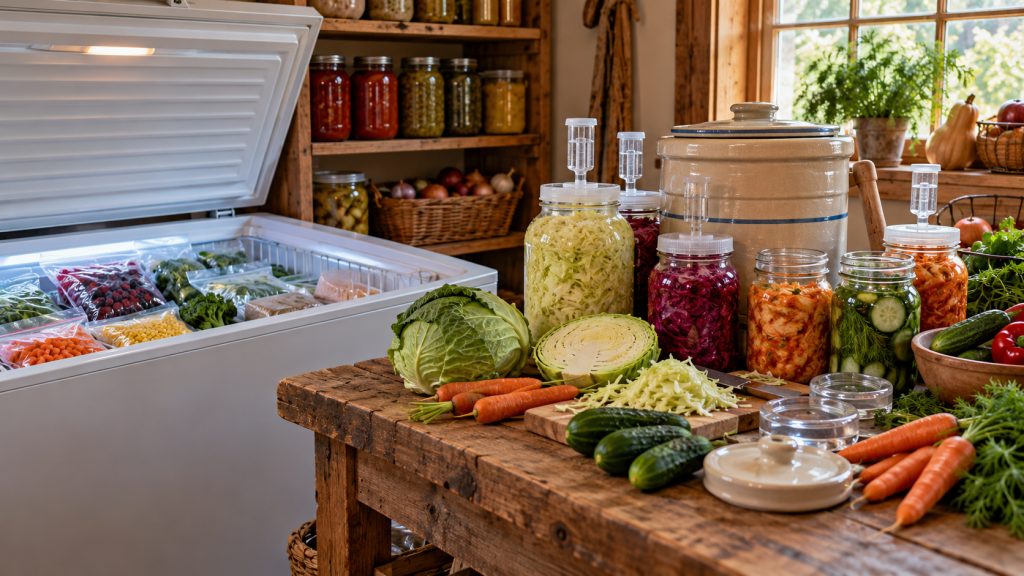
Freezing remains one of the simplest ways to preserve a harvest. A chest or upright freezer can hold meat, berries, broth, baked goods, blanched vegetables, and prepared meals with very little fuss.
Good containers, labels, and an inventory sheet make a bigger difference than many people expect. Without them, carefully stored food has a habit of disappearing under newer packages until months later.
Fermentation offers another useful option, especially for cabbage, cucumbers, carrots, and peppers. Mason jars or a crock, fermentation weights, and venting lids are enough for many beginner projects.
If you want a ready-made setup, this fermentation kit guide explains the common tools and options. Fermentation can be especially useful when freezer space is limited and you want another way to use a heavy vegetable harvest.
Top Food Preservation Products
1. Presto 01781 23-Quart Pressure Canner and Cooker
The Presto 01781 is a practical choice for homesteaders who plan to pressure-can vegetables, meat, poultry, seafood, and other approved recipes. Its large capacity also makes it useful during heavy harvest periods when processing several jars at once saves time.
Best for: Regular pressure canning.
2. COSORI 6-Tray Stainless Steel Food Dehydrator
The COSORI 6-Tray Stainless Steel Food Dehydrator provides useful drying space for herbs, fruit, vegetables, jerky, and garden surplus without taking over the kitchen.
Adjustable temperature controls make it easier to match the drying conditions to different foods, while multiple trays allow you to process a worthwhile batch at once.
Best for: Frequent produce and herb drying.
3. FoodSaver V4400 Vacuum Sealing System
The FoodSaver V4400 works well for portioning meat, sealing dried foods, and preparing vegetables or meals for freezer storage.
A vacuum sealer becomes particularly handy after bulk shopping, butchering, or harvesting because you can divide food into portions before freezing rather than thawing a large package later.
Best for: Freezer organization and reducing air exposure.
4. Ball Wide Mouth Mason Jars
Mason jars may not look like sophisticated food preservation equipment, but they are among the most useful supplies you can own.
Ball Wide Mouth Mason Jars suit approved canning recipes and also work for dry storage, refrigerated foods, and some fermentation projects. The larger opening makes filling and cleaning easier, especially with chunky foods.
Best for: Canning and everyday pantry storage.
5. Norpro Canning Essentials 6-Piece Set
The Norpro Canning Essentials 6-Piece Set includes useful tools such as a jar lifter, funnel, tongs, and headspace or bubble-removal tools.
None of these tools is complicated, yet anyone who has tried moving a hot jar with ordinary kitchen tongs quickly understands why dedicated canning equipment matters.
Best for: Beginners building their first canning setup.
Conclusion
The best food preservation equipment for homesteading is the equipment that fits your harvest, storage space, budget, and cooking habits. A pressure canner is essential if you plan to can low-acid foods, while a dehydrator, freezer, jars, and vacuum sealer can handle a large share of everyday preservation work. Start with the foods you already grow or buy in bulk, learn the correct preservation methods, and expand your setup as your needs change. A thoughtful collection of equipment does more than prevent waste; it turns a short harvest season into food your household can continue enjoying long after the garden has gone quiet.
FAQs
What food preservation equipment should a beginner buy first?
Start with freezer containers, Mason jars, basic canning tools, and a food dehydrator. Add a pressure canner if you plan to can low-acid foods.
Is a pressure canner necessary when preserving vegetables?
If you are canning low-acid vegetables for shelf-stable storage, use a pressure canner and follow a tested recipe. Pickled or properly acidified vegetables may use a different process.
Is a food dehydrator worth buying for a homestead?
Yes, especially if you grow herbs, fruit, peppers, tomatoes, mushrooms, or other foods that dry well. Dried foods also take up considerably less storage space than frozen foods.
Does vacuum sealing make food shelf-stable?
No. Vacuum sealing removes much of the surrounding air, but foods that require refrigeration or freezing must still be kept cold.
Which is better for food preservation: a freeze dryer or a dehydrator?
For most beginners, a dehydrator offers better value because it costs less and works for many common homestead foods. A freeze dryer makes more sense when long-term food storage is a major priority and you expect to use it frequently.