How to Make Buttermilk for Homestead Recipes
We may earn a commission for purchases made using our links. Please see our disclosure to learn more.
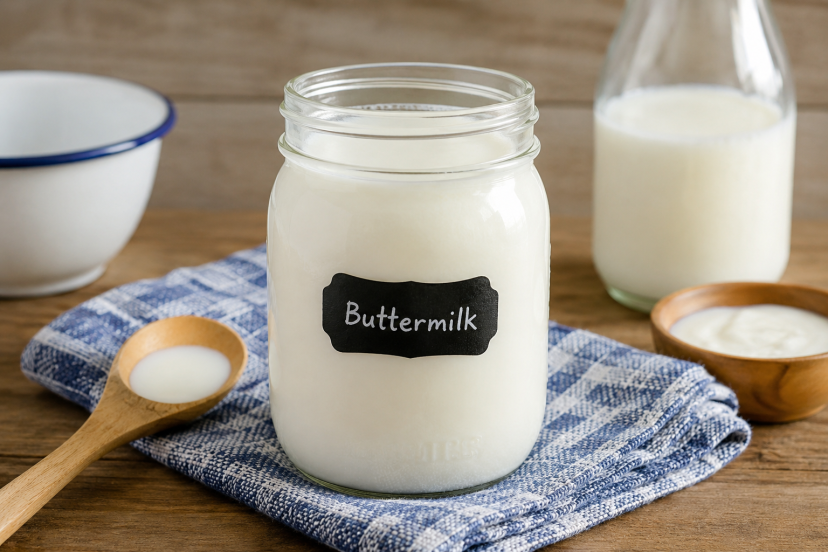
Knowing how to make buttermilk is one of those small kitchen skills that saves a recipe, cuts waste, and makes scratch cooking feel far less complicated. You do not need a dairy cow, a butter churn, or a specialty appliance. For most biscuits, pancakes, cornbread, cakes, and marinades, you can make a dependable substitute with ordinary milk and an acidic ingredient already in the pantry.
There is one useful distinction, though. Quick homemade “buttermilk” is acidified milk, while traditional or cultured buttermilk develops through butter making or bacterial fermentation. Both have a place in a homestead kitchen, but they are not identical. Here is how to choose and make the right version.
What Buttermilk Actually Is
Traditional buttermilk was the tangy liquid left after cream was churned into butter. Modern store-bought buttermilk is usually pasteurized milk fermented with lactic-acid bacteria.
The quick homemade version uses lemon juice or vinegar to acidify milk. It lacks the same cultured flavor, but it supplies the acidity that reacts with baking soda and helps biscuits, pancakes, and quick breads rise.
How to Make Buttermilk With Lemon Juice
This is the easiest method when a recipe calls for one cup of buttermilk.
Ingredients
- 1 tablespoon lemon juice
- Milk, enough to reach the 1-cup line
Instructions
- Pour the lemon juice into a liquid measuring cup.
- Add milk until the total volume reaches one cup.
- Stir briefly.
- Leave the mixture at room temperature for 5 to 10 minutes.
- Use it when the milk looks lightly curdled or separated.
Do not worry if the mixture is thinner than store-bought buttermilk. It will still work well in most baked recipes. The University of Maine Cooperative Extension’s buttermilk substitute uses this same practical ratio and recommends promptly refrigerating leftovers.
How to Make Buttermilk With Vinegar
No lemons? White vinegar works just as well.
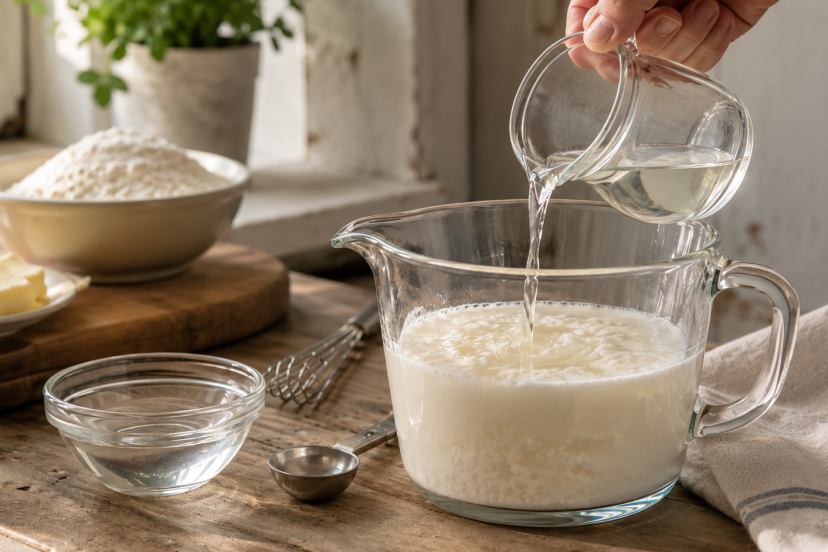
Add one tablespoon of plain white vinegar to a measuring cup, then pour in milk until the liquid reaches one cup. Mix the ingredients, then leave the mixture undisturbed for 5 to 10 minutes.
White vinegar has a clean, neutral taste, which makes it especially useful for savory biscuits, cornbread, ranch-style dressings, and fried-chicken marinades. Apple cider vinegar can also work, although it may add a faint fruity note.
Avoid strongly flavored vinegars such as balsamic, malt, or red wine vinegar. They can change the color and flavor of your recipe.
Which Milk Works Best?
Whole milk gives the richest result. Two-percent milk is a reliable everyday choice, while skim milk works when texture matters less.
For dairy-free baking, use unsweetened soy or oat milk without vanilla or added sugar. Soy milk usually curdles more visibly, although visible curds are not required. For extra thickness, stir a teaspoon of plain yogurt into the mixture.
How to Make Real Cultured Buttermilk
Cultured buttermilk takes longer, but it offers deeper flavor and can become a repeatable homestead routine.
Start with pasteurized milk and a commercial buttermilk starter culture. Clean and sanitize the jar, lid, spoon, and measuring tools. Mix the culture into the milk according to the packet directions, then incubate it at the stated temperature until it thickens and tastes pleasantly tangy.
Culture instructions vary, so follow the manufacturer’s temperature and timing rather than improvising. Utah State University Extension’s tested cultured-buttermilk guidance emphasizes reaching a pH of 4.6 or below and discarding a batch that fails to acidify within 48 hours. Refrigerate the finished buttermilk promptly.
This method is best for people who bake often, make dressings, or want a more traditional fermented dairy skill.
Quick Substitute vs. Cultured Buttermilk
Use lemon or vinegar when you need buttermilk immediately and acidity matters more than cultured flavor. Choose cultured buttermilk for dressings, dips, and recipes where its taste and texture take center stage. The quick version handles busy mornings; the cultured version rewards planning.
Common Mistakes to Avoid
The most common mistake is adding one tablespoon of acid to a full cup of milk. That produces more than one cup and changes the liquid balance. Add the acid first, then fill to the one-cup mark.
Do not expect dramatic curdling. Some milk forms obvious flecks, while other milk only thickens slightly.
Also, do not replace buttermilk with plain milk in a recipe that relies on baking soda. Without enough acid, the bake may rise poorly and develop a soapy or bitter taste.
Finally, never leave prepared buttermilk sitting out for hours. Refrigerate leftovers in a covered container.
Best Homestead Uses for Buttermilk
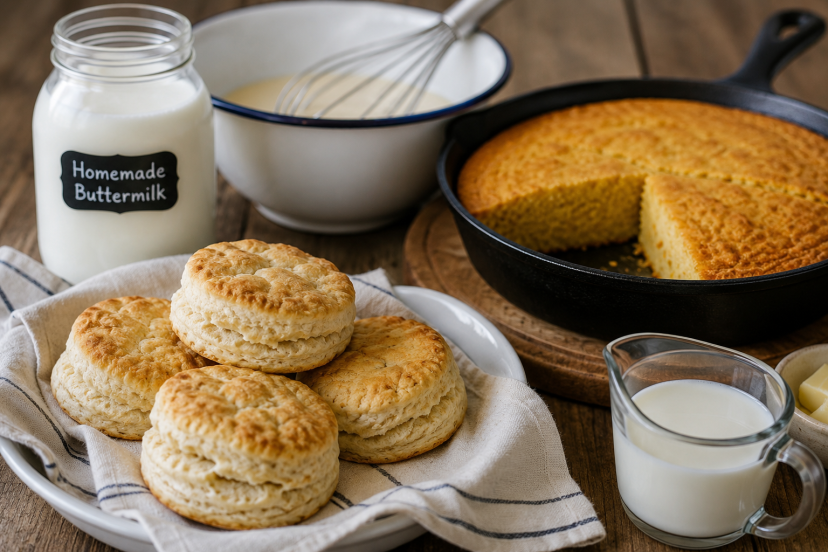
Homemade buttermilk works beautifully in:
- Flaky biscuits and skillet cornbread
- Pancakes, waffles, and muffins
- Soda bread and quick breads
- Cakes and old-fashioned cobblers
- Chicken or pork marinades
- Ranch-style dressing and coleslaw
- Mashed potatoes and creamy soups
It can also help use milk before it goes to waste, provided the milk is still fresh and safe.
Learning simple pantry substitutions is just one part of becoming more self-reliant in the kitchen. You can build on that foundation by practicing other basic homesteading skills, including cooking from scratch, preserving food, and growing your own produce. For a broader starting point, this guide to starting a homestead from scratch explains how to begin gradually with the space and resources you already have.
Helpful Tools for Making Buttermilk at Home
- Cultures for Health Buttermilk Starter Culture — A practical option for making true cultured buttermilk instead of a quick substitute.
- Pyrex 2-Cup Glass Measuring Cup — Clear markings make it easy to add acid first and fill precisely to the one-cup line.
- OXO Good Grips 11-Inch Balloon Whisk — Useful for mixing starter cultures, dressings, pancake batter, and biscuit ingredients.
- Ball Wide Mouth Pint Mason Jars — Handy for culturing, refrigerating, and labeling small batches.
- ThermoPro TP19H Instant-Read Thermometer — Helpful when a starter culture requires a specific milk or incubation temperature.
Choose tools that serve several jobs. These basics also support bread making, sauces, ferments, and everyday meal preparation.
How to Store Homemade Buttermilk
Keep quick acidified buttermilk in a clean, covered container in the refrigerator. For best quality, use it within about four days, following the University of Maine Extension guidance cited above.
Label cultured batches with the preparation date. Follow the starter manufacturer’s storage instructions, and discard buttermilk that develops mold, unusual colors, gas buildup, or a rotten odor.
Homemade buttermilk is not shelf-stable. You can freeze baking portions, although separation after thawing is normal; simply stir before use.
Conclusion
Learning how to make buttermilk gives you a reliable answer when the carton is empty and the biscuit dough is already underway. For everyday baking, add one tablespoon of lemon juice or white vinegar to a measuring cup and fill with milk to the one-cup line. Allow it to sit for 5 to 10 minutes before adding it to your recipe.
When you want fuller flavor and a genuine fermented product, use pasteurized milk and a commercial starter culture, following tested temperature, timing, and storage directions. Either way, this is homestead cooking at its best: simple ingredients, less waste, and one more useful skill you can carry into dozens of recipes.
FAQs
Can I make buttermilk with heavy cream?
You can acidify heavy cream, but it will be much richer and thicker than buttermilk. For baking, dilute it with an equal amount of water before adding lemon juice or vinegar.
Does bottled lemon juice work for making buttermilk?
Yes. Bottled lemon juice works well for a quick substitute because the recipe mainly needs acidity. Fresh lemon juice may taste brighter, but the difference is usually minor in baked goods.
Why did my homemade buttermilk not curdle?
The milk may be ultra-pasteurized, low in protein, or very cold. As long as you used the correct acid ratio and rested it for several minutes, it can still work in baking.
Can I drink quick homemade buttermilk?
It is safe when made with fresh ingredients, but it tastes like lightly soured milk rather than true cultured buttermilk. Most people prefer the cultured version for drinking.
Can I freeze buttermilk?
Yes. Freeze it in recipe-sized portions or an ice-cube tray, then transfer the frozen pieces to a labeled container. Thaw in the refrigerator and stir before baking.