How To Start A Micro Homestead In Your Backyard
We may earn a commission for purchases made using our links. Please see our disclosure to learn more.
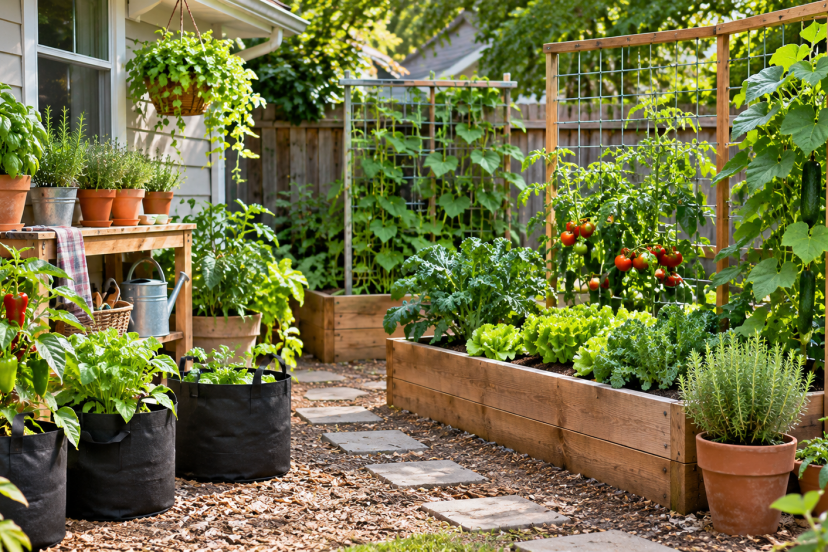
Homesteading is about doing a little more for yourself with whatever space you have. That might mean growing herbs on the patio, making strawberry jam in your kitchen, or keeping a few hens out back. You don’t need acres of farmland, a barn, or an impressive collection of gardening tools. A micro homestead brings that same philosophy into a smaller space. Instead of relying entirely on the grocery store, you begin producing some of your own food, finding uses for things you’d normally throw away, and picking up practical skills along the way. So, where do you begin? Surprisingly, it has less to do with the size of your backyard and more to do with how you use it.
What Is a Micro Homestead?
A micro homestead is a small-scale property where people practice food production, resource conservation, and self-reliant living. It takes the principles of traditional homesteading and adapts them to smaller residential spaces.
For one household, that might mean growing vegetables and keeping chickens. For another, it could be a collection of fruit trees, a compost bin, and a kitchen cupboard filled with homemade preserves.
There’s no standard setup to follow. Your homestead should reflect what you enjoy growing, what your family eats, and how much time you have to spare.
Assess Your Backyard and Available Resources
Before you order seeds or start building raised beds, spend some time getting to know your backyard. The spot that looks perfect for tomatoes in the morning might be completely shaded by afternoon.
Consider these factors when planning your space:
- Sunlight: Most fruit-producing vegetables need at least six hours of direct sunlight.
- Soil quality: Test your soil before planting, particularly if you’re unfamiliar with the property’s history.
- Water access: Position growing areas within easy reach of a water source.
- Drainage: Look for areas that become waterlogged after rainfall.
- Local regulations: Check whether your area permits livestock, garden structures, and rainwater collection.
Be realistic about your time, too. Two well-maintained garden beds are far more useful than six neglected ones.
Create a Practical Micro Homestead Layout
You don’t need a perfectly symmetrical garden with matching planters and neatly arranged pathways. What matters is having a backyard that works well in everyday life.
Give each area a purpose based on its growing conditions and accessibility.
| Homestead Area | Suggested Use |
| Sunny open space | Vegetable beds and fruiting plants |
| Fences and boundaries | Trellises and climbing vegetables |
| Near the kitchen | Frequently harvested herbs |
| Service area | Composting and tool storage |
| Near an outdoor faucet | Watering and irrigation systems |
| Secure designated area | Small livestock, if permitted |
Think about the little inconveniences that might discourage you from using your garden. A watering can that’s always on the other side of the yard or a compost bin that’s awkward to reach can make simple chores unnecessarily frustrating.
Arrange things with your everyday habits in mind.
Start Growing Your Own Food
There’s little point in growing an entire bed of kale if nobody in your household likes eating it. Start with the vegetables you regularly buy, especially those that taste noticeably better when freshly harvested.
Choose Beginner-Friendly Crops
These vegetables and herbs are worth considering, depending on your climate:
- Lettuce and spinach
- Radishes and carrots
- Bush beans
- Cherry tomatoes
- Peppers
- Green onions
- Basil and parsley
NC State Extension’s small-space gardening guide explains that leafy vegetables generally tolerate less sunlight than fruit-producing crops.
You can use this to your advantage by growing suitable greens in partially shaded areas and saving sunnier spots for tomatoes and peppers.
Practice Succession Planting
Imagine planting twenty lettuce seedlings only to find that they’re all ready to harvest during the same week. That’s a lot of salad, even for a family that loves vegetables.
Sow smaller batches every two to three weeks when growing conditions are suitable. Succession planting spreads out your harvest rather than leaving you with too much produce at once.
Make the Most of Limited Growing Space
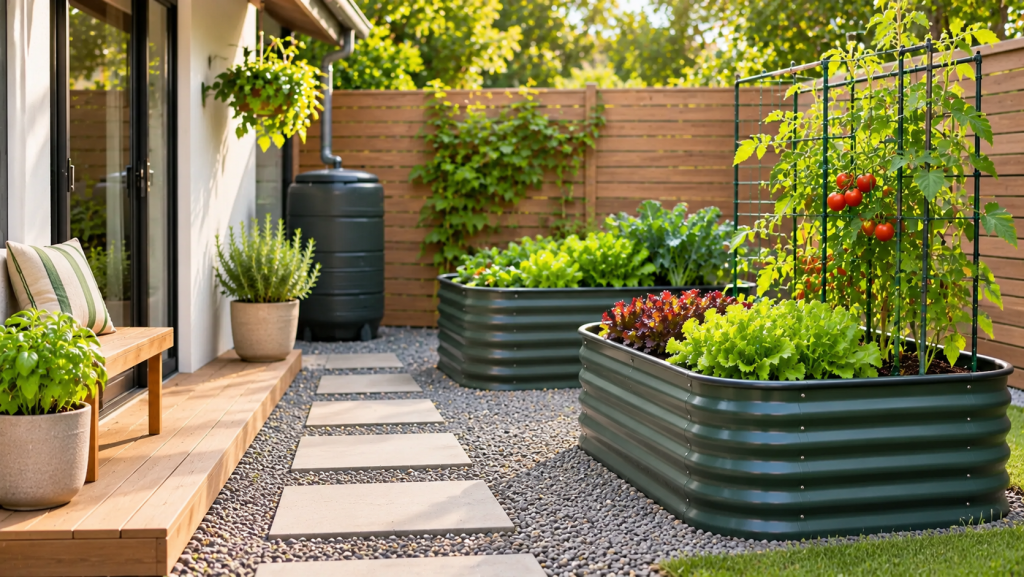
When you run out of room on the ground, look up. Fences, trellises, and other vertical supports offer growing space that might otherwise go unused.
Climbing beans, cucumbers, and peas are particularly suitable for vertical gardening. Meanwhile, fabric grow bags can turn a bare patio into a growing area without requiring permanent changes to your property.
Raised beds are useful if your backyard has compacted soil or poor growing conditions. Just remember that more plants don’t automatically mean more food. Give each crop enough room to develop properly, even when space is limited.
Build Healthy Soil Through Composting
Once you start composting, banana peels, coffee grounds, and fallen leaves begin to look a little less like rubbish and more like gardening supplies.
Compost improves soil structure, helps retain moisture, and returns organic matter to your garden.
According to the EPA’s home composting guide, a backyard compost pile should contain roughly two to three parts brown materials for every part green material by volume.
Brown materials include dry leaves and shredded cardboard, while green materials include vegetable scraps, coffee grounds, and fresh grass clippings.
Keep your compost moist without allowing it to become waterlogged, and turn it periodically. Leave meat, dairy, cooking oils, and pet waste out of conventional backyard compost piles.
Combining composting with sensible organic gardening practices can help you maintain healthier growing conditions over time.
Consider Raising Small Livestock
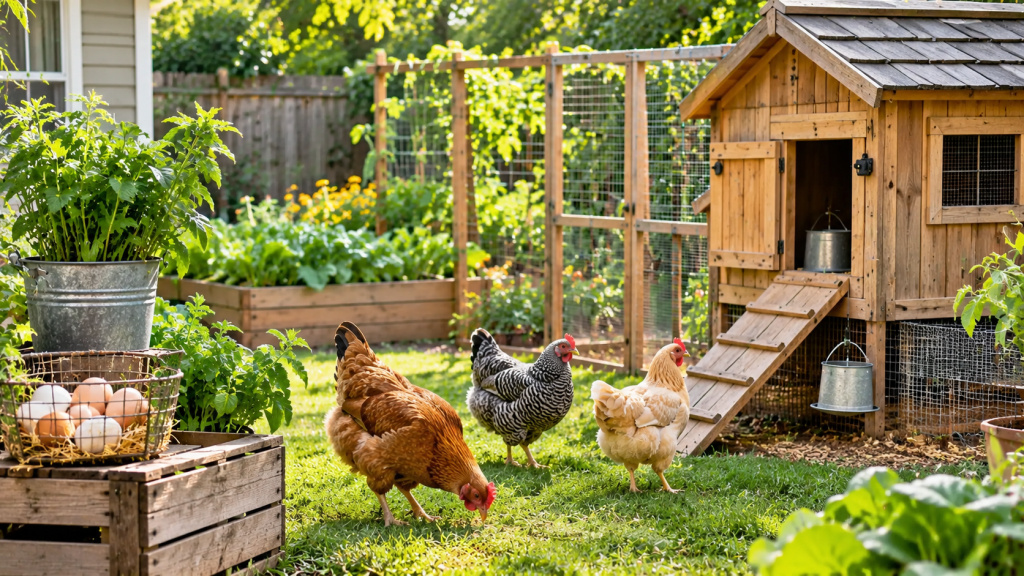
Collecting fresh eggs in the morning sounds idyllic, but chickens still need looking after when it’s raining, you’re running late for work, or you’re heading away for the weekend.
Before introducing livestock to your micro homestead, consider the responsibilities involved. Chickens need nutritious feed, fresh water, secure housing, protection from predators, and regular health checks.
Check local regulations and calculate the ongoing costs before investing in a coop.
If growing vegetables already keeps you busy, there’s nothing wrong with maintaining a plant-based homestead. Keeping animals is a choice, not a requirement.
Set Up an Efficient Watering System
Watering the garden can be quite relaxing on a cool morning. During a prolonged stretch of hot weather, however, the novelty can wear off quickly.
Drip irrigation reduces the need for manual watering by delivering water directly around plant roots. Spreading organic mulch over garden beds also helps slow moisture loss and limits weed growth.
Where permitted, a covered rain barrel can provide an additional water source. Fit it with a screen to keep mosquitoes out and follow local safety guidance when using collected rainwater around edible plants.
Learn Basic Food Preservation Skills
Sometimes the garden decides what’s for dinner. When tomatoes ripen faster than you can eat them or your zucchini plants become particularly productive, knowing how to preserve food comes in handy.
Start with these methods:
- Freezing: Store suitable vegetables, fruits, and herbs.
- Dehydrating: Dry herbs and seasonal produce.
- Refrigerator pickling: Make small batches of pickled vegetables for refrigerated storage.
- Canning: Preserve food using tested recipes and appropriate equipment.
Low-acid vegetables, such as carrots and green beans, require proper pressure canning for safe shelf-stable storage.
Start with whatever your garden produces in abundance. You don’t need to master every preservation technique in your first season.
Start Small and Expand Gradually
Social media can make homesteading look like a full-time occupation. Between overflowing garden baskets, homemade bread, and beautifully organized pantries, it’s easy to forget how much work goes into maintaining everything.
Give yourself a realistic timeline.
| Stage | Homesteading Goals |
| First month | Prepare growing areas and gather supplies. |
| Months 2–3 | Grow seasonal vegetables and start composting. |
| Months 4–6 | Improve irrigation and preserve surplus produce. |
| Months 7–12 | Review your progress and plan new projects. |
Keep a garden journal, even if it’s just an old notebook. Record what grew well, what failed, and which vegetables were actually worth growing. Those observations will become increasingly valuable with each passing season.
Recommended Products for a Micro Homestead
A few practical supplies can help you establish and maintain your backyard homestead without spending unnecessarily.
- VIVOSUN 5-Gallon Fabric Grow Bags: Breathable containers for growing peppers, herbs, and compact vegetables in limited spaces.
- GEOBIN Expandable Compost Bin: An adjustable container for turning kitchen scraps and garden waste into compost.
- Fiskars FiberComp Hand Trowel: A lightweight tool for transplanting seedlings and digging planting holes.
- Burpee 72-Cell Self-Watering Seed Starter Kit: A convenient setup for starting vegetable and herb seedlings indoors.
- Rain Bird Drip Irrigation Kit: A customizable watering system that reduces the need for hand-watering garden beds.
Conclusion
A successful micro homestead isn’t measured by the number of vegetables you harvest or how rarely you visit the grocery store. Sometimes, it’s simply having fresh basil for dinner without buying another plastic-wrapped packet. Start with a few things your household will genuinely benefit from. Grow vegetables you love eating, compost your kitchen scraps, and make better use of neglected corners of your backyard. Some seasons will be more productive than others. That’s part of growing your own food. Over time, the skills you develop may prove just as valuable as anything you harvest.
FAQs
How much land do you need for a micro homestead?
There is no minimum land requirement. A few hundred square feet can accommodate vegetable beds, herbs, containers, and a small composting area.
Can you start a micro homestead on a budget?
Yes. Grow vegetables from seeds, reuse suitable containers, make homemade compost, and look for secondhand gardening tools.
What are the best animals for a micro homestead?
Chickens and quail are popular options for smaller properties. Consider local regulations, animal welfare, housing requirements, and ongoing expenses before keeping them.
Can a micro homestead provide enough food for a family?
A productive backyard can supply a portion of your family’s vegetables, herbs, fruits, and eggs. Complete food self-sufficiency generally requires more land and resources.
How much time does a micro homestead require?
A small garden may require a few hours of maintenance each week. Raising livestock, managing larger gardens, and preserving seasonal harvests will increase your time commitment.