Top 10 Raised Garden Bed Kits
We may earn a commission for purchases made using our links. Please see our disclosure to learn more.
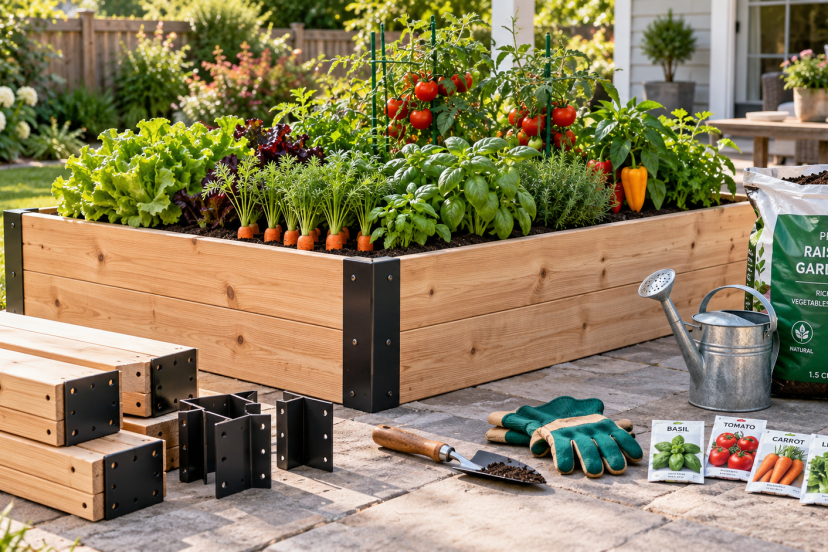
A good raised bed can turn an awkward patch of lawn, patio corner, or compact backyard into genuinely productive growing space. The trick is choosing a kit that will not bow, rust prematurely, make gardening uncomfortable, or require half a weekend to assemble. For this guide, we compared raised garden bed kits suited to different spaces and gardening styles, from modular galvanized beds for serious vegetable growing to elevated planters that keep herbs within easy reach. The goal is simple: help you find a bed you will still be happy using several growing seasons from now.
Our Top Picks
| Product | Best For | Key Feature | Rating |
| Vego Garden 17″ 9-in-1 Modular Bed | Best overall | Nine configurations | ★★★★★ |
| Vego Garden 32″ Extra Tall Bed | Deep beds | 32-inch height | ★★★★⯪ |
| Best Choice Products Galvanized Elevated Bed | Standing gardening | 30-inch working height | ★★★★⯪ |
| Keter Urban Bloomer | Patios | Self-watering system | ★★★★⯪ |
| Infinite Cedar Garden Bed | Natural wood | Cedar construction | ★★★★★ |
| Best Choice Products Elevated Wood Bed | Beginners | Comfortable waist height | ★★★★⯪ |
| Best Choice Products Mobile Planter | Mobility | Lockable wheels | ★★★★⯪ |
| VEVOR Raised Bed With Wheels | Flexible patios | Rolling metal frame | ★★★★⯪ |
| Vego Garden Extra-Tall Round Bed | Compact deep planting | 32-inch depth | ★★★★⯪ |
| Backyard Expressions Galvanized Bed | Budget gardens | Simple galvanized design | ★★★★★ |
1. Vego Garden 17″ Tall 9-in-1 Modular Raised Garden Bed

Vego Garden’s 9-in-1 is the strongest all-around choice for gardeners who want flexibility without sacrificing durability. Its modular panels can form nine layouts, making it much easier to adapt the bed around paths, fences, or available sunlight.
The 17-inch height provides considerably more root space than shallow beds while still keeping soil requirements manageable. Vego uses corrosion-resistant coated steel, stainless-steel hardware, and protective edging around the top.
Key features: Nine configurations, 17-inch height, coated steel panels, protective edging
Best for: Long-term vegetable gardens
Pros: Excellent build quality; configurable layout; generous depth; attractive finish
Cons: Costs more than basic galvanized beds; assembly involves many bolts
Why we recommend it: The combination of durability, useful depth, and layout flexibility makes this one of the easiest premium kits to build a garden around.
2. Vego Garden 32″ Extra Tall 10-in-1 Modular Bed

If you dislike crouching beside low garden beds, Vego’s 32-inch version changes the experience considerably. Its extra height puts the soil surface closer to a comfortable working position while giving deep-rooting crops plenty of room.
The modular construction also gives you several layout possibilities instead of locking you into one rectangle.
Key features: 32-inch height, modular steel panels, multiple configurations
Best for: Gardeners wanting less bending
Pros: Deep planting area; comfortable access; durable metal construction
Cons: Requires considerably more fill material; higher purchase price
Why we recommend it: It provides the flexibility of a modular metal bed with substantially better accessibility than conventional 12-inch models.
3. Best Choice Products 48x24x30 Galvanized Raised Garden Bed

This model combines galvanized steel with a 30-inch standing height, making it especially appealing for decks, balconies, and smaller backyards.
Its roughly 8-cubic-foot planting area offers enough room for vegetables and herbs without consuming the space of a full ground-level bed. Integrated drainage and protective corners add practical touches.
Key features: 48 x 24-inch planting area, 30-inch height, galvanized construction, drainage
Best for: Standing-height gardening
Pros: Minimal bending; weather-resistant metal; compact footprint; good drainage
Cons: Less growing area than large ground beds; assembly required
Why we recommend it: It offers the durability of metal while keeping plants at an easier working height.
4. Keter Urban Bloomer Raised Garden Bed

Apartment and patio gardeners do not necessarily need a giant vegetable bed. The Keter Urban Bloomer uses a compact elevated design with a built-in reservoir, water-level gauge, and drainage control.
Its roughly 12.7-gallon capacity makes the most sense for herbs, lettuce, flowers, and compact vegetables rather than large crops.
Key features: Self-watering reservoir, water gauge, drainage plug, elevated resin body
Best for: Small patios and herb gardens
Pros: Easy watering; compact; weather-resistant resin; comfortable height
Cons: Limited soil volume; unsuitable for large vegetable gardens
Why we recommend it: The self-watering setup removes some of the daily maintenance that comes with small containers.
5. Infinite Cedar Raised Bed Garden Kit

Gardeners who prefer natural materials may feel more at home with cedar than painted steel. This kit provides the warm, traditional look of a wooden vegetable garden without requiring you to buy lumber and build the frame from scratch.
Cedar naturally handles outdoor conditions better than many inexpensive softwoods, although all wooden beds eventually weather.
Key features: Cedar boards, rectangular layout, tool-free-style kit construction
Best for: Traditional backyard gardens
Pros: Attractive natural appearance; straightforward design; good growing area
Cons: Wood eventually ages; generally costs more than basic steel kits
Why we recommend it: It is a good middle ground for gardeners who want the character of a DIY cedar bed without doing all the measuring and cutting themselves.
6. Best Choice Products Elevated Wooden Raised Garden Bed

This 48 x 24-inch wooden planter is simple, approachable, and especially useful when you want herbs or vegetables near the house.
Its approximately 30-inch height reduces kneeling, while the included liner separates damp soil from the wood. Drainage allows excess moisture to escape instead of collecting around roots.
Key features: Fir construction, liner, 30-inch height, approximately 5 cubic feet
Best for: Beginner patio gardeners
Pros: Comfortable height; attractive wood finish; liner included; compact footprint
Cons: Wood benefits from additional weather protection; smaller than in-ground beds
Why we recommend it: It’s an unintimidating entry point for someone growing herbs, greens, or a few vegetables for the first time.
7. Best Choice Products Mobile Elevated Wood Planter

Sun patterns change throughout the year, and sometimes the best location for a planter in April is not the best location in July. This mobile model solves that problem with lockable wheels.
It also includes a lower storage shelf and protective liner, making it practical on decks and patios where gardening supplies need to stay organized.
Key features: Lockable wheels, 32-inch height, storage shelf, liner
Best for: Moving plants around a patio
Pros: Easy repositioning; comfortable height; built-in storage
Cons: Wood needs maintenance; heavy once filled
Why we recommend it: Mobility is genuinely useful when you’re chasing sunlight or rearranging a multipurpose patio.
8. VEVOR Raised Garden Bed With Wheels
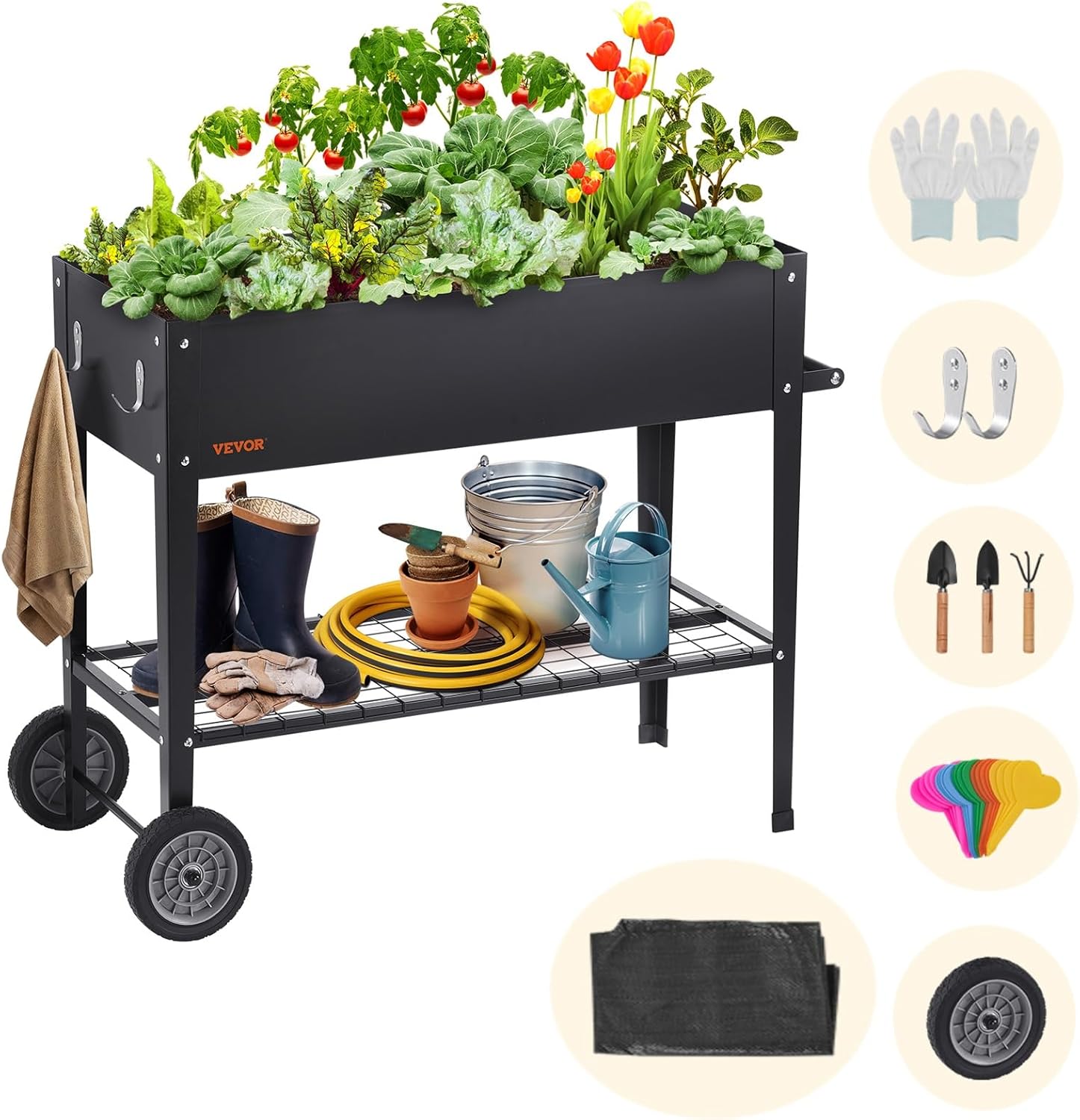
VEVOR’s rolling planter is another interesting choice for renters and gardeners who do not want a permanent bed.
Its elevated metal design keeps the growing area accessible while wheels make repositioning easier than moving a conventional filled planter.
Key features: Metal construction, elevated planting area, wheels, drainage
Best for: Flexible balcony or patio layouts
Pros: Mobile design; less bending; durable frame
Cons: Less soil volume than full-size beds; wheel quality matters on rough surfaces
Why we recommend it: It provides useful mobility without relying on an all-wood frame.
9. Vego Garden Extra-Tall Round Raised Garden Bed

Not every backyard suits a long rectangle. Vego’s extra-tall round configuration fits compact areas while offering impressive soil depth.
The 32-inch height can accommodate deep-rooted crops and also makes tending plants easier for anyone who finds low beds uncomfortable. User feedback on Vego’s extra-tall beds consistently emphasizes sturdiness and easier access.
Key features: 32-inch height, round footprint, coated metal construction
Best for: Deep planting in compact spaces
Pros: Deep root zone; attractive appearance; less bending
Cons: Uses plenty of fill; circular footprint may not suit every layout
Why we recommend it: It combines serious planting depth with a footprint that can fit spaces where rectangular beds feel awkward.
10. Backyard Expressions Galvanized Raised Garden Bed

For a straightforward vegetable bed without extra shelves, wheels, or complicated modular systems, Backyard Expressions keeps things simple.
Its approximately 4 x 2-foot footprint works particularly well for a starter vegetable patch, herbs, flowers, or expanding an existing garden one bed at a time.
Key features: Galvanized metal panels, open bottom, compact rectangular footprint
Best for: Budget-conscious beginners
Pros: Simple construction; economical; easy size to place
Cons: Shallower and less configurable than premium beds
Why we recommend it: Not every gardener needs a premium modular system. This is the kind of uncomplicated kit that can get vegetables growing with less initial expense.
How to Choose Raised Garden Bed Kits
Start with height and depth. Beds around 12 to 17 inches deep work well for many common vegetables, while extra-tall models reduce bending and provide more root volume.
Next, consider material. Galvanized and coated metal usually require less maintenance, while cedar and other woods provide a warmer appearance but gradually weather outdoors.
Finally, calculate soil before buying. A deep 32-inch bed can consume a surprising amount of material. You do not necessarily need to fill the entire depth with expensive bagged potting mix; appropriate bulk fill strategies can reduce costs.
Once your bed is planted, building healthy soil matters just as much as buying the frame. These practical DIY natural fertilizer ideas explain how compost and other organic materials can support productive raised beds.
Final Thoughts
The best raised garden bed kits are not necessarily the largest or most expensive—they are the ones that match your available space, preferred working height, crops, and willingness to maintain the material. Vego Garden’s 17-inch modular system stands out for gardeners building a long-term vegetable garden, while elevated options from Best Choice Products and Keter make more sense for patios and people who want easier access. Choose the right depth first, make sure you can reach the center comfortably, and leave enough room around the bed to actually enjoy tending it.
FAQs
Are raised garden bed kits worth it?
Yes, particularly if your native soil drains poorly, is difficult to work, or you want more control over the growing mix. Kits also eliminate much of the measuring, cutting, and sourcing involved in building a bed yourself.
What is the best material for raised garden beds?
Galvanized or coated steel is popular because it is durable and requires little maintenance. Cedar is another strong choice if you prefer natural wood, although wooden beds gradually weather and may eventually require replacement.
How deep should a raised garden bed be?
Around 12 inches works for many herbs and vegetables, while 17 inches or more provides additional room for roots. Extra-tall beds are especially useful when accessibility and reduced bending are priorities.
Do raised garden beds need a bottom?
Most ground-level raised beds benefit from an open bottom because roots can grow into the underlying soil and excess water can drain naturally. Elevated planters need a contained base with sufficient drainage holes.
What should I put at the bottom of a raised garden bed?
For an open-bottom bed, you can usually place it directly over soil after removing persistent weeds. Cardboard is sometimes used temporarily to suppress vegetation. Avoid creating thick layers of materials that interfere with drainage or settle dramatically over time.