DIY Natural Fertilizer You Can Easily Make At Home
We may earn a commission for purchases made using our links. Please see our disclosure to learn more.
If you have ever looked at kitchen scraps and thought, “Surely this could do more than fill the trash,” you are already thinking like a homesteader. DIY Natural Fertilizer is about using what you have, wasting less, and feeding your garden naturally.
You do not need a barn or fancy compost system. A small backyard, a few raised beds, or even container plants can give you enough room to start.
That said, not every internet fertilizer trick is worth trying. Some work beautifully. Some are harmless but overhyped. Others can smell awful, attract pests, or add too much of one nutrient. So let us keep this practical.
Here are easy ways to make natural fertilizer at home.
What Is a DIY Natural Fertilizer?
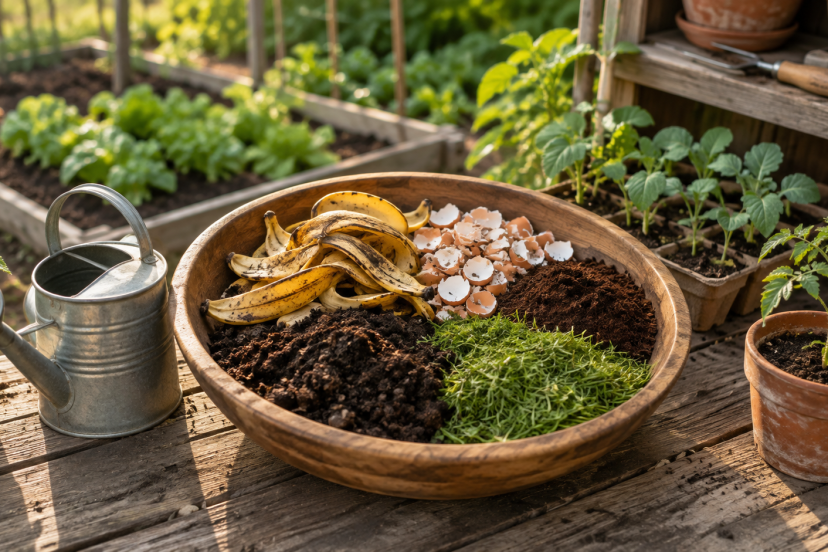
DIY natural fertilizer is plant food made from organic materials instead of synthetic fertilizer. Think finished compost, aged manure, crushed eggshells, banana peels, coffee grounds, grass clippings, and compost tea.
Most homemade fertilizers do not work like instant plant food. They feed the soil first. Over time, microbes break those materials down and make nutrients available.
That slower release is one reason many homesteaders love it. You are building soil, not just chasing quick leaf growth.
If you are filling beds from scratch, fertilizer is only one part of the picture. A good raised garden bed soil mix matters because roots need drainage, air, moisture, and nutrients.
Start With Homemade Compost
If you only make one DIY natural fertilizer, make compost. It is the backbone of healthy soil.
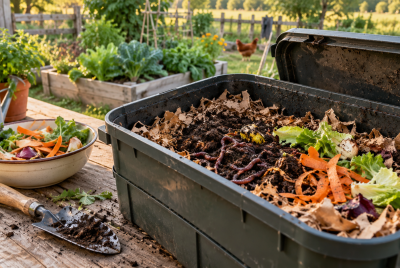
Compost turns kitchen scraps, leaves, grass clippings, and plant waste into dark, crumbly material that smells earthy. You can mix it into beds or spread it around plants.
The basic recipe is simple:
- Greens: vegetable scraps, fruit peels, coffee grounds, fresh grass clippings, and garden trimmings
- Browns: dry leaves, straw, shredded cardboard, paper, and dry plant stems
Use more browns than greens. If your pile gets slimy, add dry leaves or shredded cardboard. If it sits there doing nothing, add greens and moisture.
Finished compost should look dark and loose. You should not see whole food scraps anymore. If it still smells sharp or rotten, it needs more time.
Make Compost Tea For A Gentle Boost
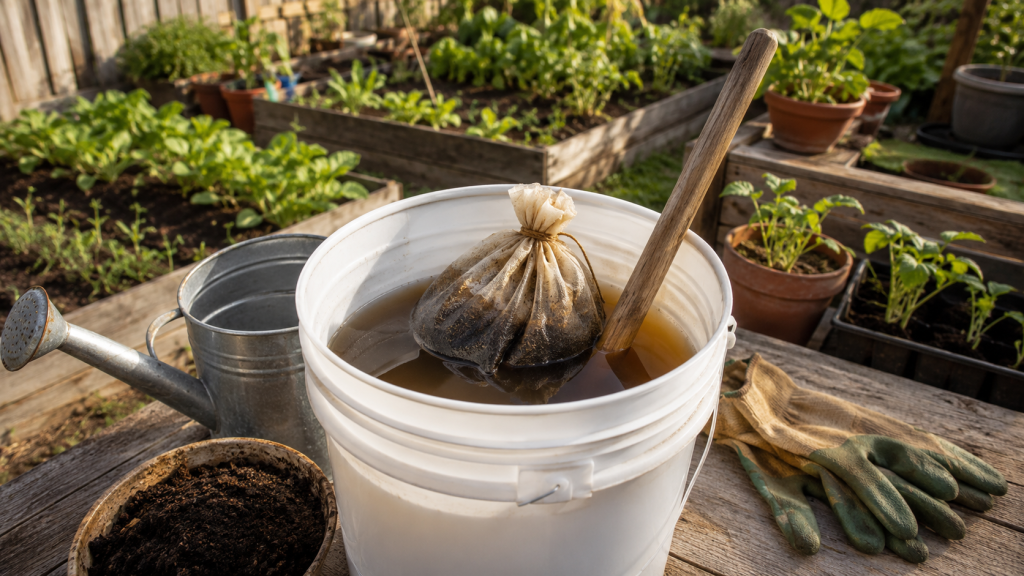
Compost tea is basically compost soaked in water. It is not magic, but it can be a gentle feed for seedlings, transplants, herbs, and tired vegetables.
To make it, place finished compost in a mesh bag or old pillowcase. Soak it in clean water for one to two days. Stir it now and then, strain the liquid, and water plants at the base.
Keep the smell test in mind. Good compost tea smells earthy. Bad compost tea smells rotten. If it smells wrong, toss it onto a non-food compost pile and start over.
For food crops, avoid spraying it directly on edible leaves close to harvest. Pouring it into the soil is cleaner.
Use Banana Peels Around Fruiting Plants
Banana peels are popular because they contain potassium, which helps with flowering, fruiting, and overall plant strength.
Chop banana peels into small pieces and bury them a few inches deep near tomatoes, peppers, roses, or other flowering plants. You can also soak chopped peels in water for two or three days, then pour the water around plant roots.
Bury banana peels instead of leaving them exposed on the soil surface. They break down slowly and may invite pests.
Banana peels can help, but they should not be your only source of plant nutrients. They are a small helper, not the whole feeding plan.
Save Eggshells, But Be Patient
Eggshells contain calcium, so gardeners often use them around tomatoes, peppers, and squash. They can help, but they are slow.
Rinse the shells, dry them, then crush them as finely as you can. Mix the powder into compost or soil before planting.
One warning: eggshells will not always fix blossom-end rot in tomatoes. That problem often comes from uneven watering, so check your watering habits too.
Add Coffee Grounds The Right Way
Used coffee grounds add organic matter and a little nitrogen. They are great in compost piles when mixed with dry browns.
In garden beds, use them lightly. A thick layer can harden into a crust and stop water from soaking in.
The safest route is to compost coffee grounds first. Mix them with leaves, shredded paper, or straw, then let the pile work.
Turn Grass Clippings Into Free Fertilizer
Grass clippings are one of the easiest homemade fertilizer materials if you have a lawn. They contain nitrogen and break down quickly.
Use them as mulch in thin layers around vegetables, fruit bushes, or young trees. Allow each layer to dry out a bit before adding another one. Thick wet clumps can smell bad and block air.
Only use clippings from untreated lawns. If your lawn has been sprayed with herbicides, keep those clippings out of the vegetable garden.
Use Aged Manure Safely
Manure can be wonderful for a homestead garden, but it needs respect. Fresh manure can be too strong, and it may carry pathogens you do not want near food crops.
Chicken, cow, horse, and goat manure should be composted or aged before use. Rabbit manure is milder, but many gardeners still compost it first.
Spread aged manure before planting or after the growing season. Keep it away from edible leaves and fruit. If you are still building your homestead routine, these beginner homesteading skills pair naturally with composting and small-scale food growing.
What Not To Put In Homemade Fertilizer
Some scraps belong in a regular compost system. Others do not.
Avoid meat, dairy, bones, grease, oily foods, pet waste, diseased plants, and weeds full of seeds. These can cause smells, pests, or food safety problems.
Be careful with wood ash too. A little can add potassium and raise soil pH, but too much can make soil too alkaline.
Recommended Products
These tools make DIY natural fertilizer easier and less messy:
- OXO Good Grips Easy-Clean Compost Bin – Great for collecting kitchen scraps on the counter.
- FCMP Outdoor IM4000 Dual Chamber Tumbling Composter – Good for small yards because it keeps compost contained and easy to turn.
- REOTEMP Compost Thermometer – Helpful for checking whether your pile is heating up.
- Luster Leaf 1601 Rapitest Soil Test Kit – Useful for checking pH, nitrogen, phosphorus, and potassium.
- Jobe’s Organics All Purpose Fertilizer – Handy when homemade compost is not enough for hungry plants.
Research-Backed Notes For Homemade Fertilizer
The University of Connecticut Extension notes that finished compost can improve soil structure, add organic matter, supply nutrients, and help soil hold moisture. Their home composting guide is a useful science-backed starting point.
A 2025 review in Environmental Technology & Innovation found that compost tea may support crop growth and disease suppression. However, results depend on the compost source, preparation method, and application. You can read the review on compost tea preparation and agricultural use.
Conclusion
DIY Natural Fertilizer does not have to be complicated. Start with compost, then add simple extras like banana peels, eggshells, coffee grounds, grass clippings, compost tea, or aged manure. The real goal is not to chase every garden hack. It is to build better soil season after season. Start small. Watch what your plants do. Test your soil when you need answers. That steady approach will take you much further than dumping random scraps around the garden and hoping.
FAQs
What is the easiest DIY natural fertilizer to make?
Compost is the easiest and most reliable choice. It uses common materials like vegetable scraps, dry leaves, grass clippings, and coffee grounds.
Can I use banana peel water on all plants?
You can use it around many garden plants, especially flowering and fruiting plants. Still, use it lightly because banana peels do not provide every nutrient plants need.
Are eggshells good for tomato plants?
Yes, but they work slowly. Crush them finely and mix them into soil or compost before planting. For blossom-end rot, also check your watering routine.
Can homemade fertilizer burn plants?
Yes, some homemade fertilizers can burn plants if they are too strong. Fresh manure, thick grass clippings, and concentrated liquid feeds can cause problems when overused.
How often should I add DIY natural fertilizer?
Add compost once or twice per season. Use gentle liquid feeds like compost tea every few weeks during active growth, but only if plants seem to need it.