How To Winterize Potted Plants
We may earn a commission for purchases made using our links. Please see our disclosure to learn more.
Potted plants are easier to move, but they are also more exposed to winter damage than plants growing in the ground. Cold air can reach the container from every side, causing roots to freeze faster and dry out more easily. If you want your herbs, perennials, shrubs, or small container crops to survive until spring, it helps to winterize potted plants before hard freezes arrive. This guide walks you through the simple steps to protect containers, insulate roots, manage moisture, and choose the best winter storage method for your homestead garden.
Why Potted Plants Need Extra Winter Protection
Plants in the ground get help from the surrounding soil. That soil acts like a natural blanket around the root system. Potted plants do not get the same protection.
That is why container plants need extra care before cold weather settles in. The Rutgers Cooperative Extension cold-weather container nursery guide explains that roots in containers can face greater winter stress because they are more exposed and lack the natural insulation of surrounding garden soil.
That means a plant can look tough on top but still lose roots below. When spring arrives, it may leaf out briefly, then collapse because the damaged roots cannot keep up.
Start Before the First Hard Freeze
The best time to winterize potted plants is after they begin going dormant but before the soil in the container freezes solid.
For most cold-climate gardeners, that means late fall. Watch your local forecast instead of using one exact calendar date. A light frost may not hurt hardy plants, but a hard freeze can make pots difficult to move and roots harder to protect.
Before winter really settles in, remove dead annuals, trim broken stems, and check for pests. However, do not aggressively prune woody plants late in the season. Fresh cuts can encourage tender new growth, and that new growth may not harden off before winter.
Decide Which Plants Are Worth Saving
Not every potted plant deserves the same winter plan. Some are hardy perennials. Some are tropical patio plants. Some are annuals that are better composted and replaced next year.
Hardy perennials and shrubs
Hardy perennials, small shrubs, roses, blueberries, and dwarf trees may survive winter if you protect the roots. For outdoor overwintering, choose plants rated at least two zones colder than your growing zone when possible. Illinois Extension recommends this “two zones colder” rule because container roots face harsher conditions than in-ground roots.
Tender herbs and tropical plants
Rosemary, citrus, hibiscus, geraniums, mandevilla, and other tender plants usually need indoor or frost-free protection. Some can grow as houseplants. Others can rest in a cool, bright place.
Weak, diseased, or crowded plants
If a plant struggled all summer, winter may finish it off. Be honest here. Homesteading teaches you to save what is useful, but it also teaches you not to babysit a lost cause all winter.
Water Correctly Before Winter
Dry roots suffer faster in cold weather. Before a freeze, water your potted plants deeply if the soil is dry.
Illinois Extension explains that moist growing media freezes more slowly than dry media, which can offer extra root protection. This is especially important for evergreens because they keep losing moisture through their leaves during winter.
That said, do not turn the pot into a swamp. Soggy soil can lead to root rot, crown rot, and cracked containers. Aim for evenly moist soil, not muddy soil.
Choose the Best Winterizing Method
There are three practical ways to winterize potted plants: move them into an unheated shelter, sink the pots into the ground, or group and insulate them outdoors.
Move Pots to an Unheated Shelter
An unheated garage, shed, cold basement, barn corner, or three-season porch can work well for dormant hardy plants.
The key is temperature. Iowa State recommends a moderately cold space, often between 20°F and 45°F, for container-grown trees, shrubs, and perennials that need dormancy. Check soil moisture during winter and water lightly when needed if temperatures are above freezing.
Do not place dormant hardy plants in a warm living room unless they are meant to grow indoors. Too much warmth can wake them up too early.
Sink Containers Into the Ground
If you have garden space, burying the pot is one of the best low-cost methods.
Dig a hole and set the container into the ground so the pot rim sits level with the surrounding soil. Backfill around it. This lets the earth insulate the root zone.
Iowa State calls this one of the most reliable ways for home gardeners to overwinter container-grown plants. Add mulch after the plant goes dormant for extra insulation.
This method works beautifully for homesteaders who already have garden beds, nursery areas, or unused fall growing space. If you are improving your garden layout, it also pairs well with building healthier raised garden bed soil for next season.
Group and Insulate Pots Outdoors
If the pots are too heavy to move or you cannot bury them, group them together in a protected spot.
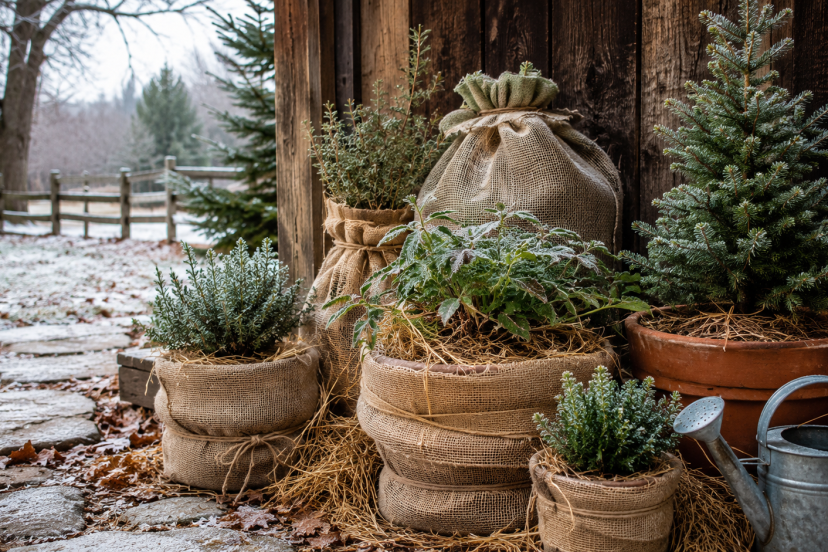
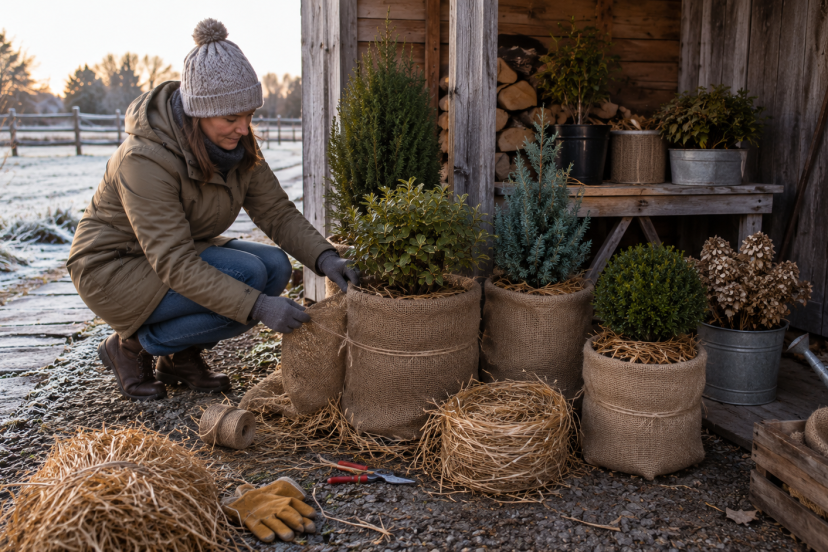
Choose a place out of strong wind and harsh winter sun, such as the north or east side of a building. Push pots close together. Then pack straw, leaves, bark mulch, or wood chips around the outside of the containers.
University of New Hampshire Extension recommends grouping containers in a protected area and surrounding them with insulating material when digging them into the ground is not possible.
For extra protection, wrap the outside of the pot with burlap, bubble wrap, old blankets, or frost cloth. Keep the plant itself breathable. Avoid sealing plants in plastic without airflow, since trapped moisture can cause mold and temperature swings.
How To Protect the Pot Itself
Winter can damage the container as much as the plant.
Terracotta and ceramic pots can crack when wet soil freezes and expands. Thin plastic can turn brittle. Metal pots can become very cold and transfer that cold quickly to the root zone.
If a pot is empty, dump the soil and store the container upside down in a dry place. Illinois Extension notes that many containers last longer when emptied and stored upside down through freezing and thawing conditions.
For planted containers, raise pots slightly off hard surfaces so drainage holes do not freeze shut. Use pot feet, bricks, wood blocks, or a plant caddy. Good drainage matters even in winter.
Winter Care for Herbs, Perennials, Shrubs, and Tender Plants
Different plants need different treatment.
Hardy perennials usually want dormancy. Keep them cold but protected. Do not fertilize them in winter.
Evergreen shrubs need moisture checks because their leaves still lose water. Water when the soil thaws and feels dry.
Tender herbs like rosemary often struggle indoors because winter light is weak. Give them your brightest window, avoid heat vents, and water only when the top of the soil begins to dry.
Tropical plants should come inside before damaging cold arrives. Check leaves and soil for insects first. A gentle rinse, light pruning, and pest inspection can save you from bringing aphids or spider mites into the house.
Common Winterizing Mistakes
The biggest mistake is waiting too long. Once pots freeze hard, moving and watering become much harder.
Another mistake is overwatering. Winter plants use less water, especially dormant ones. Keep soil lightly moist, not soaked.
Also, avoid heavy pruning late in fall. It can push new growth at the wrong time.
Finally, do not forget rodent protection. Straw and mulch make cozy winter homes for mice and voles. If you pack mulch around woody plants, consider hardware cloth or chicken wire around the base.
Recommended Products
The right supplies can make winterize potted plants easier, especially when you need to protect roots, move heavy containers, or manage moisture through cold weather.
1. Gardzen 5-Pack Plant Covers Freeze Protection
A breathable frost cover can help protect small shrubs, herbs, and patio plants during cold snaps. The listed product uses nonwoven fabric designed to hold warmth while staying light on plants.
2. Natural Burlap Fabric Roll
Burlap is useful for wrapping pots, making wind barriers, and securing loose mulch around outdoor containers. It allows more airflow than plastic.
3. VIVOSUN 3-in-1 Soil Tester
A simple soil tester helps you check moisture before watering overwintered plants. This model tests moisture, light, and pH.
4. Bosmere Down Under Plant Caddie
Heavy pots are easier to shift into shelter when they sit on a sturdy plant caddy. This one is designed for large planters and has a high weight limit.
5. Fiskars Bypass Pruning Shears
A clean pair of pruning shears helps remove broken stems and tidy plants before storage. Fiskars notes that the low-friction coating helps resist sap buildup and rust.
Conclusion
Winterizing potted plants is a simple seasonal habit that can protect your garden investment and make spring feel less like starting over. By moving vulnerable containers, insulating exposed roots, watering carefully, and choosing the right storage method for each plant, you give your herbs, perennials, shrubs, and small container crops a much better chance of surviving cold weather. A little preparation before hard freezes arrive can mean healthier plants, fewer replacements, and a stronger homestead garden when the growing season returns.
FAQs
1. When should I winterize potted plants?
Winterize potted plants after they start going dormant but before the soil in the pot freezes solid. For many gardeners, this happens in late fall after a few frosts.
2. Can potted plants survive winter outside?
Yes, some hardy potted plants can survive outside if you protect the roots. Use a sheltered location, group pots together, and insulate with mulch, straw, burlap, or frost cloth.
3. Should I water potted plants in winter?
Yes, but only when needed. Dormant plants use less water, but roots should not dry out completely. Check moisture during thawed periods and water lightly if the soil is dry.
4. Is it better to bring potted plants indoors or leave them outside?
It depends on the plant. Tropical plants usually need indoor protection. Hardy perennials and shrubs often do better in a cold but protected place, such as an unheated garage or buried in the ground.
5. Should I fertilize potted plants before winter?
No, avoid fertilizing late in the season. Fertilizer can encourage soft new growth that is more likely to suffer cold damage. Resume feeding when plants begin active growth in spring.