10 Off Grid Living Supplies for Self-Sufficient Living
We may earn a commission for purchases made using our links. Please see our disclosure to learn more.
Off grid living depends on practical systems, not random gear. You need supplies that help you manage clean water, power, food storage, cooking, sanitation, and safety without relying fully on public utilities. In this guide, we’ll cover 10 essential off grid living supplies worth considering and how they can help you create a self-sufficient lifestyle.
How to Choose Off Grid Living Supplies That Actually Help
Before you buy anything, think in systems.
A water filter is useful, but it works better when you also have water storage. A solar generator is helpful, but it becomes far more valuable when paired with panels, low-energy appliances, and a clear idea of what you actually need to power.
The best off grid living supplies usually support one of six needs:
- Clean water
- Reliable power
- Food storage
- Cooking
- Sanitation
- Safety and communication
Start there. It is tempting to buy the exciting stuff first, but your basics should come before comfort upgrades. A fancy outdoor shower is nice. Clean drinking water is non-negotiable.
1. Reliable Water Storage Containers
Water storage should be a top priority for off grid living. Even with a well, spring, rain catchment system, or nearby water source, you still need safe containers for clean backup water.
According to the CDC, a basic emergency water supply should include at least one gallon of water per person per day for three days, though storing enough for two weeks is even better when space allows. Off grid households may need more for cooking, washing, animals, and gardening.
What to look for: Choose food-grade, BPA-free containers with tight lids and sturdy handles. Keep some water in portable containers, label storage dates, and rotate it regularly.
2. A High-Quality Water Filtration System
Stored water helps, but you also need a way to filter water from wells, rain barrels, creeks, ponds, or questionable taps.
Gravity-fed filters work well off grid because they do not need electricity. Portable filters are also useful for hiking, land checks, or emergency backup. Just remember that filters vary. Some target bacteria and protozoa, while others focus on chemicals, heavy metals, or taste.
What to look for: Match the filter to your water source. For long-term use, test your water so you know what needs to be removed.
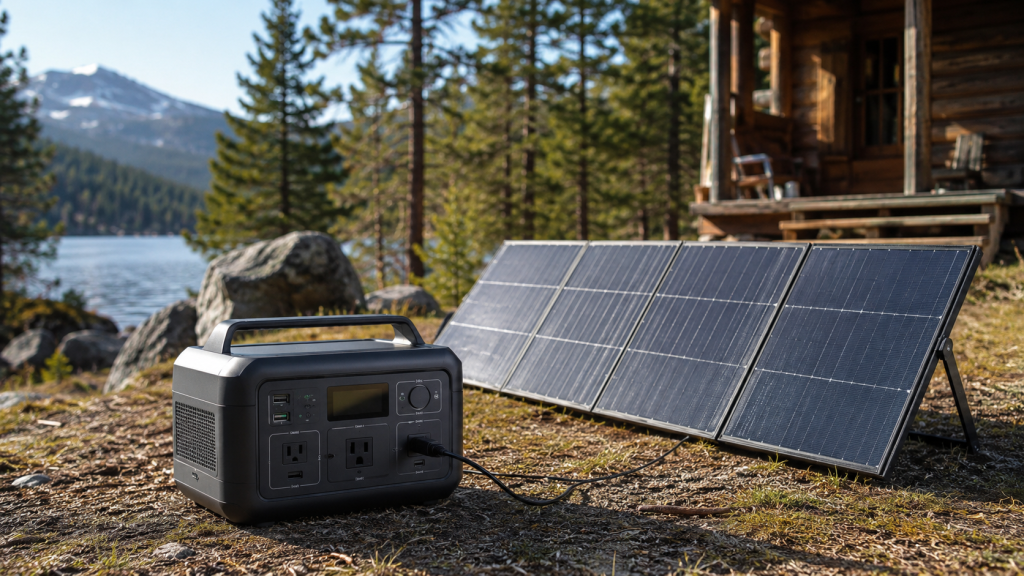
3. Portable Solar Generator or Power Station
A portable power station gives you quiet backup power without running a gas generator all day. It can charge phones, lights, radios, laptops, small appliances, fans, and some medical devices.
The U.S. Department of Energy explains that energy storage helps solar power remain useful when sunlight is not available, which makes battery backup valuable for off grid living.
What to look for: Check watt-hours, output watts, surge capacity, battery type, solar input, and outlets. Match the unit to the devices you truly need to run.
4. Solar Panels and Charging Gear
A power station is only useful until the battery runs down. Solar panels help turn it into a renewable off grid power setup.
Portable folding panels work well for cabins, RVs, and temporary setups. Roof-mounted panels are better for permanent homes, sheds, and workshops. You will also need compatible cables, adapters, charge controllers, and mounting gear.
What to look for: Make sure your panels, batteries, and charge controller work together. Also consider shade, snow, clouds, and short winter days.
5. Food Storage Containers and Pantry Organization
A self-sufficient home needs a pantry that keeps food dry, organized, and protected from pests.
Store staples like rice, beans, oats, flour, pasta, lentils, salt, sugar, powdered milk, and dehydrated foods in airtight containers or food-grade buckets. Use labels, dates, and visible shelving so you know what you have before buying more.
A simple pantry inventory system can help you track what is stocked, what is running low, and what needs to be used first.
What to look for: Use clear labels, rotate older food forward, and group staples by category for easier meal planning.
6. Pressure Canner and Food Preservation Tools
If you garden, raise animals, buy in bulk, or preserve seasonal food, a pressure canner is a smart off grid investment.
Water bath canning works for high-acid foods, but low-acid foods like vegetables, meat, poultry, beans, and soups require pressure canning. The National Center for Home Food Preservation explains that low-acid foods need higher temperatures than boiling water can provide.
What to look for: Choose a true pressure canner, not just a pressure cooker. Look for durable construction, a reliable gauge or weighted regulator, and the right size for your household.
7. Manual Kitchen Tools
Off grid living quickly shows how many kitchen tools depend on electricity.
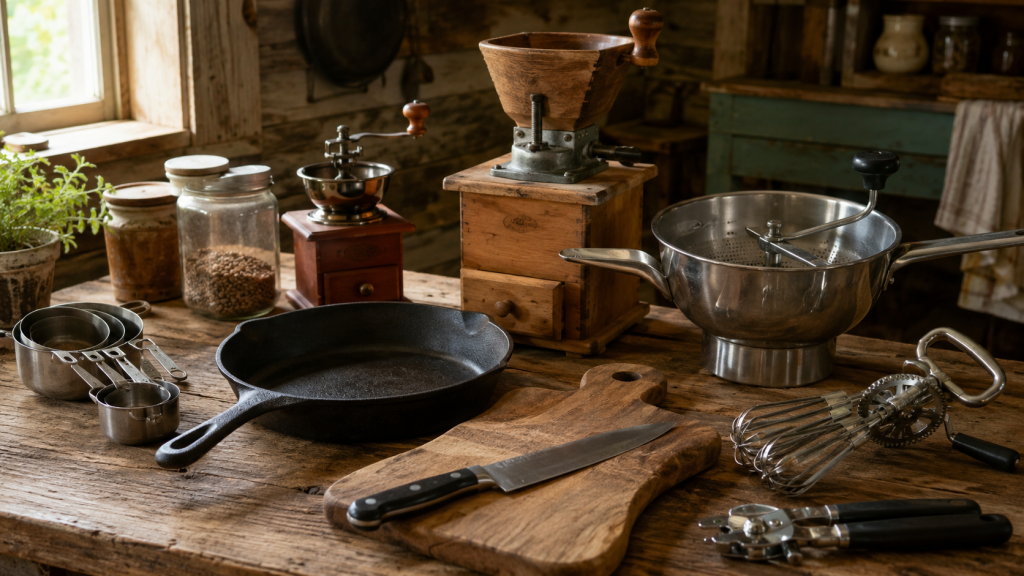
Manual tools keep your kitchen running when batteries are low or power is unavailable. A hand-crank grain mill, manual coffee grinder, cast iron cookware, hand egg beater, can opener, food mill, and sturdy knives are all useful.
What to look for: Choose stainless steel, cast iron, or other durable materials. Avoid flimsy tools with small plastic parts if you plan to use them often.
8. Off Grid Cooking Setup
You need more than one way to cook off grid.
Propane stoves, wood stoves, rocket stoves, solar ovens, and outdoor camp stoves can all work depending on your climate, fuel access, and local fire rules. A propane stove is simple, a wood stove can heat and cook, and a rocket stove uses small sticks efficiently.
What to look for: Keep at least two cooking methods available. Store fuel safely and follow ventilation rules, especially with propane or wood-burning equipment.
9. Composting Toilet or Emergency Sanitation Kit
Sanitation is not glamorous, but it matters.
A composting toilet can work well for cabins, tiny homes, RVs, and remote properties without septic access. It uses little to no water and can be helpful where plumbing is limited. You can also build a backup kit with heavy-duty bags, absorbent material, gloves, toilet paper, hand sanitizer, sawdust or lime, and a sealed container.
What to look for: Check local rules before installing any waste system. Human waste disposal is regulated in many areas, even off grid.
10. Weather Radio and Emergency Communication Tools
Cell phones are useful until service drops, towers fail, or batteries die. Off grid homes need backup communication.
A NOAA weather radio can provide weather alerts and emergency updates. You may also want two-way radios, whistles, signal mirrors, printed maps, extra battery banks, and a written contact plan.
What to look for: Choose a radio with battery, solar, and hand-crank charging. A flashlight and USB charging are helpful, but emergency alert access matters most.
Recommended Products for Off Grid Living
Here are five off grid living supplies to consider adding to your off grid setup. These are not random “survival shelf candy” items. Each one supports a real daily need.
1. Jackery Solar Generator 1000 v2 with 200W Solar Panel
This type of solar generator is useful for charging phones, lights, laptops, small appliances, and emergency devices. It is a good fit for cabins, RVs, camping setups, and backup home power.
Best for: Portable off grid power and emergency backup.
2. LifeStraw Personal Water Filter
A compact water filter is smart to keep in your emergency bag, vehicle, hiking kit, or backup water plan. It is not a full-house water system, but it is lightweight and easy to store.
Best for: Portable water filtering and emergency use.
3. Reliance Aqua-Tainer 7-Gallon Water Container
This kind of water container is practical because it is portable, stackable in many storage setups, and easier to move than oversized barrels.
Best for: Short-term water storage and transport.
4. All American 921 Pressure Canner
A pressure canner is ideal for preserving low-acid foods safely when used with tested recipes. It is especially useful for gardeners, hunters, bulk buyers, and homesteaders.
Best for: Long-term food preservation.
5. Midland NOAA Emergency Weather Radio
A weather radio gives you another way to receive alerts when phones, Wi-Fi, or power are unreliable. Look for models with multiple charging options.
Best for: Emergency alerts and backup communication.
Conclusion
Building a self-sufficient lifestyle starts with the basics: clean water, dependable power, food storage, safe cooking, sanitation, and emergency communication. The best off grid living supplies are not about collecting gear for the sake of it, but creating reliable systems that support daily life when public utilities or easy store access are not available. Start with the essentials, choose supplies that match your space and needs, and build your setup over time. With the right tools in place, off grid living becomes more practical, prepared, and sustainable.
FAQs
1. What are the most important off grid living supplies for beginners?
Start with water storage, water filtration, shelf-stable food, a cooking method, basic tools, lighting, first aid supplies, and emergency communication. Once those basics are covered, you can add solar power, food preservation tools, and larger homestead systems.
2. How much water should I store for off grid living?
A good emergency baseline is one gallon per person per day for at least three days. For off grid living, many households need more because water is also used for cooking, cleaning, animals, and gardening. A two-week supply is a better goal when you have the space.
3. Do I need solar power to live off grid?
Not always, but solar power is one of the most useful off grid energy options. You can also use propane, wood heat, generators, wind, micro-hydro, or a mix of systems. The best setup depends on your location, budget, climate, and energy needs.
4. What food should I store for off grid living?
Focus on foods you already eat and know how to cook. Good staples include rice, beans, oats, pasta, flour, lentils, canned foods, dried fruit, powdered milk, salt, sugar, cooking oil, and preserved garden produce. Rotate food regularly so it does not expire forgotten on a shelf.
5. Is off grid living expensive to start?
The cost can add up, but you can build your setup one step at a time. Start with affordable basics like water containers, pantry staples, manual tools, a camp stove, and emergency lighting. Larger investments like solar systems, pressure canners, composting toilets, and rainwater systems can come later.