8 Best Chicken Waterer Picks for Homesteaders
We may earn a commission for purchases made using our links. Please see our disclosure to learn more.
A dependable chicken waterer does more than save you an extra trip to the coop. It keeps fresh water available, limits contamination, protects bedding from spills, and makes daily flock care much easier.
However, not every watering system works for every homestead. A small gravity fountain may suit six hens perfectly, while a large flock needs a sealed bucket or automatic reservoir. Cold climates add another challenge because water can freeze within hours.
The eight picks below cover small backyard flocks, young chicks, busy homesteaders, and harsh winters. Each option offers a useful balance of capacity, durability, cleanliness, and ease of maintenance.
How We Chose the Best Chicken Waterers
A large capacity looks convenient, but size alone does not determine whether a waterer works well. We focused on practical features that affect everyday care:
- Capacity relative to flock size
- Resistance to leaks and tipping
- Ease of filling and scrubbing
- Protection from dirt, manure, and bedding
- Suitability for hot or freezing weather
- Availability of replacement parts
- Overall value for a homestead flock
Cleanliness received particular attention. Mississippi State University Extension advises flock owners to empty, scrub, rinse, and refill conventional waterers daily because contaminated water can contribute to disease. Its guidance on raising healthy chicks also recommends replacing dirty water rather than simply topping it up.
Chicken Waterer Comparison
| Chicken waterer | Capacity | Best for | Drinking system |
| RentACoop Automatic Waterer | 5 gallons | Best overall | Cups or nipples |
| OverEZ Automatic Waterer | 12 gallons | Large flocks | Drinking ports |
| Harris Farms Double Wall Drinker | 5 gallons | Long-term durability | Open trough |
| Farm Innovators HPF-100 | 3 gallons | Freezing winters | Heated trough |
| Little Giant Plastic Fount | 1 gallon | Small flocks | Gravity trough |
| Farm Innovators HB-60P | 2.25 gallons | Heated nipple system | Side nipples |
| Premier 1 Bucket Waterer | 5 gallons | Cleaner bedding | Nipples |
| Harris Farms Easy-Fill Waterer | 3.5 gallons | Easy refilling | Gravity trough |
1. RentACoop 5-Gallon Automatic Chicken Waterer
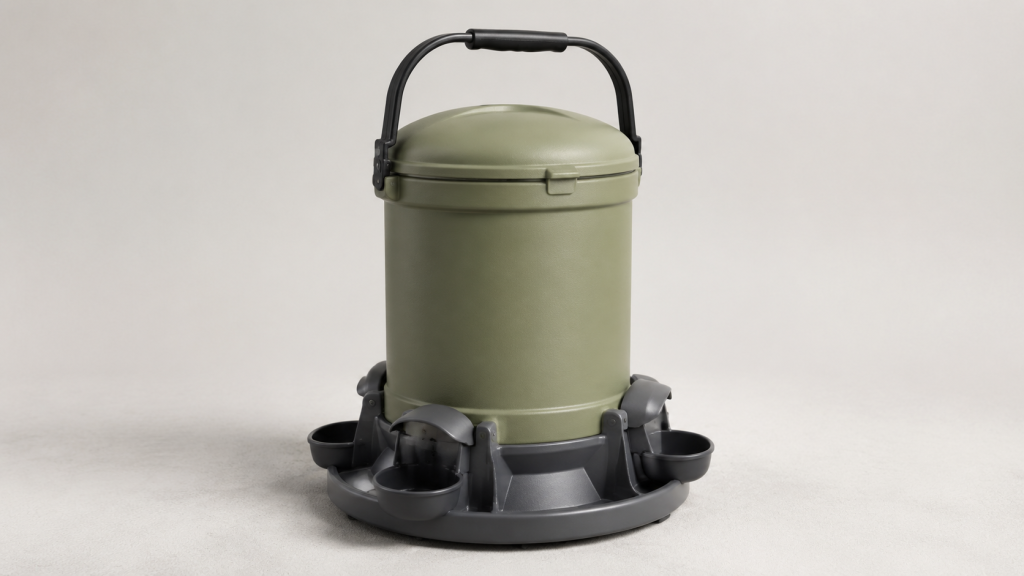
The RentACoop 5-Gallon Automatic Chicken Waterer offers a practical middle ground between basic fountains and complicated plumbing systems. Its five-gallon container provides useful capacity without becoming impossible to carry.
Depending on the selected version, chickens drink from horizontal nipples or cups mounted around the bucket. Both designs reduce the amount of bedding and droppings that enter the water.
RentACoop states that the waterer generally serves about eight to ten chickens, although hot weather and flock behavior affect actual refill times. It works especially well for homesteaders who want cleaner water without connecting a permanent supply line.
Best for: Most backyard flocks
Potential drawback: Chickens may need help learning to use nipples.
2. OverEZ Automatic Chicken Waterer
Refilling a small container twice a day quickly becomes frustrating when you keep a larger flock. The OverEZ Automatic Chicken Waterer holds 12 gallons, making it the largest reservoir in this roundup.
Its sealed body helps keep the main water supply away from dirt. Chickens drink through ports positioned near the bottom, while the opaque, UV-resistant container limits sunlight inside the tank. Less sunlight may help slow algae growth compared with a clear reservoir.
The tradeoff is weight. Twelve gallons of water weighs roughly 100 pounds, so choose its location before filling it.
Best for: Large flocks and infrequent refilling
Potential drawback: Heavy and awkward to move when full.
3. Harris Farms Double Wall Poultry Drinker
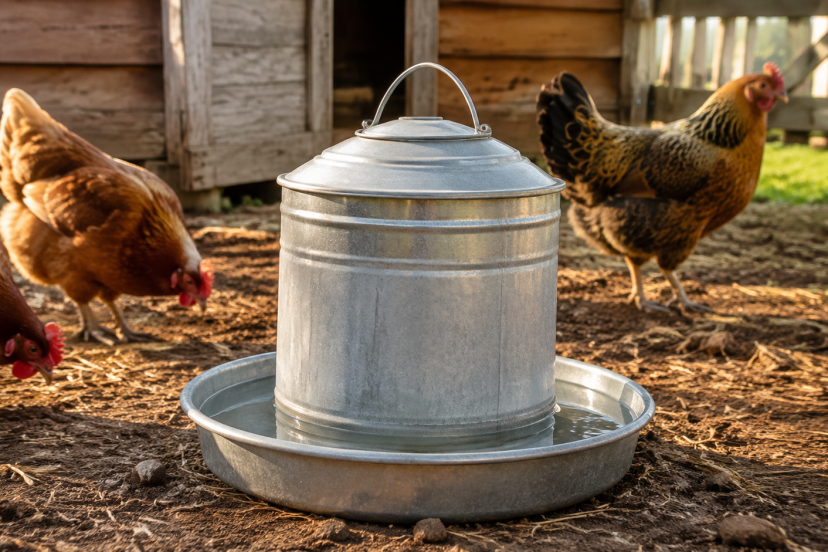
Plastic may crack or degrade after years outdoors. The Harris Farms Double Wall Poultry Drinker combines a sturdy metal build with enough capacity to hold up to five gallons of water.
Its double-wall, vacuum-style system releases water into the drinking tray as chickens consume it. The straightforward design has no valves or nipples to teach the flock to operate. It is also harder for adult chickens to tip than a lightweight chick fountain.
Galvanized steel requires appropriate care. Avoid adding acidic substances such as apple cider vinegar because acid can react with the zinc coating. Check the locking mechanism carefully after every refill to prevent leaks.
Best for: Homesteaders who prefer sturdy metal equipment
Potential drawback: Open water can collect debris.
4. Farm Innovators HPF-100 Heated Poultry Fountain
Breaking ice out of a water tray every winter morning is not a sustainable routine. The Farm Innovators HPF-100 Heated Poultry Fountain combines a three-gallon fountain with a thermostatically controlled, 100-watt heater.
The manufacturer says it can prevent freezing in temperatures down to 0°F under suitable conditions. Because the thermostat turns the heater on only when needed, it does not run continuously during mild weather.
Place it on a dry, level surface and connect it to a properly protected outdoor electrical outlet. Check the cord regularly for damage, and keep the connection away from standing water.
Best for: Homesteads with prolonged freezing weather
Potential drawback: Requires safe access to electricity.
5. Little Giant One-Gallon Plastic Poultry Fount
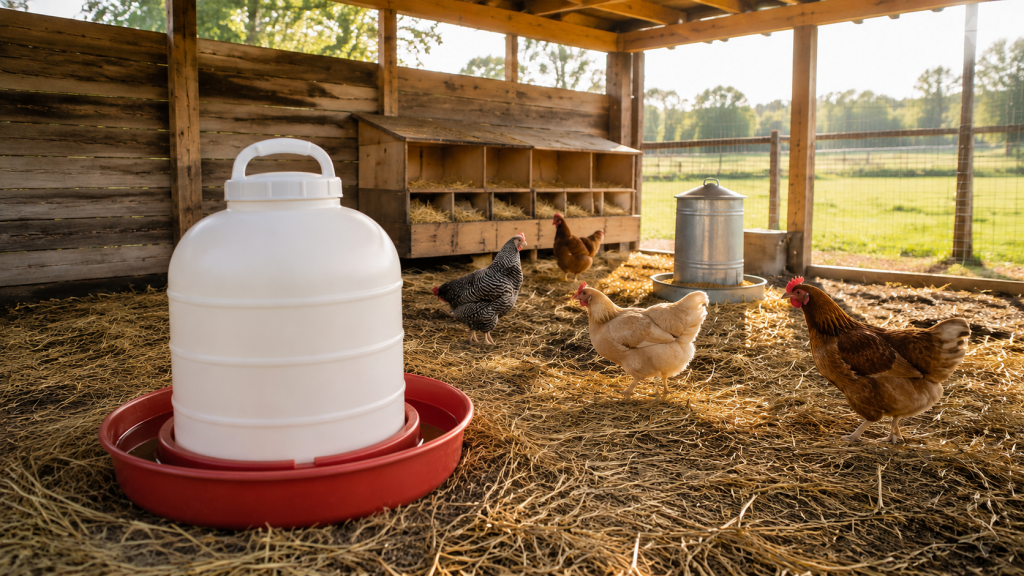
Large drinking cups can create problems in a brooder. Chicks may step into them, soak the bedding, or become chilled. The Little Giant One-Gallon Plastic Poultry Fount provides a simple gravity-fed option for chicks and very small flocks.
The one-gallon jar screws onto its base and separates for cleaning. Its bright red tray is easy for young birds to notice. Raising the fountain slightly—while keeping it within comfortable reach—helps prevent chicks from scratching shavings into the water.
A gallon will not last long for growing birds, so treat this as a brooder or small-flock solution rather than a permanent water source for many adult hens.
Best for: Brooders and compact coops
Potential drawback: Needs frequent cleaning and refilling.
6. Farm Innovators HB-60P Heated Nipple Waterer
The Farm Innovators HB-60P Heated Poultry Waterer offers a cleaner winter alternative to an open heated fountain. It holds more than two gallons and uses side-mounted nipples that can serve up to 15 chickens, according to the manufacturer.
Its 60-watt thermostatic heater operates only when necessary. Since chickens do not drink from an exposed tray, they cannot easily kick bedding or manure into the reservoir.
Nipples still require daily inspection. A small blockage or frozen component can stop water flow even when the bucket contains plenty of water. Keep a backup waterer available during severe cold.
Best for: Keeping winter water cleaner
Potential drawback: Water flow is less visible at a glance.
7. Premier 1 Supplies Five-Gallon Bucket Waterer
A nipple-equipped Premier 1 Supplies poultry waterer helps prevent the splashing associated with open troughs. Its raised bucket design also keeps the drinking points above loose litter.
This style suits adult birds that already understand nipple systems. It can help keep coop floors drier, which matters in enclosed housing where excess moisture contributes to odor and unhealthy litter.
Test every nipple after refilling. Chickens cannot tell you that a valve has stopped working, so visible water in the bucket does not guarantee they can access it.
Best for: Cleaner coops and experienced flocks
Potential drawback: Valves need frequent testing.
8. Harris Farms Easy-Fill Poultry Waterer
Traditional bottom-fill fountains must be inverted, which can lead to wet boots and spilled water. The Harris Farms Easy-Fill Poultry Waterer simplifies routine refilling with a more accessible reservoir design.
Its moderate capacity suits a typical backyard flock, while the built-in handle makes transportation manageable. The wide drinking tray also allows several hens to drink without waiting for a nipple.
As with any open-tray waterer, placement makes a major difference. Set it on a stable block or purpose-built stand at approximately the height of your chickens’ backs.
Best for: Simple, familiar operation
Potential drawback: The tray attracts litter if placed on the floor.
How to Choose the Right Chicken Waterer
Match Capacity to Your Flock
Penn State Extension explains that poultry may consume roughly two pounds of water for every pound of feed. Consumption can rise during hot weather, so do not base capacity on mild-day use alone.
Choose a reservoir that gives your flock a comfortable reserve. However, avoid buying such a large container that you hesitate to empty and clean it.
Consider Your Climate
Heated models make sense where temperatures remain below freezing. In warm regions, prioritize shade, airflow, and frequent refills with cool water. A dark or opaque reservoir can also reduce light exposure inside the container.
Decide Between Cups, Nipples, and Troughs
Nipples usually keep water cleanest, but each one serves a limited number of birds. Cups are easy for hens to learn, although they may collect sediment. Gravity troughs offer simple visual monitoring but require more cleaning.
If you are still planning your poultry setup, this guide to chicken coops for beginners covers space, ventilation, cleaning, and predator protection. You can also review the basics of choosing chicken feed for backyard flocks to build a more complete care routine.
Chicken Waterer Placement and Maintenance Tips
Set the waterer in shade whenever possible. Place it on a level platform high enough to prevent scratching but low enough for the smallest bird to drink comfortably.
Inspect the system every morning and evening. Confirm that nipples move freely, cups refill correctly, and the reservoir has not leaked. In summer, check it more often.
Scrub open trays daily. Clean sealed reservoirs and components regularly rather than waiting for slime or an odor to appear. A large tank reduces refilling work, but it does not eliminate maintenance.
Conclusion
The RentACoop five-gallon model is the strongest all-around choice for a typical homestead because it combines manageable capacity with cleaner drinking points. Large flocks may benefit more from the 12-gallon OverEZ, while the Farm Innovators models solve common winter problems.
Whichever chicken waterer you choose, inspect it at least twice a day. Reliable equipment helps, but clean water, sensible placement, and consistent maintenance remain the foundations of a healthy flock.
FAQs
How large should a chicken waterer be?
For many backyard flocks, a three- to five-gallon waterer provides a useful balance between capacity and portability. Larger flocks may benefit from a 12-gallon reservoir or multiple watering stations.
Are nipple waterers better for chickens?
Nipple systems generally keep water cleaner and reduce spills. However, chickens must learn to activate them, and owners need to test every nipple daily.
How often should a chicken waterer be cleaned?
Scrub conventional open waterers daily. Clean closed tanks and valves regularly, and replace the water whenever it looks dirty. Never rely on topping off visibly contaminated water.
Where should I put the waterer?
Place it on level ground in a shaded, easy-to-inspect location. Raise open trays to the birds’ back height so they cannot scratch large amounts of litter into them.
Do chickens need a heated waterer in winter?
They need constant access to liquid water, but the equipment does not necessarily need built-in heat. A heated model becomes worthwhile when freezing temperatures make manual water replacement difficult or unreliable.