5 Affordable Greenhouse Kits for Year-Round Growing
We may earn a commission for purchases made using our links. Please see our disclosure to learn more.
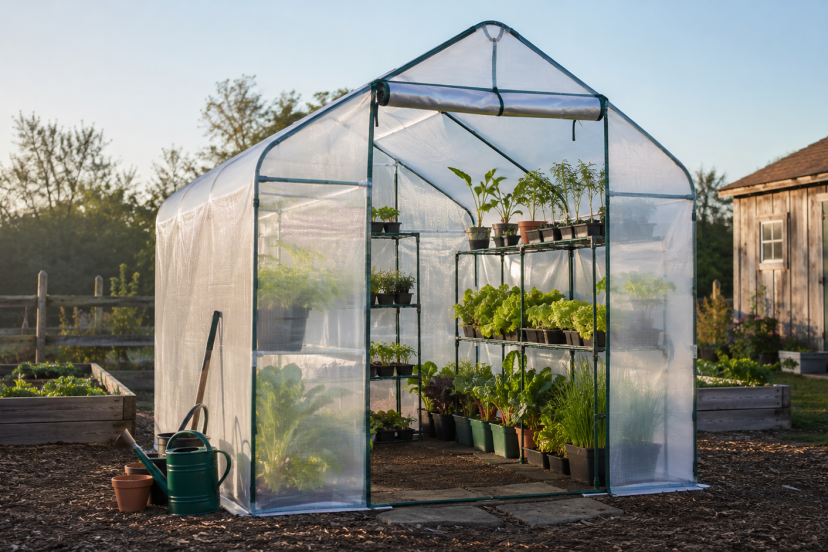
A greenhouse can turn a short gardening season into months of extra harvests. It protects seedlings from surprise frosts, gives heat-loving crops a warmer home, and creates a sheltered place for growing herbs and vegetables. Fortunately, you do not need an expensive glass structure to get started. Today’s affordable greenhouse kits range from compact tabletop covers to walk-in models with multiple shelves.
However, “year-round” does not mean every kit will stay warm through winter without help. In a cold climate, you may still need insulation, supplemental lighting, or a greenhouse-safe heater. The right kit gives you the protected foundation; your local weather determines what else you need.
If growing more of your own food is part of a larger plan, these ideas for starting a backyard homestead can help you make better use of the space you already have.
Why an Affordable Greenhouse Is Worth Considering
A greenhouse captures solar warmth and shields plants from wind, frost, heavy rain, and some pests. It also lets you control watering more closely because rainfall cannot reach the covered growing area.
Research compiled by Sustainable Agriculture Research and Education shows that protected growing structures can extend the production season and increase plant growth or yield. However, covered soil may accumulate fertilizer salts because natural rain cannot flush them away. Regular soil testing and careful feeding remain important.
A small kit also lets you experiment before investing in a permanent structure. You can learn how temperature, airflow, and crop choice affect results without committing a large part of your homestead budget.
Quick Comparison of the Best Greenhouse Kits
| Greenhouse kit | Approximate size | Best for | Notable feature |
| Quictent Mini Greenhouse | 95 x 36 x 36 inches | Raised beds and seed trays | Low-profile design |
| Ohuhu Small Greenhouse | 4.8 x 2.5 x 6.4 feet | Narrow patios | Six shelves |
| Greengro Walk-In Greenhouse | 57 x 57 x 76 inches | Seedlings and potted crops | Eight shelves |
| WORKPRO Walk-In Greenhouse | 56 x 56 x 77 inches | General homestead use | Two screened windows |
| Home-Complete Walk-In Greenhouse | About 56 x 56 x 76 inches | High-capacity plant storage | Eight-shelf layout |
Product availability and prices can change. Check the current listing, dimensions, and included parts before ordering.
5 Recommended Greenhouse Kits
1. Quictent Mini Greenhouse
The Quictent Mini Greenhouse suits gardeners who want protection without a full-height structure. At approximately 95 inches long and 36 inches wide, it can cover seed trays, low crops, or a small raised bed.
Its clear cover allows you to see plants without opening the enclosure. The low shape also presents less surface area to the wind than a tall walk-in model. That said, you will need to kneel or bend down when tending plants.
Best for: Seed starting, hardening off young plants, and protecting leafy greens.
Keep in mind: This is not a walk-in greenhouse, so it offers less working room.
2. Ohuhu Small Greenhouse
The Ohuhu Small Greenhouse measures roughly 4.8 by 2.5 by 6.4 feet. Its narrow footprint works well beside a shed, along a fence, or on a protected patio.
Six shelves provide room for herbs, seedling trays, and compact pots. You can also remove or rearrange shelves to accommodate taller plants. The reinforced plastic cover helps hold warmth while keeping rain off tender growth.
Best for: Homesteaders with limited floor space who still want walk-in access.
Keep in mind: Lightweight frames need firm anchoring, especially on an exposed property.
3. Greengro Walk-In Greenhouse
The Greengro Walk-In Greenhouse offers three tiers and eight shelves in a 57-by-57-inch footprint. This layout gives you substantial vertical growing space without taking over the yard.
Its screened windows encourage air movement while helping to exclude larger insects. Shelf clips add stability, which matters when you load the unit with moist pots. You can use the central floor area for taller containers or gardening supplies.
Best for: Growing a varied collection of seedlings, herbs, and container vegetables.
Keep in mind: Distribute heavy pots evenly and observe the manufacturer’s shelf limits.
4. WORKPRO Walk-In Greenhouse
The WORKPRO Walk-In Greenhouse combines a roll-up zippered door with two screened side windows. These openings make temperature and humidity easier to manage than they would be in a fully sealed cover.
Its 56-by-56-inch floor area feels roomy enough for daily plant care while remaining practical for a small homestead. The screened windows are especially useful during warm spring days when a closed greenhouse can heat up surprisingly fast.
Best for: Gardeners who prioritize convenient ventilation and access.
Keep in mind: Close and secure the openings before storms or cold nights.
5. Walk-In Greenhouse
The Walk-In Greenhouse includes eight shelves arranged on both sides of a central walkway. This straightforward design creates plenty of organized space for trays, pots, and gardening tools.
You can place taller containers on the floor after removing a shelf. The PVC cover helps protect plants from cool air, rain, and minor weather changes. It can also be used inside a garage or basement when paired with suitable grow lights.
Best for: Gardeners who want maximum shelf capacity in a compact enclosure.
Keep in mind: The cover and lightweight frame require protection from strong wind and heavy snow.
What to Look for When Comparing Greenhouse Kits
Available Space
Measure the site before shopping. Leave enough clearance to open the door, roll up the cover, and walk around the structure. A smaller greenhouse that fits comfortably will serve you better than a large one squeezed into an unsuitable corner.
Choose a location that receives at least six hours of direct sunlight when possible. Choose a well-drained spot that does not stay soggy after rainfall.
Cover Material
PVC covers offer high visibility, while reinforced polyethylene covers often handle regular outdoor use well. Neither material lasts forever. Sun exposure, rubbing against the frame, and extreme temperatures gradually weaken flexible covers.
Look for a replacement cover before purchasing. A kit loses much of its value if you cannot replace the outer layer later.
Ventilation
Ventilation is essential, even during cool weather. A sunny enclosed space can become dangerously hot within a short period.
The University of Minnesota’s guidance on extending the growing season warns that protective covers may trap enough heat to damage plants on warm days. Doors, windows, or vent flaps give that excess heat somewhere to escape.
Anchoring and Weather Resistance
Most inexpensive greenhouse kits weigh very little. Secure the frame to firm ground with anchors and reinforce it according to the manufacturer’s directions. Adding bricks to loose shelving does not replace proper anchoring.
Remove accumulated snow promptly if the kit is not rated for a snow load. In severe weather, taking down a portable cover may prevent permanent damage.
How to Use a Greenhouse Throughout the Year
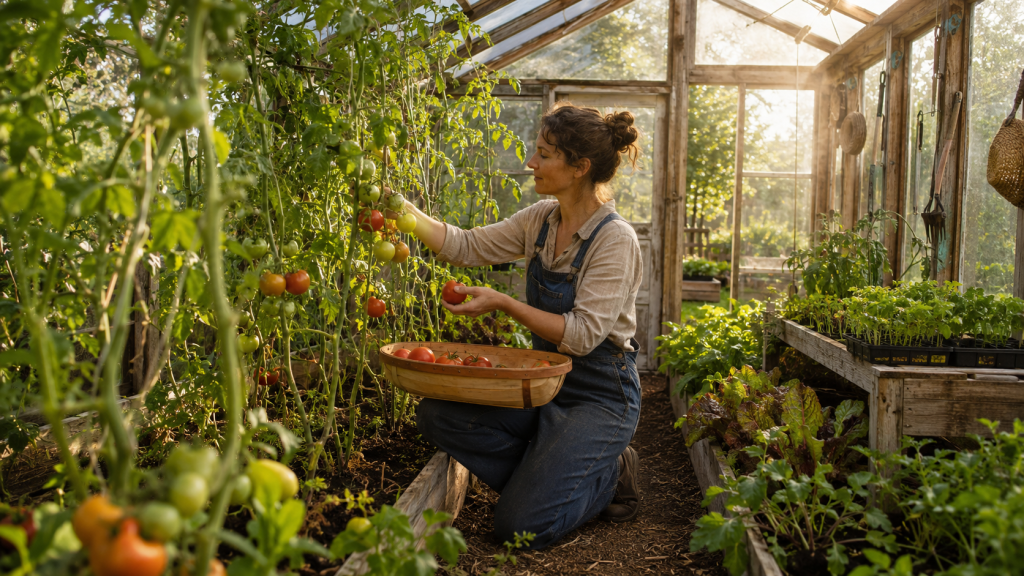
In spring, use your greenhouse to start seeds and gradually prepare seedlings for outdoor conditions. Open the vents during warm afternoons so young plants do not overheat.
During summer, focus on airflow and shade. Tomatoes, peppers, cucumbers, and heat-loving herbs may thrive inside, but temperatures can climb quickly. A shade cloth and a simple maximum-minimum thermometer make management easier.
Fall is ideal for salad greens, radishes, herbs, and other cool-season crops. Plant before daylight becomes too limited, since a greenhouse retains warmth but cannot create sunlight.
Winter requires realistic planning. An unheated kit may protect hardy crops from wind and light frost, but it will not remain warm during prolonged freezes. Use sealed water containers as thermal mass, insulate carefully, or install equipment specifically approved for greenhouse use.
For additional crop-planning inspiration, explore these seasonal ideas for a year-round garden.
Conclusion
Affordable greenhouse kits make protected growing accessible to homesteaders with modest budgets and limited space. The Quictent works well over low crops, while the Ohuhu offers a narrow walk-in design. Greengro, WORKPRO, and Home-Complete provide more shelving for larger plant collections.
Whichever model you choose, give equal attention to placement, ventilation, anchoring, and seasonal temperature control. A simple greenhouse cannot eliminate the weather, but thoughtful management can help it deliver healthier seedlings, longer harvests, and more homegrown food throughout the year.
Frequently Asked Questions
Can an inexpensive greenhouse really work year-round?
Yes, but the structure alone may not provide enough winter warmth. Your climate, crop selection, insulation, available sunlight, and heating setup will determine what you can grow.
Which greenhouse kit is best for beginners?
A compact walk-in model with shelves and screened vents offers a manageable starting point. It provides organized growing space while making temperature control easier to learn.
Do plastic greenhouses stay warm at night?
They retain some daytime heat, but temperatures can drop quickly after sunset. Thermal mass and insulation may slow the decline, while cold regions often require supplemental heat.
Should a greenhouse sit in full sun?
Aim for at least six hours of direct sunlight, especially during winter. In very hot climates, afternoon shade or seasonal shade cloth can prevent overheating.
What vegetables grow well in a small greenhouse?
Lettuce, spinach, radishes, herbs, peppers, compact tomatoes, and bush cucumbers are practical choices. Match each crop to the available temperature, light, and vertical space.